
Hanh Hoang
Jan 21 2026 •10 minutes
If you’ve ever searched for handmade gifts, custom products, or unique vintage finds, you’ve likely come across Etsy-one of the world’s largest marketplaces for creators, crafters, and small business owners. But what is Etsy, and why has it become such a powerful platform in the e-commerce world?
This comprehensive guide explains what Etsy is, how Etsy works, what you can sell, how payments function, and the pros and cons for both buyers and sellers. Whether you’re planning to start a shop or simply want to understand the platform better, this is the guide you need.
Etsy is an online marketplace that connects independent sellers with buyers around the world, with a strong focus on handmade, vintage, and custom products. Unlike general marketplaces such as Amazon, Etsy was created to give artists, crafters, and small brands a place to sell unique, creative items.
Since it was founded in 2005, Etsy has created a playground for artists and artisans to create and sell their products. Etsy has grown so strong that it can compete directly with Shopify, Big Cartel and Amazon Handmade.
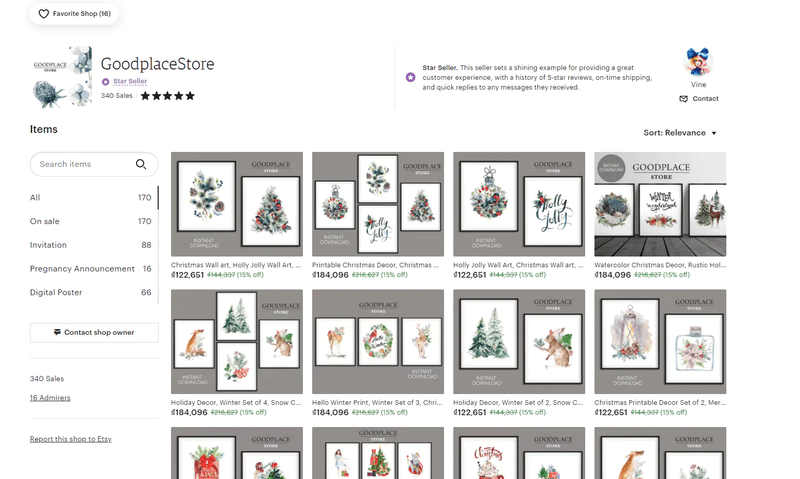
Etsy is one of the largest online sales platforms in the world (Image source: GoodplaceStore)
Unlike traditional e-commerce sites dominated by mass-produced products, Etsy emphasizes:
Currently, products sold on Etsy include:
This focus makes Etsy especially popular among buyers seeking gifts, décor, art, and custom-made merch they can’t find anywhere else.
In short, Etsy is a marketplace designed for creativity and individuality - ideal for consumers and sellers who value unique products over mass-market alternatives.
> > > Read more: How to Find a Hot Selling Niche for a POD Store
To understand what is Etsy and how does it work, you need to look at both sides of the marketplace: buyers and sellers.
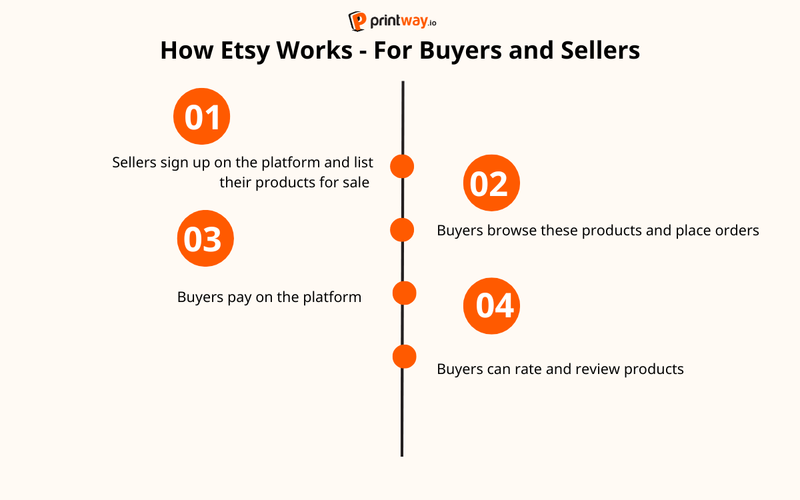
Shopping on Etsy is designed to be simple, enjoyable, and highly personalized.
Buyers can:
Because many products are handmade or customized, Etsy offers a more personal shopping experience than traditional e-commerce.
Starting a shop on Etsy is straightforward:
Etsy sellers control their own pricing, production process, and customer communication. Many sellers use external fulfillment partners or print-on-demand manufacturers to scale.
Etsy charges sellers several types of fees:
While fees can add up, Etsy’s huge traffic can justify the cost.
Sellers can choose:
Buyers see estimated delivery times and tracking information when available.
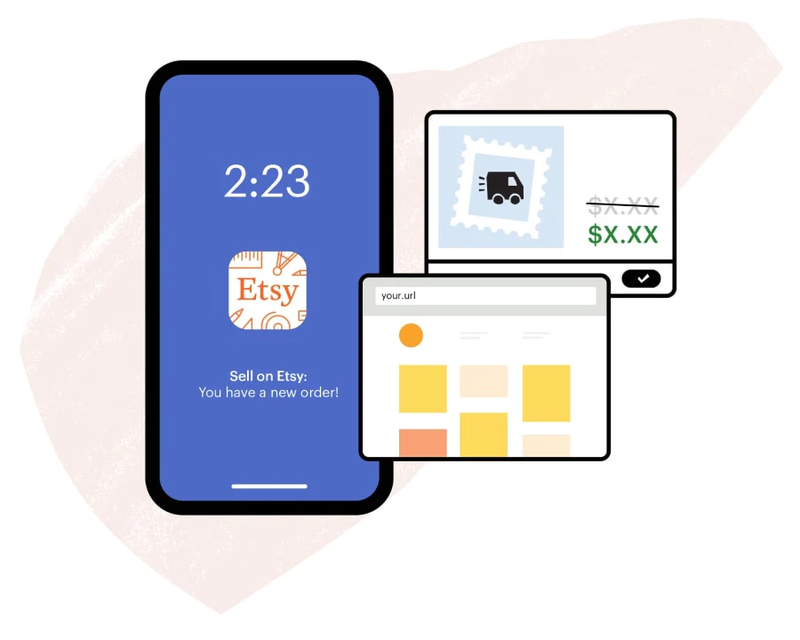
How to Choose and Sell on Etsy (Image Source: Etsy)
Selling on Etsy is simple and easy to understand, but to compete with a market of 8.5 million sellers (2026). Each one needs to pay attention to improving product quality as well as have a strategic plan to provide the best customer service to global buyers.
If you already have handmade products, handmade items are molded by your own creativity. You can immediately connect with Etsy to start selling to buyers around the globe. If you don't have a product to sell yet, visit Etsy's homepage to browse its product catalog and pick out the one with the most potential.
Here are the top 10 selling products on Etsy based on the total sales report of top Etsy Sellers globally:
Top 1: Craft Products (Stickers, Antique Charms, Hooks, Claws, Beads,..)
Top 2: Handmade (Handmade Stickers, Metal jewelry, pendants, and paper designs)
Top 3: Jewelry (Rings, Anklets, Hair vines,..)
Top 4: Wedding Products (Wedding Bells, Bouquets, Corsages, Veils, etc.)..)
Top 5: Accessories (Scarves, Hats,..)
Top 6: Items made from paper and party decorations (custom cards, paper straw, posters, etc...)
Top 7: Clothing ( T-shirt, Hobos, Swimwear,..)
Top 8: Vintage items (rugs, Fossils, Jeans,.. Note, vintage items sold on Etsy must be over 20 years old)
Top 9: Home & Living (products Home Decor such as Poster, Canvas, Candles,...)
Top 10: Art & Collectibles (Paintings, Prints, and Figures,..)
How to register an Etsy account is relatively simple. You can refer to the article "How to sell on Etsy" with specific instructions for creating an Etsy account. In general, you just need to complete the steps, select a username, fill out basic information, and read Etsy s policy terms to own a sales profile on Etsy.
Once you have an Etsy profile, select Sell On Etsy on the right side of the screen to open a shop. Select your language, country, currency rate and shop name to start selling on Etsy.
Customers often search for products by entering keywords in the search box on Etsy. In order for products to appear on the first page when buyers search, Etsy seller needs to optimize the entire store and product. Sections such as store descriptions, bio, listing title tags, and product descriptions need to use the right keywords. Stores that are on top of similar products will be a good reference source for sellers who have discovered the appropriate keyword list.
After setting up the store, now is the time to list the product on the floor, prepare high-quality photos, focus, no shake, blur and previously researched keywords to include in the product SEO. Set the price with the selling cost, shipping time as well as shipping fee.
Manage your store by looking at the traffic you have, if the product has no views in the early days, maybe customers have not found your products. consider the keywords and adjust the image to attract customer attention.
Etsy Seller can set the shipping time so that customers know the time they can receive the goods. Sellers should choose the parties that provide fast and professional delivery services to get the product to customers in the shortest time!
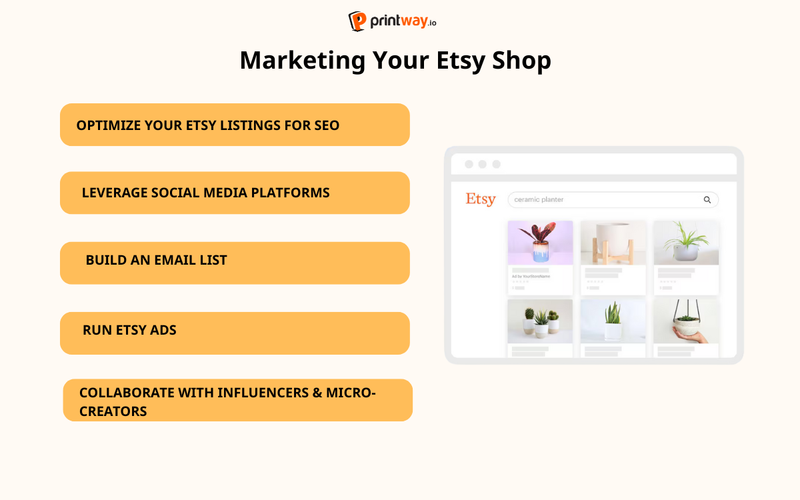
Marketing your Etsy shop is essential for standing out in a highly competitive marketplace. With millions of active sellers, relying solely on organic traffic is rarely enough - strategic promotion helps increase visibility, boost conversions, and build a loyal customer base. Below are the most effective marketing methods for Etsy sellers:
Learn about Etsy s payment methods and how to sign up for Etsy Payments.
Find out the payment methods on Etsy
In addition to setting up stores, selecting products, etc., Etsy Payment is also the backbone to maintain the growth of each individual and business selling on this e-commerce platform. So what is Etsy Payment? Etsy Payment is a way for Etsy Sellers to receive payment when orders are completed on Etsy. Once the merchant signs up for Etsy Payment, the seller can choose from the following payment options:
According to Etsy, from April 26, 2021, sellers will not be able to open stores in markets where Etsy Payment is not available. If sellers have opened stores, they can continue to use Paypal to receive payments.
Currently, Etsy is available in 45 countries around the world. You can see a detailed list of countries on the Etsy help page.
To sign up for Etsy Payments, you need to have:
Residence addresses and valid bank accounts in countries where Etsy Payment is valid
Cards such as credit, debit, or reloadable prepaid cards can be used to receive payments if the seller is located in Australia, Germany, or the Netherlands.
For tax and legal purposes, Etsy Merchants will need to choose whether their Etsy Payment eligibility is Individual or Corporate.
Select Individual if you sell as an individual and do not represent an official business entity or use a taxpayer ID number for a business.
To register as an individual, the seller will need to provide:
Select Business if the seller has registered and established a legal entity with a taxpayer ID as a business. The information to provide is:
Business name
Legal address:
Etsy will perform identity verification to ensure the seller s safety as well as the overall safety of the marketplace. If Etsy is unable to verify identity at the time the seller signs up, the seller will be required to provide additional information to confirm his or her identity. At this point, the seller just needs to follow the instructions sent by Etsy in the registered mail.
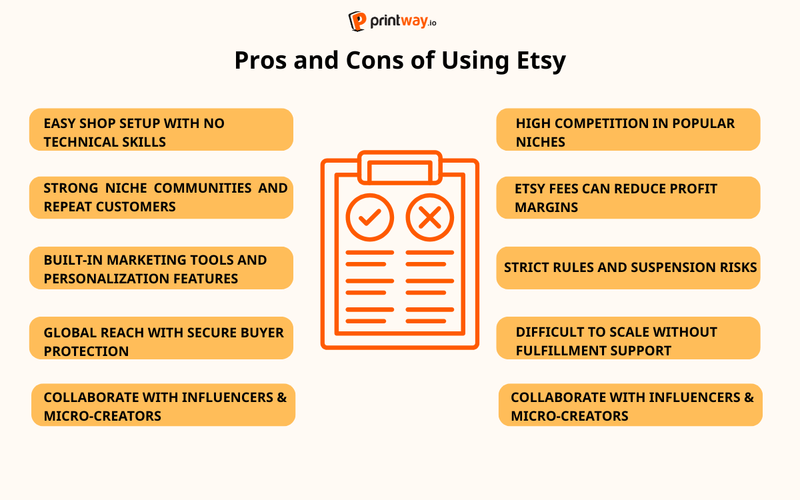
When people research the benefits of Etsy for sellers, they usually want to know whether Etsy is really worth the time, fees, and effort compared to building their own website. Etsy’s strengths lie in traffic, simplicity, and built‑in trust, especially for handmade and personalized products
Opening a shop is simple: no coding, hosting, or complex setup. Etsy guides sellers through naming the shop, adding listings, choosing payments, and setting shipping profiles. This makes it ideal for beginners who feel overwhelmed by traditional e-commerce platforms.
Etsy’s community culture supports creators, crafters, and small businesses. If you focus on a clear niche and deliver great service, buyers often favorite your shop, follow updates, and return for custom or seasonal gifts-leading to strong repeat purchase potential.
Etsy provides helpful tools like coupons, sales events, Etsy Ads, and targeted offers to past buyers. Its listing system supports customization fields and variations, making it easy to sell personalized gifts or print-on-demand products with unique designs.
Etsy’s international reputation and secure checkout system help build trust. Buyers feel safe purchasing from small shops because Etsy handles payments, tax, and dispute management-letting sellers focus on product quality and communication.
Crowded categories like jewelry, T-shirts, and décor mean sellers must invest in branding, strong photography, and Etsy SEO. Without a unique angle, new shops can struggle to gain visibility.
Listing fees, transaction fees, processing fees, and ads can add up quickly. Sellers must calculate all costs into pricing to maintain healthy profit margins.
Etsy has firm policies on handmade and vintage products. Violations-even unintentional-can lead to listing removal or shop suspension. Because the platform isn’t fully in your control, sellers must follow guidelines closely.
Handling production and shipping yourself can become overwhelming as orders increase. Many sellers rely on print-on-demand or third-party fulfillment to grow efficiently while still benefiting from Etsy’s traffic.
Currently, Etsy sellers face the risk of "dead" accounts continuously only when registering and listing products in the first 1-2 days. To limit account death when Selling On Etsy, Etsy Vietnam Seller can note the following:
Etsy is an online marketplace that connects sellers with buyers around the world. It is a potential platform for those who want to sell handmade, handmade products in overseas markets. The above article introduced what Etsy is, and how to register Etsy Payment for beginners.
If you are a new trader and do not have too much capital, you can refer to the Print On Demand business model. Read more about Print On Demand here.
Hope you found the above article useful, please quickly refer to and register as Etsy Seller today!
Etsy sells handmade, vintage (20+ years), craft supplies, tools, and unique custom products.
Etsy charges a $0.20 listing fee, 6.5% transaction fee, payment processing fees, and optional advertising costs.
Yes. Many sellers earn part-time or full-time income, especially in niches like jewelry, personalized gifts, digital files, weddings, and home décor.
Absolutely. It requires no website-building skills and provides built-in customers - ideal for beginners starting small.
Etsy focuses on handmade, creative, unique products - not mass-produced goods - making it distinct from marketplaces like Amazon or eBay.