
Hanh Hoang
Aug 25 2022 •4 minutes
The keyword "product pricing" or "pricing strategy" has been mentioned more and more, especially in optimizing the revenue of each business in general and each online store in particular. It is time to apply product pricing strategies in a smart way to optimize sales of products and services in a competitive market. Here are 6 pricing strategies to help sellers increase sales of goods effectively.
Product pricing strategy is an important link for any business. This is considered the trump card that determines the growth of revenue, position, and reputation of the brand in the market. That is why many giants such as Apple and Samsung maintain their attractiveness despite extremely competitive prices in the market.
Product valuation is not an easy process. In addition to calculating the costs of production, labor, marketing, and distribution, enterprises must also determine the price so that the product is competitive with competitors in the same field but still ensure the reputation and image of the trade. sign.
Here are the top pricing strategies that have been applied by many businesses to increase sales and influence of the store. Let's find out the top 6 strategies and apply them immediately with your Print On Demand store today.
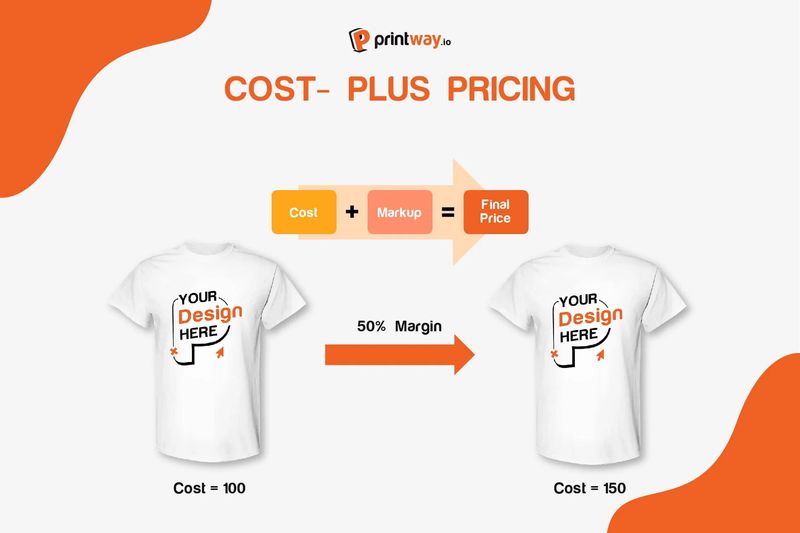
Price-plus pricing, also known as cost-plus pricing, is the simplest method of pricing products in the market.
The first step to surplus pricing is to determine the total cost of production, marketing, advertising, personnel, etc. otherwise known as the cost you have to spend on your product or service. Once you have determined the cost, you will add a fixed percentage (such as 10%, 20%. 30%) to generate a profit.
This pricing strategy is suitable for online retailers such as Print On Demand or Dropshipping. However, this method is not suitable for complex products and services such as software or consulting services.
Example of a surplus pricing strategy: A Print On Demand T-shirt has a base cost of $10, other costs such as advertising, platform listing fees, shipping costs, etc... accounts for $8. The total selling cost of the product is $18. Depending on market demand and the price of competitors, sellers can set a profit of 30-50%, then add to this cost to get the final price of the product.
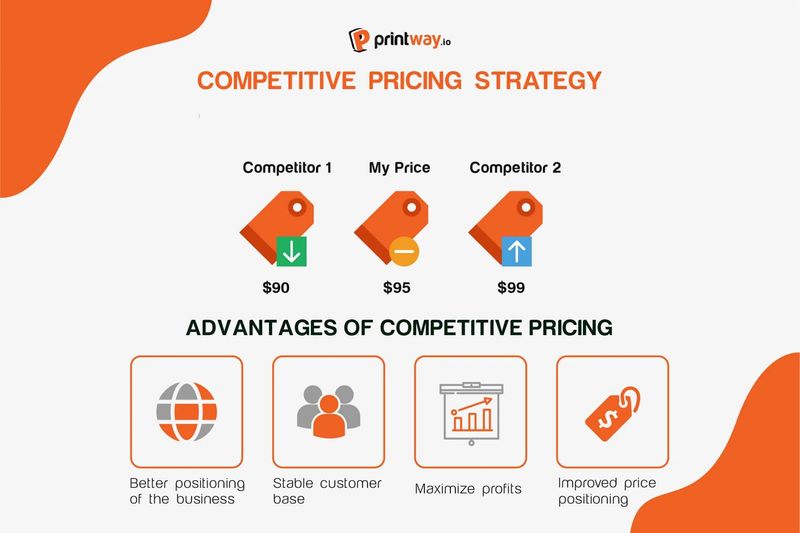
A competitive pricing strategy is a pricing strategy based on other products and services being sold in the market. This method is suitable for people who are selling items of similar nature. Competitive pricing is often applied when the prices of products have reached saturation because the market has many similar products and services.
Sellers can price by the price of competitors, lower or higher prices when they have their own strengths in the quality of products and services.
The best example of a competitive pricing strategy is Shopify s Store Plan pricing. If you compare Shopify s Store Plan pricing with other platforms, you'll see that their pricing is only similar to competitors' pricing. The strength of Shopify is that it offers more features for the same price, USP, that few competitors can surpass.
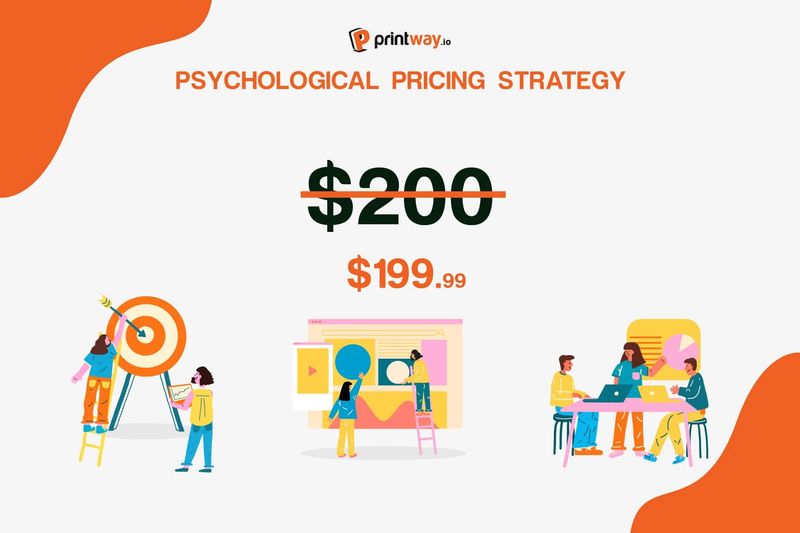
Psychological pricing strategy is the evaluation of the emotional side of the customer instead of the logical side. This is a common tactic in many stores, for example, a T-shirt is sold for $19.99.
will attract more visitors than the price of $20. This tactic works because people tend to read from left to right and look at the first numbers to decide to buy.
Another strategy that hits user sentiment is the price anchoring strategy. This works by pushing the price up and then bringing it to a lower price to create a feeling of buying a bargain for the customer. Example: Discounting T-shirt prices from $100.00 to $75 The goal of psychological pricing is to boost customer demand by giving them an illusion of increased value.
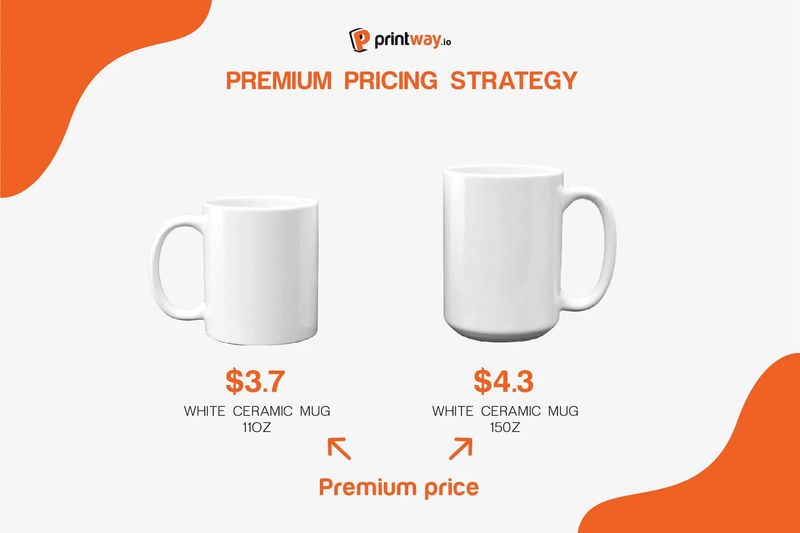
As the name implies, the Premium pricing strategy is a method of setting high prices to donate the value of products and services. With this pricing, business owners will set higher prices than competitors. This pricing method is suitable for those who are looking to sell unique, different products.
A high price for products with 1-0-2 will make customers feel the product is worth the same price they are sold for. In addition to the high valuation strategy, enterprises also need to pay attention to the quality of products, brands, and packaging so that the price set is commensurate with product quality.
With the product Print On Demand, sellers can set high prices for products that require high personalization or special handmade and custom products according to customer needs.
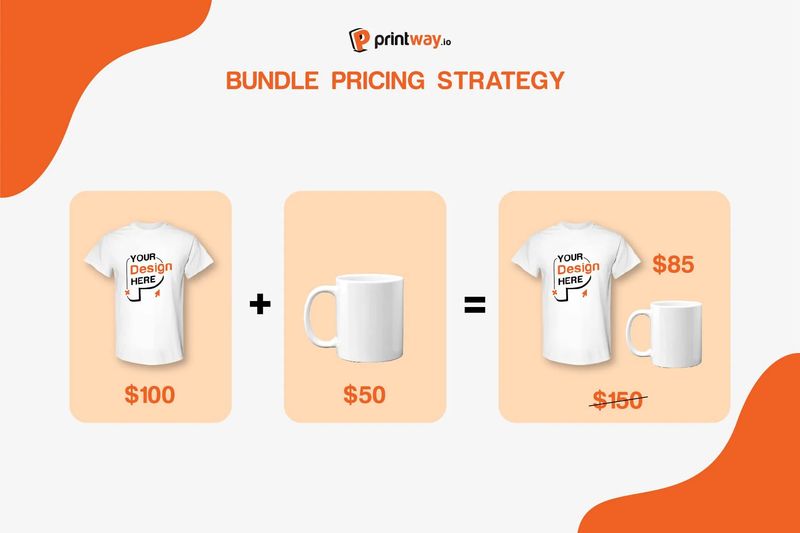
Package pricing is a strategy to set lower prices when customers buy more products at the same time. With Print On Demand sellers, package pricing helps sellers sell more products at the same time and increase the average order value (AOV). This is also considered one of the effective strategies to upsell, and cross-sell products that are in the seller's listing.
Example of Bundle Pricing Strategy for a POD Seller: Sell a combo of T-shirts, hats, and Shoes for $85.00
instead of retailing T-shirts, hats, or shoes for $30.
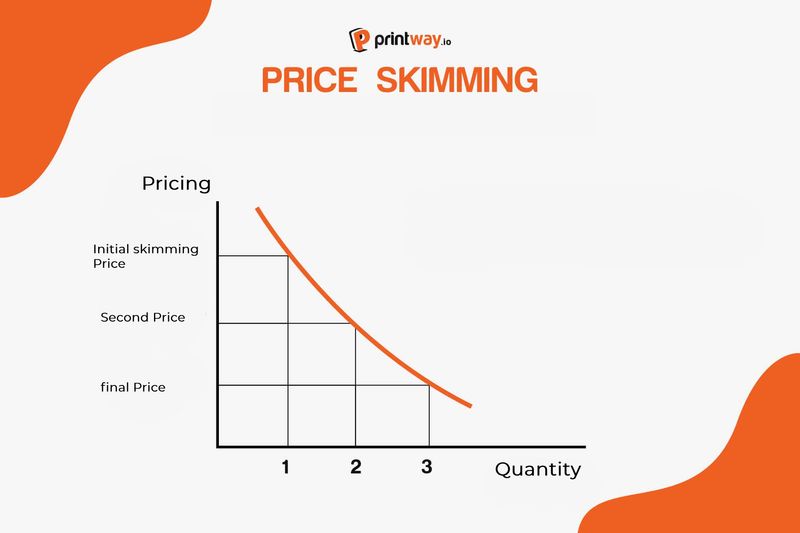
Slicing pricing is a strategy where sellers set high prices right from the launch of a new product to optimize sales, then gradually lower the price of the product to attract customers who like to sell.
The advantage of this pricing strategy is that it allows businesses to optimize product profitability as soon as it is launched and still makes a profit after reducing product prices. For Print On Demand sellers, this strategy will work with new, unique, and special products such as the product line in the Home Decor category or the gift customization category.