
Hanh Hoang
Nov 04 2026 •9 minutes

The main pros and cons of selling on Etsy come down to traffic versus cost. Etsy gives you access to about 86.5 million active buyers with almost no setup, but you pay roughly 11% to 15% of each order in fees, compete in crowded niches, and follow Etsy's rules. For UK sellers, add HMRC reporting and post-Brexit shipping to the equation.
Etsy is still one of the largest marketplaces for gifts, personalised items and home decor. At the end of 2025 it had 86.5 million active buyers and 5.6 million active sellers. That buyer base is the reason sellers start on Etsy, and the fee stack, competition and policy risk are the reasons some leave.
This guide breaks down the pros and cons globally, then looks at what is different for UK sellers: fees, tax, shipping to the EU and US, a sample cost breakdown for a UK order, and five tips to make Etsy UK profitable.
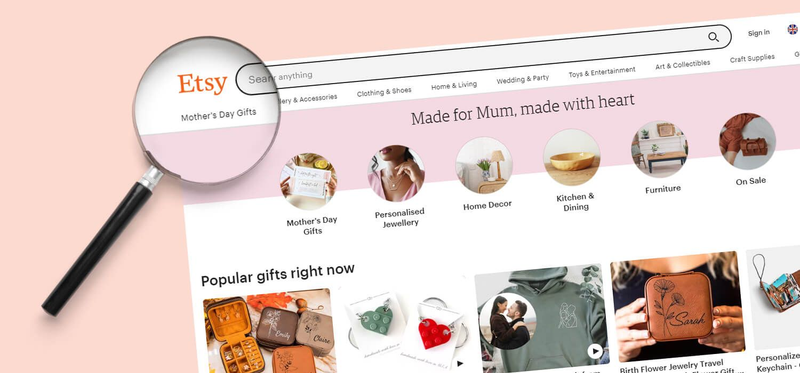
Before looking at the UK specifically, here is how Etsy compares for any seller. Most of the pros are about demand; most of the cons are about margin and control.
| Pros | Cons |
| Built-in traffic from millions of gift-focused buyers | Multiple fees on every order |
| Low startup cost: $0.20 per listing, no monthly fee required | Heavy competition in popular niches |
| Buyers trust Etsy checkout and reviews | Limited branding and no ownership of customer data |
| Strong demand for personalised and handmade-style items | Policy changes and account suspension risk |
| Works with print-on-demand partners, so no inventory | Offsite Ads become mandatory above $10,000 in sales |
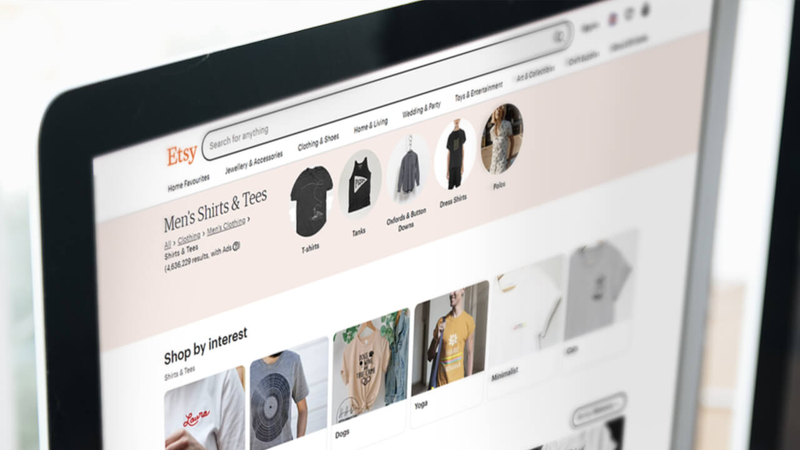
UK sellers share the global pros and cons, plus a few that are specific to selling from Britain. The UK is a strong gifting market and a gateway to US buyers, but tax reporting and EU shipping need more attention than before.

Selling on Etsy in the UK is worth it when your product has a healthy margin after fees, sells as a gift, and can be shipped quickly. The numbers below show why pricing matters more than anything else.
Example: a personalised hoodie sold to a UK buyer for £25 plus £3.50 shipping (order total £28.50), seller not VAT registered. The production and postage costs are illustrative; use your own supplier's prices.
| Cost Item | Calculation | Amount |
| Order total paid by buyer | £25.00 item + £3.50 shipping | £28.50 |
| Listing fee | $0.20 | about £0.16 |
| Transaction fee | 6.5% of £28.50 | £1.85 |
| Payment processing | 4% of £28.50 + £0.20 | £1.34 |
| Regulatory operating fee | 0.48% of £28.50 [CONFIRM] | £0.14 |
| VAT on Etsy fees | 20% of fees | £0.70 |
| Production cost (example) | POD base cost | £12.00 |
| Postage (example) | Actual shipping cost | £3.50 |
| Profit | £8.81 (about 31%) | |
| Profit if sold via Offsite Ads | minus 15% of £28.50 | £4.53 (about 16%) |
The takeaway: a sale that looks healthy at 31% margin can drop by half when Offsite Ads apply. Price your products so they still make money in the worst case.
The pros and cons of selling on Etsy UK depend heavily on how you run your shop. These five habits separate profitable UK shops from the rest.
UK buyers search with British spelling and terms: "personalised", "jumper", "mum", "colour". Use these in titles and tags for UK-focused listings, and keep US spelling for listings aimed at US buyers.
Create separate profiles for UK, EU and US delivery with realistic processing and transit times. Late orders hurt your Star Seller score and search ranking.
Keep records of every sale, fee and cost. If your gross trading income passes the £1,000 trading allowance, register for Self Assessment. Speak to an accountant if you are unsure.
Star Seller rewards fast replies, on-time dispatch with tracking, and high review scores. It builds buyer trust and supports visibility in search.
Do not rely on one platform. Connect your products to Shopify, Amazon or TikTok Shop as well, so a policy change or account issue on Etsy does not stop your income.
A production partner decides your margin, your delivery times and your reviews. Printway is built for cross-border sellers who list on Etsy and want to expand to other channels without changing suppliers.
| Capability | Details |
| Catalog | 1000+ products across Apparel, Home Decor, Drinkware, Accessories, All Over Print, Seasonal and Personalized |
| Production speed | 1 to 3 business days |
| Factories | USA and Vietnam, with shipping to the US, UK, EU and Australia |
| Daily capacity | Up to 50,000 orders/day |
| Integrations | Etsy, Shopify, WooCommerce, Amazon, TikTok Shop in one dashboard |
| Minimum order | None |
US production is a practical advantage for UK shops selling to US buyers, the largest market on Etsy. No minimum orders, no upfront inventory, no risk.
The pros of selling on Etsy are built-in traffic from about 86.5 million active buyers, low startup costs of $0.20 per listing, buyer trust, and support for print-on-demand production partners. The cons are layered fees (a 6.5% transaction fee, payment processing, regulatory fees and 12% to 15% Offsite Ads), heavy competition, limited branding, and policy risk. UK Etsy sellers pay payment processing of 4% + £0.20 per order, 20% VAT on Etsy fees if not VAT registered, and are reported to HMRC under the digital platform reporting rules. Selling on Etsy in the UK is worth it for personalised, giftable products that keep at least 25% margin after fees.
Printway is a global print-on-demand and fulfillment provider with factories in the USA and Vietnam. Printway offers 1000+ products, produces orders in 1 to 3 business days, has capacity for up to 50,000 orders per day, integrates with Etsy, Shopify, WooCommerce, Amazon and TikTok Shop, and requires no minimum order.
No, you do not need a general business licence to sell on Etsy in the UK. You do need to register as self-employed with HMRC once your trading income passes the £1,000 trading allowance, and some products (such as cosmetics, toys or food) have their own safety rules.
HMRC's trading allowance lets you earn up to £1,000 in gross trading income per tax year without declaring it. Above that, you must register for Self Assessment and pay tax on your profit. Etsy reporting your sales to HMRC does not change these rules.
Yes, UK Etsy shops can sell and ship to US buyers. Since the US ended its duty-free de minimis exemption in 2025, parcels may face import duties, so many UK sellers use a POD partner with US production to fulfil US orders domestically.
Etsy is usually better for UK beginners because it brings buyers to you, while Shopify requires you to build your own traffic. Shopify gives more control and better margins once you have a brand, so many sellers start on Etsy and add Shopify later.
The pros and cons of selling on Etsy balance out in your favour when you price for the full fee stack, choose giftable niches, and ship on time. For UK sellers, staying on top of HMRC reporting and choosing the right production location for each market makes the difference.
Use Etsy for discovery, protect your margin, and expand to other channels as you grow.
Explore Printway's 1000+ products and connect your Etsy shop today at printway.io.