
Hanh Hoang
May 25 2026 •8 minutes
Starting an online store in 2026 almost always comes down to one early decision: print on demand vs dropshipping. Both let you sell products without holding inventory, both have low startup costs, and both can be run from a laptop. But they are not the same business - and choosing the wrong one can cost you months of wasted effort and thin margins.
This guide breaks down both models in plain language, compares them specifically for the US market, and shows you how to launch a print - on - demand business the right way in 2026. By the end, you'll know exactly which model fits your goals, your budget, and your appetite for risk.
Quick answer: If you want to build a recognizable brand with custom products and healthier long - term margins, print on demand wins. If you want to test trending generic products fast with the widest possible catalog, dropshipping has the edge. Many sellers in 2026 actually run both.
Print on demand (POD) is a fulfillment model where products are manufactured only after a customer places an order. You design the product - a t-shirt, hoodie, mug, poster, phone case, tote bag - and a print partner produces it, packs it, and ships it directly to your customer under your brand.
You never buy inventory upfront. There is no warehouse, no minimum order quantity, and no leftover stock. Your job is design, marketing, and customer experience; your fulfillment partner handles production and logistics.
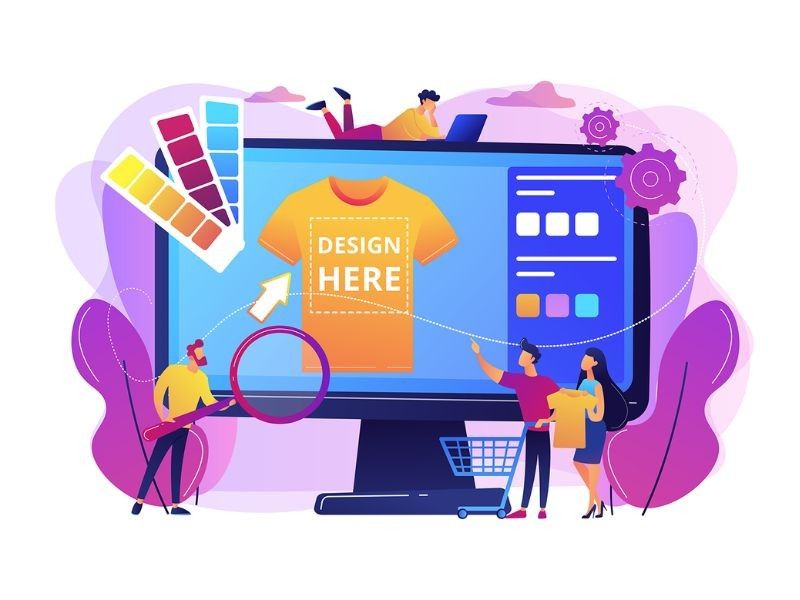
The typical POD workflow in 2026 looks like this:
You create designs and upload them to your store (Shopify, Etsy, WooCommerce, TikTok Shop, etc.).
The designs are mapped onto blank "base" products through realistic mockups.
A customer buys a product on your storefront.
The order is sent automatically to your print provider.
The provider prints, quality - checks, packs, and ships the item with your branding.
You keep the difference between the retail price and the production + shipping cost.
Pros of print on demand
Cons of print on demand
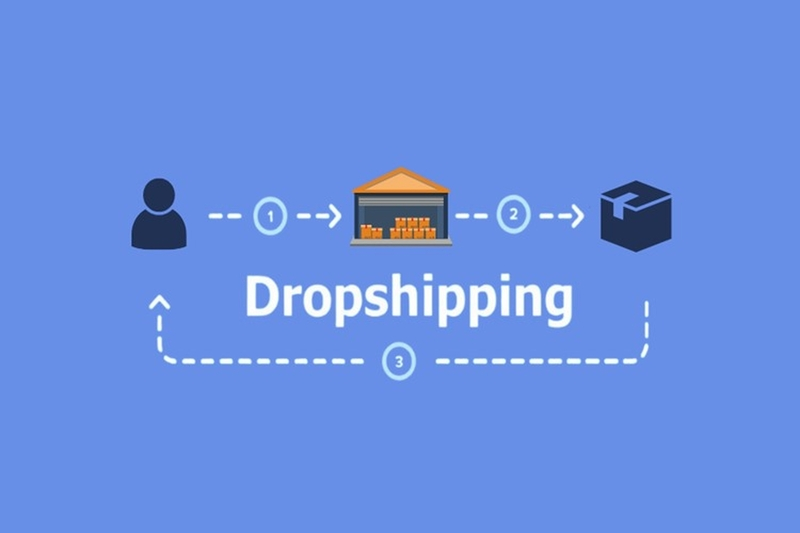
Dropshipping is a retail model where you sell ready - made, pre - existing products that a third - party supplier stores and ships on your behalf. When a customer orders from your store, you forward that order to the supplier, who ships the product directly to the buyer.
The key difference: in dropshipping you are reselling products that already exist in a supplier's catalog. You don't design anything - you curate, market, and price.
The standard dropshipping flow:
Pros of dropshipping
Cons of dropshipping
For US - based sellers - or anyone selling to US customers - the comparison gets sharper. American shoppers in 2026 expect fast delivery, reliable quality, and brands they can trust. Here's how print on demand vs dropshipping in the US stacks up across the factors that actually decide profitability.
td {white-space:nowrap;border:0.5pt solid #dee0e3;font-size:10pt;font-style:normal;font-weight:normal;vertical-align:middle;word-break:normal;word-wrap:normal;}
| Factor | Print on Demand | Dropshipping |
| Product type | Custom, branded products | Generic, pre - made products |
| Inventory risk | None | None |
| Startup cost | Low (store + design tools) | Low (store + ad budget) |
| Branding | Strong - your art, your packaging | Weak - generic items |
| US shipping speed | Fast with a US - based POD partner (3–7 days typical) | Often slow if shipped from overseas |
| Profit margin | Moderate to high (15–40%+) | Low to moderate, often squeezed |
| Competition | Lower - designs are unique to you | Very high - same products everywhere |
| Repeat customers | Higher - brand loyalty | Lower - commodity buying |
| Best for | Brand builders, creators, niche stores | Fast trend testers, broad catalogs |
Shipping is the deciding factor in the US. Long, unpredictable delivery from overseas dropshipping suppliers leads to chargebacks, bad reviews, and ad accounts that stop converting. Print on demand with a US - based fulfillment network - printing close to the customer - typically delivers in 3–7 business days, which keeps reviews high and ad performance stable.
Margins favor print on demand over time. Because dropshipped products are identical across hundreds of stores, sellers compete on price and erode their own profit. Custom POD products can't be price - matched, so you keep pricing power.
2026 trends shaping the choice:
If print on demand sounds like the right fit, here's a practical step - by - step path to launch in 2026.
>>> If you're new to ecommerce, you can also learn more about the best print-on-demand sites for beginners and how to choose the right platform for your business goals.
For sellers who want to build a lasting, branded business, print on demand is generally better - it offers unique products, more pricing power, stronger customer loyalty, and (with a US - based partner) faster shipping. Dropshipping can be better if your only goal is to test many generic trending products quickly. Neither is universally "best"; it depends on whether you want a brand or a fast catalog.
Yes, but it's harder than it used to be. Dropshipping can still be profitable for sellers who find genuinely underserved products, market exceptionally well, and use suppliers with fast US delivery. However, intense competition, price wars, and rising overseas shipping and import costs have squeezed margins. Generic, slow - shipping dropshipping stores struggle the most in 2026.
Dropshipping is slightly faster to launch because there's no design work - you import existing products and start. But it's harder to succeed with because of competition. Print on demand requires creating designs up front, yet AI design tools have made that step much easier, and the lower competition makes early sales more achievable. For long - term beginner success, print on demand is often the smoother path.
Absolutely - and many successful sellers do. A common 2026 strategy is to use print on demand for your core branded products (the items that build your identity and margins) and dropshipping for complementary accessories you don't want to design. Running both lets you widen your catalog while still building a real brand.
Print on demand typically has higher and more stable margins. Custom products can't be price - matched, so you keep pricing power, with margins often ranging from 15–40%+. Dropshipping margins are usually thinner and more fragile because identical products are sold by many stores, triggering price competition. Per - unit production cost is lower in dropshipping, but that advantage is often erased by price wars and ad costs.
If you're deciding between print on demand vs dropshipping in 2026, here's the bottom line for US sellers:
Choose print on demand if you want a real, defensible brand, unique products, healthier margins, and fast US shipping. This is the better long - term play for most sellers.
Choose dropshipping if you want to test a broad range of trending generic products quickly and accept thinner, more competitive margins.
Choose both if you want a branded core supported by a wider accessory catalog.
Whichever you pick, your fulfillment partner determines whether customers get fast delivery and quality products. Printway offers US - based print - on - demand fulfillment, a broad product catalog, custom branding, and direct integrations with Shopify, Etsy, and TikTok Shop - so you can launch with confidence and scale without inventory risk.
Ready to start your print - on - demand business? Explore Printway's fulfillment services and turn your designs into a profitable brand in 2026.