
Hanh Hoang
Jun 09 2026 •14 minutes
Print on demand tees are transforming the way entrepreneurs launch apparel brands — no factory minimums, no upfront inventory, and no warehousing headaches. Whether you're a designer looking to monetize your creativity, a side hustler testing a niche idea, or a seasoned e-commerce seller expanding your catalog, POD tees offer one of the lowest-risk, highest-flexibility business models available today.
The concept is simple: you create the design, a fulfillment partner like Printway prints and ships each order on your behalf, and you keep the profit margin. No boxes stacked in your garage. No cash tied up in stock that might never sell.
But simple doesn't mean easy. The POD tee market is competitive - and the sellers winning are the ones who understand how to pick the right niche, work with the right supplier, and build a store that converts. That's exactly what this guide covers.
From understanding how print on demand tees work, to choosing the best provider, selecting the right blank, and finding your most profitable niche - everything you need to launch and scale your custom tee business is right here.
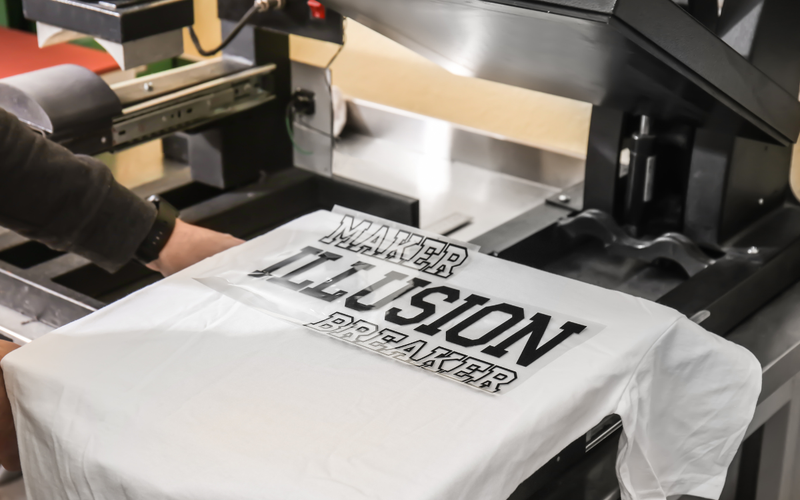
Print-on-demand tees are custom-designed t-shirts that are only manufactured after a customer places an order - meaning no upfront production, no warehouse full of unsold stock, and no wasted capital. The model connects sellers, designers, and print fulfillment providers in one seamless workflow.
Print-on-demand tees (POD tees) are t-shirts produced one at a time using direct-to-garment (DTG), sublimation, or screen printing technology. The defining feature is on-demand production: the shirt is only printed when a real order comes in. You, as a seller, never touch the physical product - you design it, list it, and a fulfillment partner like Printway handles everything from printing to packaging to shipping.
This model has fundamentally changed how independent creators, small businesses, and cross-border e-commerce sellers launch apparel brands. Instead of ordering 500 units of a design hoping it sells, you can list unlimited designs with zero inventory risk.
The POD workflow is straightforward:
The entire cycle, from order to delivery, typically takes 3–7 business days for domestic US orders. With providers like Printway maintaining production facilities in both the United States and Vietnam, fulfillment speed and cost are highly competitive across global markets.
The print-on-demand tee market has exploded over the past five years - and for good reason. POD removes almost every traditional barrier to launching a clothing brand.
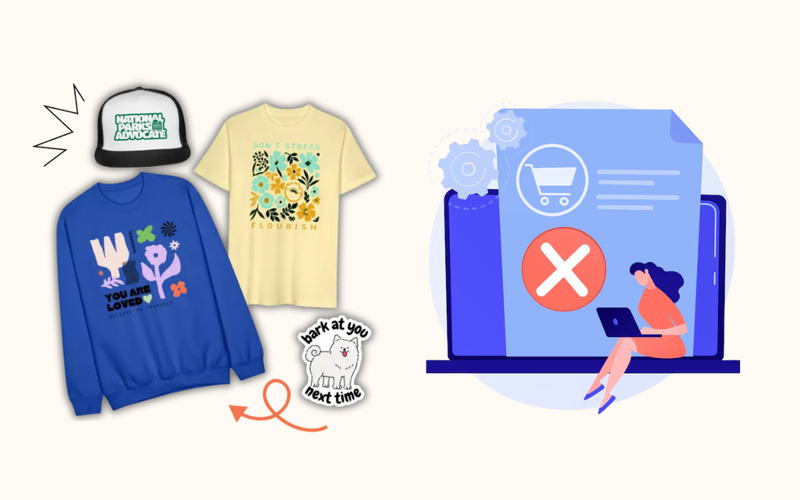
Traditional apparel brands require purchasing stock in bulk before making a single sale. A minimum order of 50–100 units per design per colorway is typical - costing thousands of dollars before you've validated any market demand.
With POD tees, that equation flips entirely. You can list hundreds of designs across dozens of niches without holding a single physical item. Storage costs are zero. Deadstock risk is eliminated. If a design doesn't sell, you simply unpublish it - no loss beyond the time spent creating it.
For cross-border e-commerce sellers on Etsy, Amazon, and Shopify, this dramatically lowers the capital required to test new markets and trend-based designs.
Getting a print-on-demand tee business off the ground can cost as little as $0–$50. Here's a realistic cost breakdown for a beginner:
td {white-space:nowrap;border:0.5pt solid #dee0e3;font-size:10pt;font-style:normal;font-weight:normal;vertical-align:middle;word-break:normal;word-wrap:normal;}
| Expense | Estimated Cost |
| Etsy shop setup | $0.20/listing |
| Shopify plan (basic) | ~$39/month |
| Design tools (Canva free tier) | $0 |
| POD platform integration | Free (Printway) |
| First product sample | $15–$30 |
Compare this to traditional retail - where inventory, warehouse space, and logistics can require $10,000+ upfront - and the appeal is obvious. POD tees make entrepreneurship accessible to anyone with a laptop and a creative idea.
One of the most powerful aspects of POD is how effortlessly it scales. Because fulfillment is handled by your provider, there's no operational bottleneck as orders increase. You don't need to hire warehouse staff, manage shipping logistics, or upgrade your facility.
Printway's production network in the US operates at a capacity of up to 50,000 orders per day, meaning even during peak seasons like Q4, Black Friday, and Christmas - when apparel sales typically spike 3–5x - your store can keep up without delays.
Sellers commonly start with 10–20 designs and scale to 500+ SKUs across multiple niches, all managed from a single dashboard. With Printway's multi-platform sync, you can run stores on Etsy, Shopify, Amazon, and TikTok Shop simultaneously - all from one place.
POD providers with international print networks allow sellers to reach customers across the US, UK, EU, Australia, and beyond - without dealing with customs paperwork, overseas warehousing, or local logistics partners. Printway supports fulfillment across these key markets, enabling truly borderless e-commerce for independent apparel brands.
Starting a POD tee business in 2025 is more accessible than ever. Follow these steps to go from idea to your first sale.
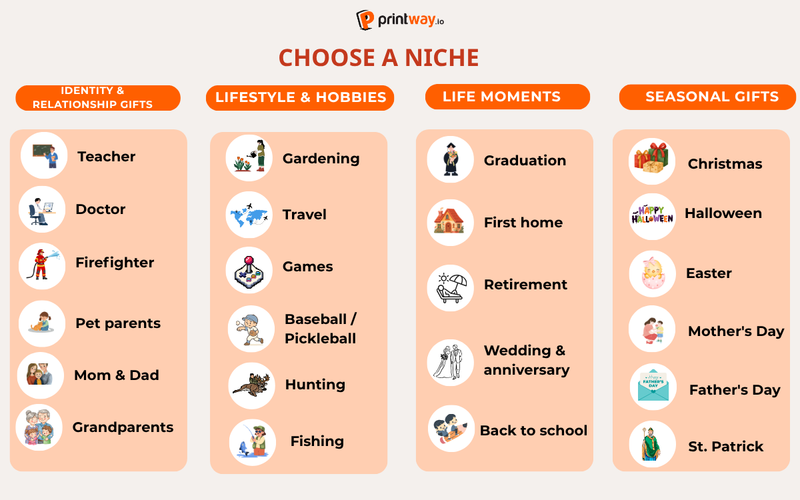
The most common mistake new POD sellers make is designing for everyone. Generic tees don't convert. Niche tees do.
A niche is a specific audience with a shared identity, interest, or passion. The tighter the niche, the more your designs resonate - and the cheaper your advertising becomes, because you're speaking directly to a defined community.
High-performing POD tee niches include:
Custom graphic tees live and die by design quality. You don't need to be a professional designer, but your designs should look intentional, readable, and on-brand for your niche audience.
Design tips for custom graphic tees:
For sellers without design skills, platforms like Fiverr and 99designs offer affordable freelance design services. Canva Pro also has a robust template library suited for creating simple but effective POD graphics.
Your POD provider is the operational backbone of your business. The right partner determines your profit margins, product quality, fulfillment speed, and customer satisfaction.
Key factors to evaluate:
Once you've chosen a provider, connect your storefront:
For Shopify:
For Etsy:
Printway integrates natively with: Etsy, Shopify, WooCommerce, Amazon, and TikTok Shop - making multi-channel management straightforward from a single dashboard.
Great products don't sell themselves. Here's how successful POD sellers drive traffic:
Choosing the right POD provider is one of the most important decisions for your business. Here's an honest comparison of the top options in 2025.
Best for: Cross-border sellers, Home Decor + Apparel combination, high-volume seasonal business
Printway is a comprehensive print-on-demand fulfillment platform founded in 2019, with production facilities in both the United States and Vietnam. Originally establishing itself as the #1 provider for Ornaments in the POD space, Printway has expanded to a catalog of 900+ products spanning Home Decor, Apparel, Accessories, and All Over Print categories.
Key advantages for tee sellers:
Not all t-shirts are created equal - and your choice of blank significantly impacts customer satisfaction, return rates, and brand perception.
Heavyweight tees (6+ oz/yd²) have surged in popularity as buyers move away from thin, fast-fashion garments. Styles like the Gildan Softstyle or Bella+Canvas 3001 offer a premium feel that justifies higher retail pricing - often $30–$45 in niche markets. The extra fabric weight also holds DTG ink better, resulting in sharper, more vibrant prints that last longer.
For POD sellers targeting masculine niches (construction, military, fitness, hunting), heavyweight tees signal quality and durability - attributes that translate to strong reviews and repeat buyers.
The oversized silhouette continues to dominate streetwear and casual fashion trends. Drop-shoulder, boxy-fit tees appeal to younger demographics, especially in music, art, and lifestyle niches. These styles typically retail for $35–$55 and photograph well for Instagram and TikTok content.
If your niche skews Gen Z or Millennial, offering an oversized option alongside a standard unisex fit can double your addressable audience without creating a new design.
Vintage-washed, acid-wash, and pigment-dyed tees tap into the nostalgia economy. These blanks feature distressed, faded aesthetics that make even simple text designs look intentional and "worn in." They pair especially well with retro typography, band-inspired graphics, and throwback pop culture references.
The vintage tee category has seen consistent year-over-year growth on Etsy and commands premium pricing - commonly $35–$60 per unit - making them excellent for improving average order value.
Premium cotton blanks (100% combed ring-spun cotton or tri-blend fabrics) represent the standard for quality-focused POD brands. The Bella+Canvas 3001 and Next Level 3600 are industry benchmarks. Softer, lighter, and with a better drape than standard cotton, these tees reduce return rates and drive stronger reviews.
For any seller positioning their brand in a quality-over-price bracket, premium cotton tees are non-negotiable.
Market research consistently shows that niche-specific POD tees outperform generic designs 5:1 in conversion rate and repeat purchase behavior. Here are the most consistently profitable niches in 2025.
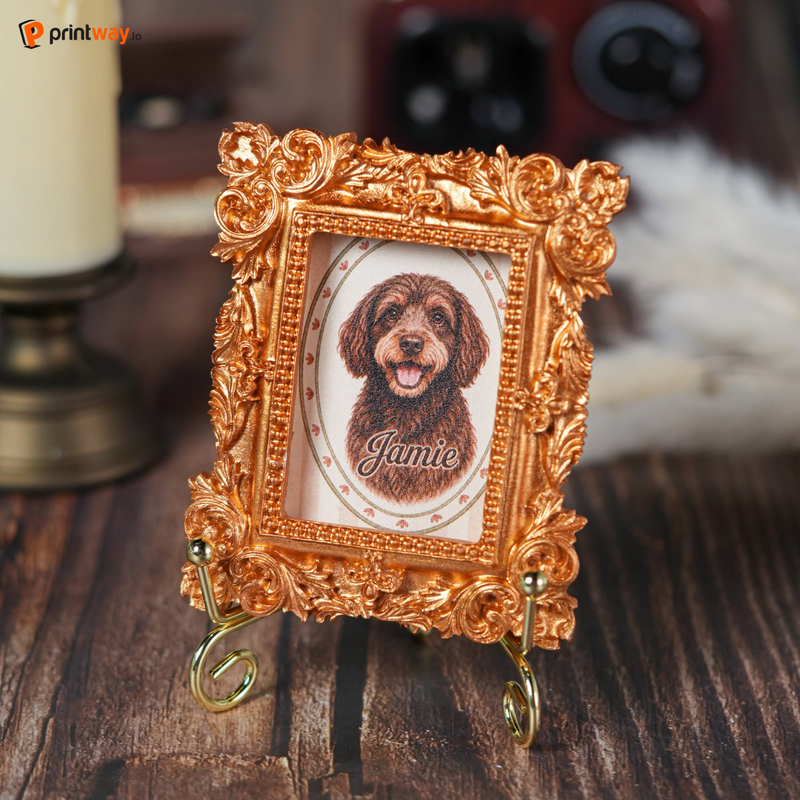
Pet niche tees are perennially among the top-selling categories on Etsy and Merch by Amazon. The key is specificity - "Dog Mom" is saturated, but "Corgi Mom" or "Rescue Dog Dad" targets a passionate sub-community willing to pay a premium to represent their identity.
Top sub-niches: specific dog breeds, cat breeds, "I just want to stay home with my [pet]" designs, custom pet portrait tees, pet memorial tees.
Gym-goers, yoga practitioners, runners, and cyclists are passionate buyers who regularly refresh their workout wardrobe. This niche benefits from strong repeat purchase rates - a customer who loves their first tee is very likely to return.
Evergreen angles: motivational slogans, specific workout styles ("powerlifter," "HIIT addict"), gym humor, body positive messaging, marathon/5K finisher tees.
Family-themed tees - particularly around roles like mom, dad, grandparent, and sibling - have massive year-round demand with significant seasonal spikes around Mother's Day, Father's Day, and Christmas. Personalization options (adding a child's name, birth year) increase average order value significantly.
Top performers: "Girl Mom," "Dog Dad," "Grandma of [number] grandkids," pregnancy announcement tees, new parent humor.
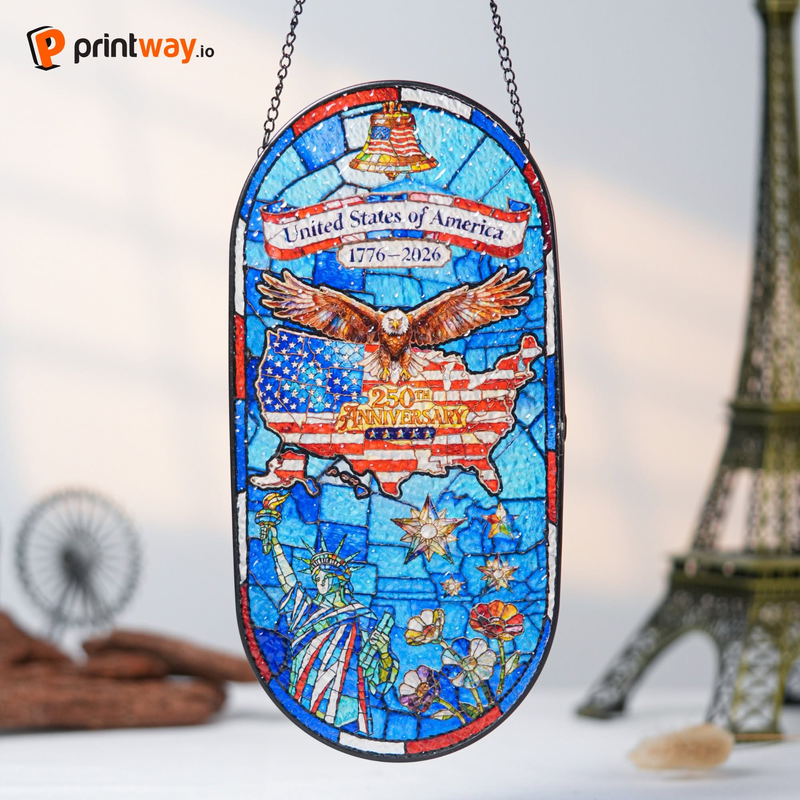
US patriotic tees peak sharply around July 4th and Memorial Day but sell steadily year-round. Regional pride tees ("Kentucky girl," "Texas born and raised") tap into strong local identity - and face less direct competition than national-level patriotic designs.
For international sellers: UK, Australian, and Canadian patriotic designs are significantly underserved relative to US competition, representing a genuine opportunity.
Gaming is a massive, high-engagement niche with a young demographic that actively expresses identity through clothing. While specific game IP (licensed characters) requires permission, gaming humor, playstyle identity ("support main," "I paused my game for this"), and console loyalty are fully open for POD.
Strong angles: gaming humor, late-night gaming culture, retro/classic gaming nostalgia, esports-inspired aesthetics.
Music lovers are among the most identity-expressive buyers in e-commerce. Genre-based tees - rather than specific artist/band tees (which require licensing) - are safe territory. Think metal fan aesthetics, jazz culture, "vinyl collector," or "I listen to bands you've never heard of."
Teacher-themed tees represent one of the most gift-purchase-heavy niches in the POD space. Back-to-school season (August–September) and the end-of-year teacher appreciation window (April–May) drive significant volume.
High-converting angles: subject-specific teacher tees (math teacher, science teacher), grade-specific designs (kindergarten teacher, 5th grade squad), humor-based ("I teach what's your superpower").
Yes - print-on-demand tees are genuinely profitable when approached with the right strategy. Typical margins run 30–45% per unit at standard retail pricing, though niche positioning, strong designs, and effective SEO can push margins higher.
A realistic example: a premium cotton tee with a base cost of $12–$15 (including production and shipping) can retail for $28–$38 in a defined niche. At $35 retail and $14 base cost, you're generating $21 gross profit per sale. Sell 10 per day and that's $75,000+ annual gross profit from a single product category.
Profitability depends on: design quality, niche selection, SEO and traffic, conversion rate, and platform fees (Etsy takes ~6.5% + $0.20 listing fee; Shopify charges monthly subscription). Most successful POD sellers reach profitability within 3–6 months of consistent effort.
The barrier to entry is remarkably low. Here's what you realistically need:
Absolutely. Shopify is one of the most powerful platforms for building a branded POD tee store. Here's how the process works:
Create your Shopify store and choose a plan ($39/month for Basic)
Install your POD provider's Shopify app (Printway offers a native Shopify integration)
Create products by uploading your designs - the app auto-generates variants, mockups, and syncs pricing
Configure your payment gateway, shipping settings, and domain
Launch and drive traffic through SEO, social media, paid ads, or email
The advantage of Shopify over Etsy is full control - your own storefront, customer data, brand identity, and pricing structure. It requires more marketing effort to drive traffic (no built-in marketplace audience), but the long-term brand equity is significantly greater.
Yes, and Etsy is often the recommended starting point for new POD sellers because of its massive built-in audience of buyers already searching for custom and niche-specific products.
Key advantages of Etsy for POD tees:
Printway integrates directly with Etsy, making it easy to list your tees, sync orders, and manage fulfillment without manually copying order details. Most successful cross-border POD sellers run both an Etsy store and a Shopify store simultaneously - Etsy for marketplace-driven discovery traffic, Shopify for brand building and higher-margin direct sales.
Ready to launch your print-on-demand tee business? Explore Printway's apparel catalog and get started with zero inventory today.