
Hanh Hoang
Jun 11 2026 •10 minutes
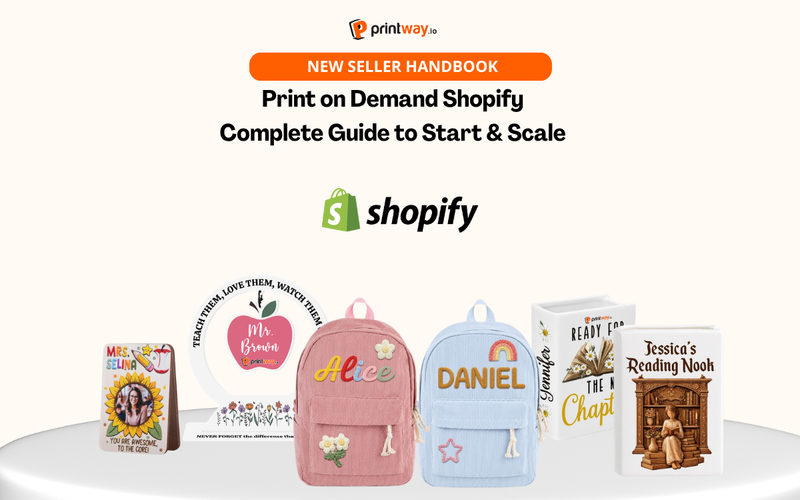
The print on demand Shopify model has moved well beyond side-hustle territory. With the global POD market valued at approximately $12.96 billion in 2025 and forecast to grow at 26% CAGR through 2034, sellers who combine Shopify's storefront infrastructure with the right fulfillment partner are building real, scalable businesses without touching a single unit of inventory.
This guide covers everything you need: what the model is, how to set up your first store, which products sell best, how to choose suppliers for Australia and Canada, and what makes Printway a strong global fulfillment partner for cross-border sellers.
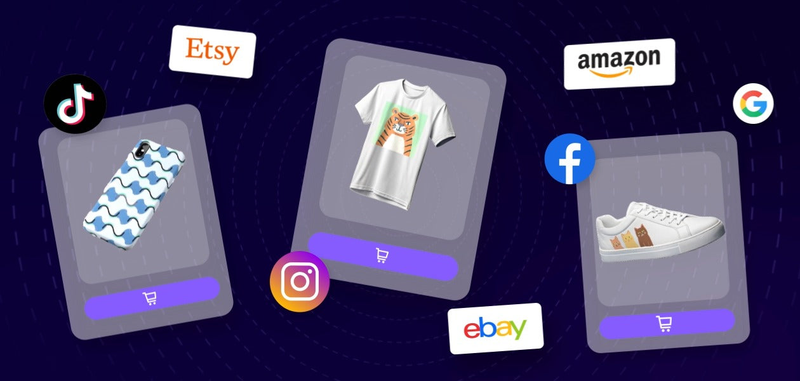
Print on demand Shopify is the combination of two complementary systems: Shopify as the customer-facing storefront and a POD supplier as the back-end fulfillment engine. When a customer places an order on your Shopify store, the order is automatically routed to your POD partner, who prints the product, packages it, and ships it directly to the buyer — all under your brand name.
The model works because Shopify handles storefront, checkout, and payment processing, while platforms like Printway handle production and logistics. Neither side needs to see the other. For sellers, this creates a fully automated sales pipeline that scales without proportional increases in overhead.
Key characteristics of the print on demand Shopify model:
For cross-border sellers, the print on demand Shopify setup is particularly powerful. Platforms like Printway offer multi-country print networks, so your Shopify store can serve customers in the US, UK, Australia, and Canada from production facilities closest to the buyer — reducing both cost and shipping time.
Starting a print on demand Shopify store does not require technical expertise or significant capital. The process follows five structured steps, each of which builds on the last.
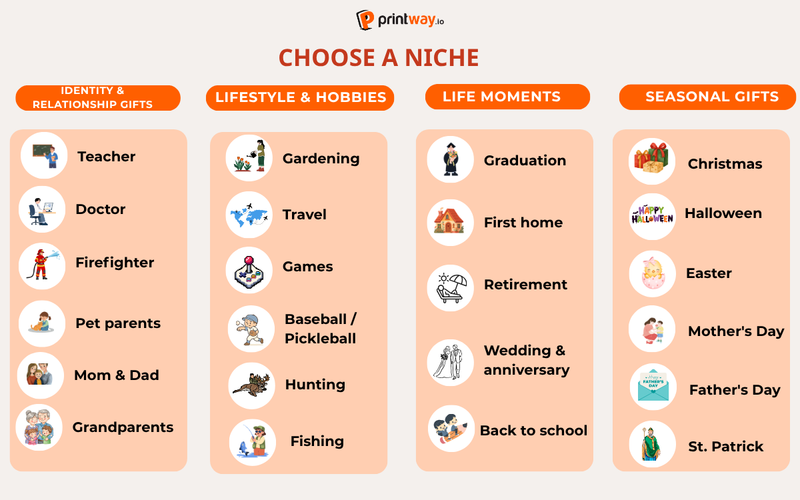
A niche defines your audience and shapes every product decision you make. The most profitable Shopify POD stores are not general — they serve a specific community: dog lovers, nurses, hiking enthusiasts, new homeowners, or fans of a particular aesthetic. A tight niche makes targeting easier, lowers ad costs, and creates a natural reason for repeat purchases.
When evaluating a niche, look for three signals: active communities on social platforms, a track record of spending on custom/personalized products, and room for multiple product categories (apparel, home decor, accessories) to support basket growth.
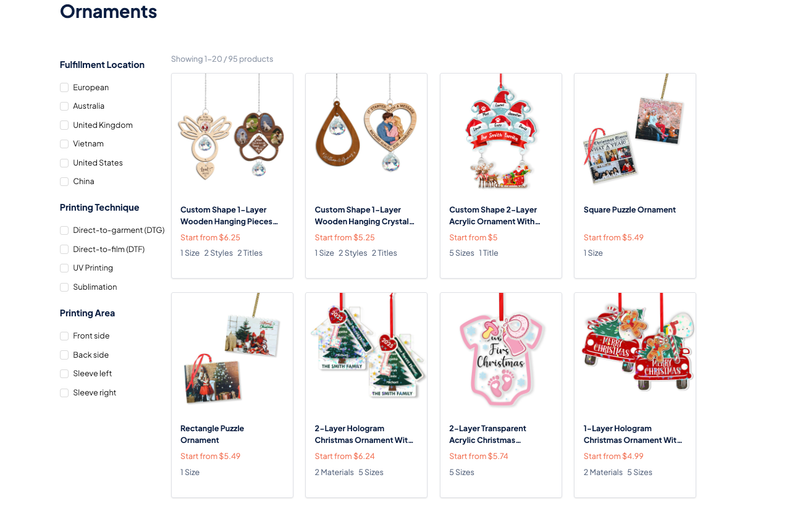
Your supplier determines product quality, shipping speed, and your ability to serve different geographic markets. For sellers targeting the US, Australia, or Canada, prioritize suppliers with print facilities in or near those markets to keep domestic shipping times competitive. Key criteria: production capacity during peak seasons, product catalog breadth, integration reliability with Shopify, and support for custom branding.
Printway, for example, operates print facilities in both the US and Vietnam, supports global fulfillment across the US, UK, EU, Australia, and China, and integrates directly with Shopify — all from a single dashboard. With a capacity of 30,000 orders per day, it is built to handle scale during Q4 and other peak periods.
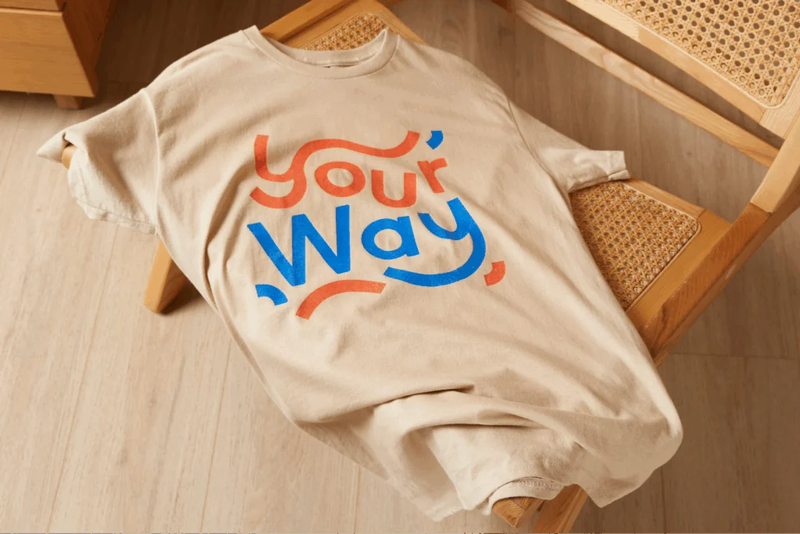
Design quality is the primary differentiator in a commoditized product category. Tools like Adobe Illustrator, Canva Pro, or Figma are standard starting points. For sellers without design skills, hiring from platforms like 99designs or Fiverr is a cost-effective alternative. Regardless of tool, always request print-ready files: 300 DPI minimum, correct color profile (CMYK for print), and dimensions sized to the actual product specifications provided by your supplier.
Shopify's setup process is straightforward. Select a theme optimized for product-forward layouts (Dawn or Refresh work well for POD catalogs), configure your payment gateway, and set up shipping zones that correspond to your supplier's fulfillment regions. For sellers working with Printway, the Shopify integration page provides a step-by-step connection guide.
→ Connect Printway to Your Shopify Store →
Once your supplier is connected to Shopify, all new orders will route automatically for production and shipping. Before going live, place test orders across your product range to verify print quality, packaging, and delivery time. Configure automated order confirmation and tracking emails so customers receive updates without manual intervention. After launch, monitor your first 30 days closely — this is the period to catch any fulfillment edge cases before order volume grows.
Not all product categories perform equally on Shopify. Data from 2025 and 2026 consistently points to four categories that drive the highest volume and margin in the print on demand Shopify space.
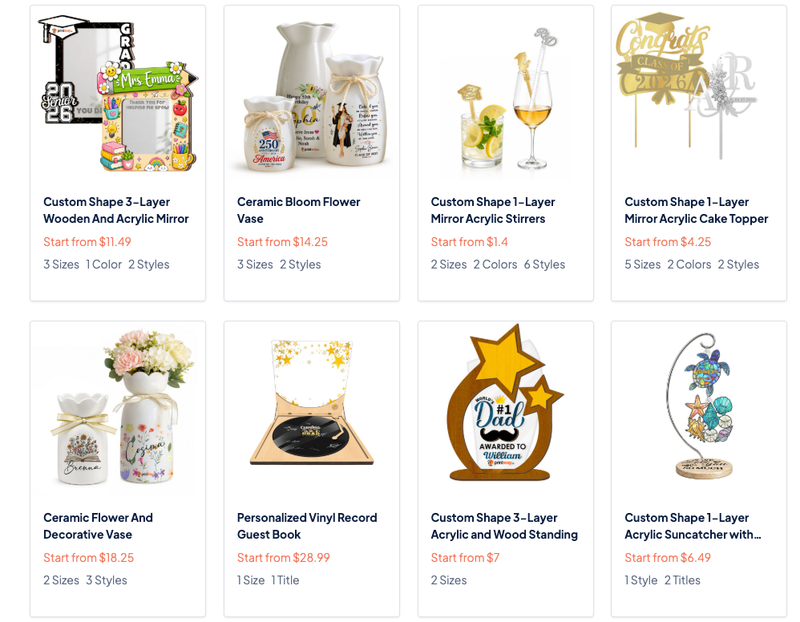
Home decor is the fastest-growing segment in POD right now. Custom canvas prints, blankets, pillows, wall art, and ornaments appeal to the gift-buying market and personal expression market simultaneously. Printway holds a #1 market position in ornament production and offers 900+ SKUs across the home decor category — making it the strongest option for sellers focused here. Average order values are higher than apparel, and seasonal demand is highly predictable, which makes inventory planning easier.
Mugs remain one of the top-selling POD products globally. They are low-cost to produce, carry strong margins, and serve as impulse buys with high gifting potential. Posters and prints are similarly strong performers in the decor segment, particularly for niche audiences (astronomy fans, vintage travel, botanical art). Both categories are well-suited to running paid traffic due to their broad demographic appeal and accessible price points.
Apparel is the category most people start with, and for good reason. The custom t-shirt printing market alone was valued at $7.55 billion in 2024. T-shirts serve as a low-barrier entry point for new stores, and hoodies command higher price points ($40–$65 retail) that support healthier margins. For apparel, DTG (direct-to-garment) printing delivers the best quality on complex designs; embroidery works better for branded or minimalist designs.
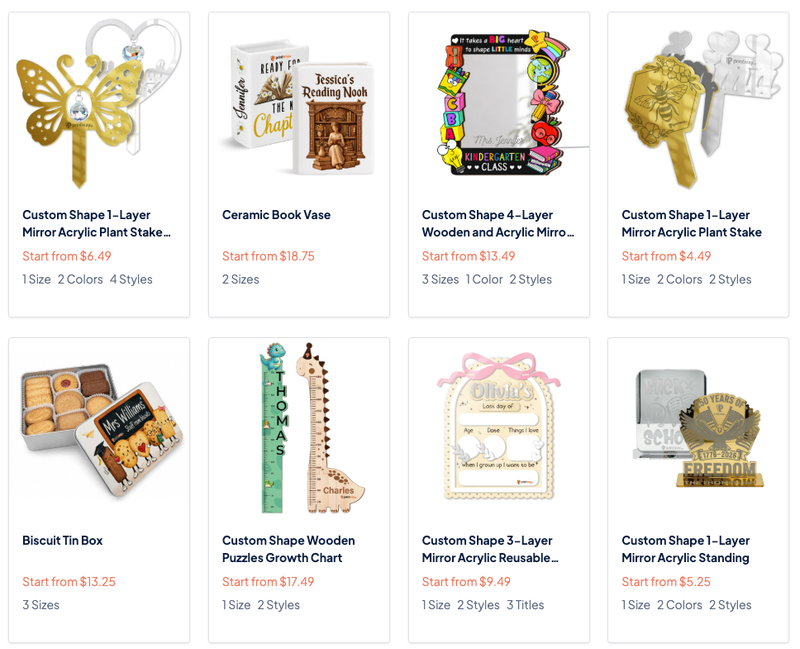
Personalization is the single most powerful driver in POD right now. According to a 2026 Shopify report, 61% of consumers are more likely to purchase from brands offering personalized product experiences. Custom name products, photo gifts, anniversary items, and pet portraits convert exceptionally well during seasonal peaks (Valentine's Day, Mother's Day, Christmas). Sellers who build personalization into their product catalog from the start have a structural advantage over generic print stores.
Shopify's global reach makes it natural for POD sellers to expand beyond the US. Two markets — Australia and Canada — represent significant opportunities due to their high consumer purchasing power, English-language market access, and growing DTC culture. The key challenge in both is fulfillment: choosing the right supplier structure to keep shipping times competitive without inflating base costs.
Australia is a high-value POD market. Statista projects Australian ecommerce revenue will reach $42.22 billion in 2025, and consumer demand for custom, personalized products is particularly strong in home decor and gifting categories. The main operational challenge is that Australia has fewer local POD production facilities than the US or EU, so most sellers depend on international supply chains.
For sellers targeting Australian buyers, two fulfillment strategies work best:
Recommended suppliers for Australia:
Australia's ecommerce consumers are accustomed to paying a premium for quality and customization. Sellers who invest in product photography, clear sizing guides, and branded packaging tend to see stronger repeat purchase rates in this market.
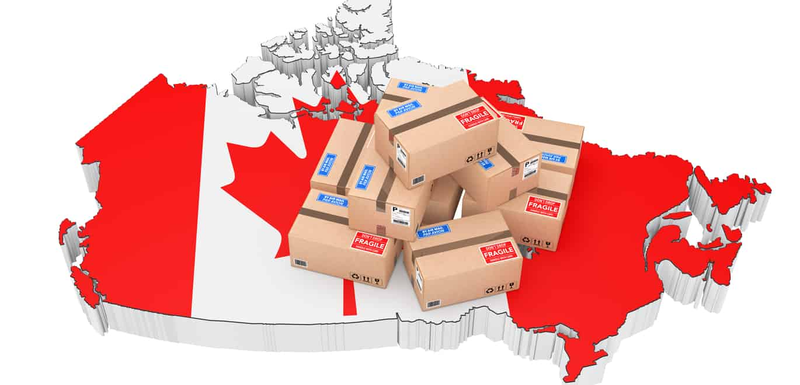
Canada is North America's second-largest ecommerce market and shares cultural alignment with the US, making it a natural expansion target for sellers who already have a US-facing store. The main consideration is shipping: cross-border shipping from US facilities into Canada can be slow and add customs friction. Sellers who want to serve Canadian buyers well need a fulfillment strategy that either uses Canadian production facilities or minimizes cross-border touchpoints.
Fulfillment considerations for Canada:
Recommended suppliers for Canada:
Canada's POD market skews toward personalized gifts, home decor, and seasonal products — which aligns directly with Printway's product strength. Sellers can run a single Shopify store and manage US and Canadian orders through the same Printway integration.
Among the suppliers available for Shopify integration, Printway stands out for sellers building cross-border businesses that need consistent quality, competitive cost, and the production capacity to handle scale.
Print on demand Shopify is a fulfillment model where custom products are manufactured only after a customer places an order. The seller's Shopify store connects to a third-party POD supplier, which handles printing, packaging, and shipping. The model eliminates inventory risk and enables cross-border ecommerce at scale.
The global print on demand market reached $12.96 billion in 2025 and is projected to grow at 26% CAGR through 2034. Shopify dominates platform usage in the POD space, and software integrations account for 54.2% of total market value — reflecting how central API-based workflows have become. Key product categories include home decor, apparel, mugs, and personalized gifts.
Printway is a print-on-demand supplier founded in 2019, offering 900+ products across home decor, apparel, and accessories. The company operates print facilities in the US and Vietnam, supports fulfillment in markets including the US, UK, EU, Australia, and China, and maintains a daily production capacity of 30,000 orders. Printway integrates natively with Shopify, Etsy, Amazon, WooCommerce, and TikTok Shop. |
While Shopify gives you full control over your brand and customer experience, many new sellers start their POD journey on Etsy to take advantage of its built-in marketplace traffic. Learn more in our Print on Demand Etsy guide.
Is Shopify POD profitable?
Yes — print on demand on Shopify is profitable when you choose the right niche, control your base costs, and invest in marketing. Margins typically range from 20–40% depending on the product category and supplier. Home decor and personalized gifts tend to yield higher margins than basic apparel. Success depends more on design quality and targeting than on the platform itself.
How much does it cost to start a POD Shopify store?
You can start with as little as $29–$79/month for a Shopify subscription, with no upfront product costs. POD suppliers charge per order, so your cost of goods only occurs when a sale is made. Factor in domain registration (~$15/year) and marketing spend. Many sellers launch with under $200 in total startup costs.
What is the best print on demand app for Shopify? T
he best app depends on your product focus and target markets. Printway is ideal for sellers prioritizing home decor, ornaments, and global fulfillment including Australia and the US. Printful and Printify are strong for apparel. Gelato excels for European and global distribution. Evaluate based on product catalog, pricing, and fulfillment coverage for your specific target market.
How long does print on demand take to ship on Shopify?
Production time is typically 2–5 business days, and shipping time depends on the destination market and supplier network. For US domestic orders, most suppliers deliver within 5–10 business days. Sellers using Printway's US print facilities can reach US customers in 3–7 business days. For Australia and Canada, timelines depend on whether local or international production is used.
Do I need design skills to start a Shopify POD store?
No. You can hire designers on platforms like Fiverr or 99designs, use AI design tools, or source royalty-free artwork licensed for commercial printing. What matters more than creating designs yourself is understanding what your niche audience responds to. Many successful POD stores are run by non-designers who are skilled at market research and audience targeting.
Can I use Printway with Shopify for Australian orders?
Yes. Printway supports global fulfillment including the Australian market. Its multi-country print network routes orders efficiently to serve AU customers, helping sellers balance delivery speed and cost without needing a separate supplier or store setup for that region.
How do I scale a print on demand Shopify store?
Scaling a Shopify POD store follows three phases: first, validate product-niche fit with organic traffic or small paid tests; second, reinvest into paid advertising (Meta, Google Shopping, TikTok) once you have a proven winner; third, expand your product catalog and geographic reach. Connecting a high-capacity supplier like Printway early ensures your fulfillment infrastructure can handle volume spikes without degrading customer experience.
Print on demand Shopify remains one of the most accessible and scalable ecommerce models available in 2026. With the right niche, a reliable supplier, and a store built around your audience, it is possible to build a profitable cross-border business without inventory risk. Whether you are targeting US buyers, expanding into Australia, or building a North American presence that includes Canada, the critical variable is always fulfillment — and choosing a partner with the production capacity and market coverage to support your ambitions.
Printway has supported cross-border sellers since 2019, handling up to 30,000 orders per day across the US, UK, EU, Australia, and China. With 900+ products, Shopify integration, and the #1 position in ornament production, it is built for sellers who want to scale — not just start.
Start selling with Printway today → Connect Printway to Shopify