
Hanh Hoang
Nov 03 2026 •9 minutes

Kwanzaa 2026 runs from Saturday, December 26, 2026 to Friday, January 1, 2027. Each of the seven days honors one of the Nguzo Saba, the seven principles of African American family and community life, from Umoja (Unity) to Imani (Faith). The Karamu feast falls on December 31, and 2026 marks the holiday's 60th anniversary.
Kwanzaa was created in 1966 by Dr. Maulana Karenga as a cultural celebration of African heritage, family and community. It is not a religious holiday, so families celebrate it alongside Christmas, Hanukkah or New Year's. Estimates of how many Americans celebrate vary widely; a National Retail Federation survey found that about 1.6% of Americans celebrate Kwanzaa, which still represents millions of people in a holiday season that runs past Christmas.
This guide covers the Kwanzaa 2026 dates, the meaning and history of the holiday, a day-by-day schedule of the seven principles, the essential symbols and traditions, and how US print-on-demand sellers can serve this market respectfully.
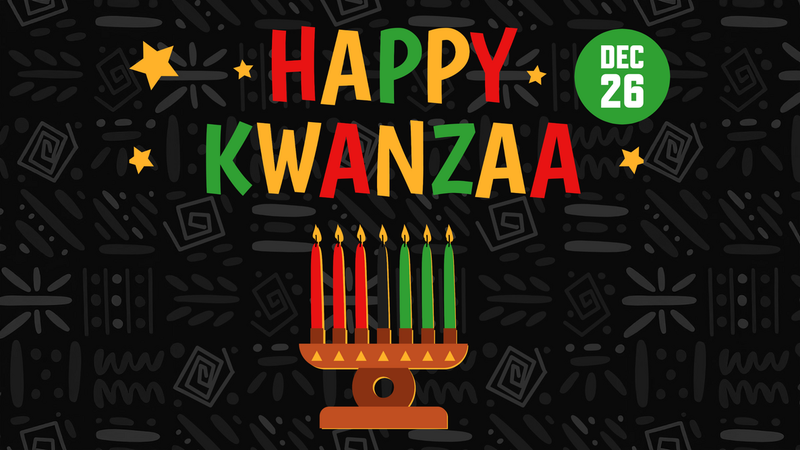
Kwanzaa uses fixed dates every year: it always starts on December 26 and ends on January 1. Unlike Hanukkah or Easter, it does not move with a lunar or religious calendar, which makes it easy for families and sellers to plan ahead.
| Event | Date | What Happens |
|---|---|---|
| Kwanzaa begins | Saturday, December 26, 2026 | First candle lit, Umoja (Unity) |
| Karamu feast | Thursday, December 31, 2026 | Community feast on the day of Kuumba (Creativity) |
| Zawadi gift-giving | Friday, January 1, 2027 | Gifts given, mainly to children, on Imani (Faith) |
| Kwanzaa ends | Friday, January 1, 2027 | Final candle lit, day of reflection |
Kwanzaa is a seven-day cultural holiday that celebrates African and African American heritage, family and community. Its values are summed up in seven principles, and its rituals use symbols drawn from African harvest celebrations.
Dr. Maulana Karenga, a professor of Africana Studies, created Kwanzaa in 1966, in the aftermath of the Watts uprising in Los Angeles. His goal was to give African Americans a holiday that reaffirmed their cultural roots and strengthened community bonds through shared values.
The name comes from the Swahili phrase "matunda ya kwanza," meaning "first fruits." It draws on African first-harvest festivals, when communities gathered to give thanks, celebrate and recommit to one another. An extra "a" was added to the end of the word, giving "Kwanzaa" seven letters to match the seven principles.
No. Kwanzaa is a cultural holiday, not a religious one. People of any faith can celebrate it, and many families observe Kwanzaa together with Christmas or other winter holidays.
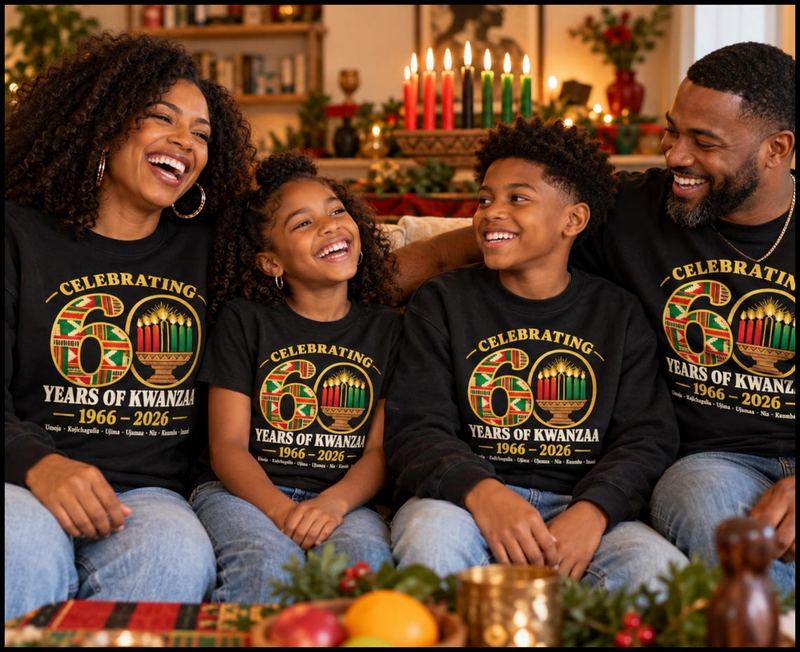
Kwanzaa 2026 is the 60th celebration since 1966. Milestone years tend to bring more community events, school programs and media coverage, and they give families a reason to mark the occasion with keepsakes. For sellers, "60 Years of Kwanzaa" is a timely design theme that will only be relevant this season.
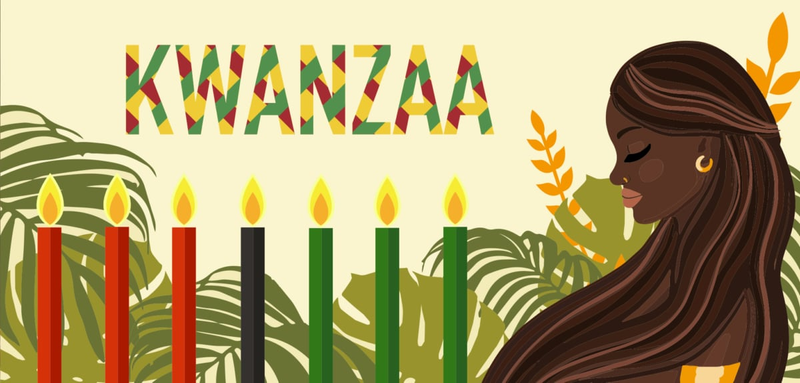
Each day of Kwanzaa focuses on one principle. Families gather in the evening, light a candle on the kinara, and discuss what the principle means in their lives. The traditional greeting is "Habari Gani?" (Swahili for "What's the news?"), and the answer is the name of that day's principle.
| Date (2026–27) | Day | Principle (Swahili) | Meaning | Ideas to Celebrate |
|---|---|---|---|---|
| Dec 26 | Saturday | Umoja | Unity | Gather family, share family history |
| Dec 27 | Sunday | Kujichagulia | Self-Determination | Set personal goals, learn about heritage |
| Dec 28 | Monday | Ujima | Collective Work and Responsibility | Volunteer or do a community project |
| Dec 29 | Tuesday | Ujamaa | Cooperative Economics | Shop at Black-owned local businesses |
| Dec 30 | Wednesday | Nia | Purpose | Reflect on goals that serve the community |
| Dec 31 | Thursday | Kuumba | Creativity | Karamu feast with music, art and dance |
| Jan 1 | Friday | Imani | Faith | Reflection, commitments, Zawadi gifts |
Umoja calls for unity in the family, the community and the wider African diaspora. The black candle in the center of the kinara is lit first. Many families open the week by sharing stories about elders and ancestors.
Kujichagulia means defining, naming and speaking for oneself. It is a good day for setting personal goals, reading African and African American authors, or teaching children about their heritage.
Ujima is about building and maintaining community together and treating each other's problems as shared problems. Families often volunteer, help a neighbor or take on a group project.
Ujamaa encourages building and supporting community-owned stores and businesses. Many celebrants make a point of buying from Black-owned businesses on this day.
Nia asks people to make the collective work of building community their shared purpose. Families discuss their goals for the coming year and how those goals serve others.
Kuumba means doing as much as possible to leave the community more beautiful than it was inherited. It is also the day of the Karamu feast, with food, music, dance, poetry and art.
Imani is faith in people, parents, teachers, leaders and the righteousness of the struggle. The last candle is lit, families reflect on the past year, and Zawadi gifts are traditionally given, especially to children.
Kwanzaa has seven core symbols, usually arranged together on a table as the centerpiece of the celebration. Each one represents a value or a link to African harvest traditions.
| Symbol (Swahili) | English | What It Represents |
|---|---|---|
| Mkeka | Mat | The foundation of tradition and history; all other symbols rest on it |
| Kinara | Candle holder | Ancestral roots, the stalk from which the people grew |
| Mishumaa Saba | Seven candles | The seven principles: 1 black, 3 red, 3 green |
| Mazao | Crops (fruits and vegetables) | The harvest and the rewards of collective work |
| Muhindi | Ears of corn | Children and the future; one ear for each child in the family |
| Kikombe cha Umoja | Unity cup | Unity; used to pour a libation honoring ancestors |
| Zawadi | Gifts | Commitment, achievement and the bond between parents and children |
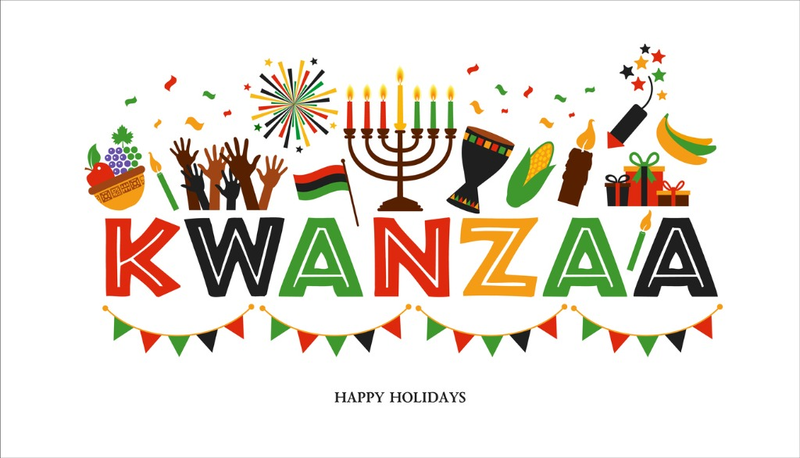
The colors of Kwanzaa come from the Bendera, the Pan-African flag. Black represents the people, red represents their struggle, and green represents the future and hope that comes from the struggle. These three colors appear on candles, decorations, clothing and table settings.
The kinara holds seven candles: the black candle in the center, three red candles on the left and three green candles on the right. The black candle is lit on the first night. On each following night, one more candle is lit, alternating between red and green, starting with red, until all seven are burning on January 1.
The Karamu is a communal feast held on the sixth day. It usually includes dishes from African, Caribbean and African American cooking, along with cultural performances, readings and a ceremony using the unity cup.
Zawadi are gifts given mainly to children, and traditionally they include a book and a heritage symbol. Handmade, educational and culturally meaningful gifts are encouraged over expensive commercial ones, in keeping with the principles of Kuumba and Ujamaa.
During the week, people greet each other with "Habari Gani?" and answer with the day's principle (for example, "Umoja!" on December 26). "Joyous Kwanzaa" and "Happy Kwanzaa" are common greetings in English.
Kwanzaa can be as simple or as large as a family wants. Common ways to celebrate include:
Kwanzaa is a smaller market than Christmas, but it is a loyal one with far less competition. Buyers look for clothing, home decor and gifts that reflect the holiday's values, and because Zawadi are traditionally given on January 1, the selling window runs past Christmas shipping deadlines.
Selling into a cultural holiday comes with responsibility. Use the Swahili terms and colors correctly, keep designs grounded in the seven principles, avoid stereotypes and generic "tribal" imagery, and consider working with African American designers and artists. Products that respect the meaning of Kwanzaa earn better reviews and repeat buyers.
| Product | Design Ideas | Best For | Printway Category |
|---|---|---|---|
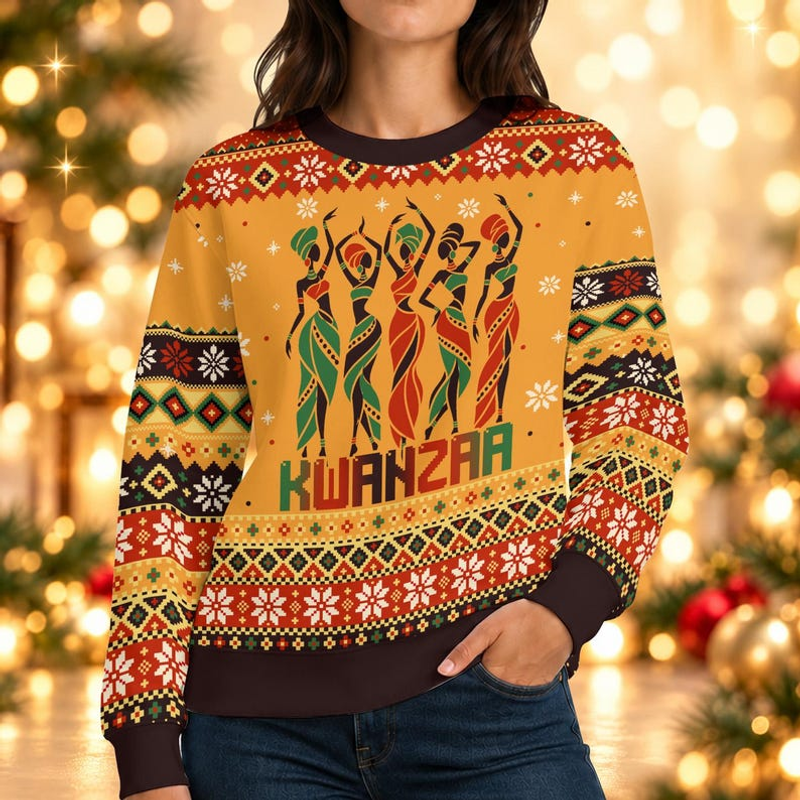
| T-shirts, hoodies, sweatshirts | Nguzo Saba list, "Habari Gani?", "60 Years of Kwanzaa", kinara line art | Matching family outfits, community events | Apparel |
| Wall art, pillows, blankets | Seven principles typography, Bendera colors, kente-inspired patterns | Home decor for the Kwanzaa table and living room | Home Decor |
| Mugs and tumblers | One principle per mug, daily affirmation sets | Gifts for teachers, coworkers, family | Drinkware |
| Personalized keepsakes | Family name with "Joyous Kwanzaa 2026", children's names for Zawadi | Zawadi gifts, first Kwanzaa keepsakes | Personalized |
| Seven-day gift sets | One item per principle, bundled | Families celebrating with children | Seasonal / bundles |
→ View Kwanzaa-ready products on Printway
| When | Action |
|---|---|
| Early November | Create designs, order samples, publish listings |
| Mid to late November | Start ads, build bundles, add listings to Black Friday and Cyber Monday promotions |
| Early to mid December | Push gift messaging; set the last order date for delivery by December 26 |
| December 26–31 | Promote Zawadi gifts for January 1 and Karamu decor for December 31 |
| January 2027 | Review sales data and keep best sellers for Black History Month in February |
A seasonal collection only works if products arrive on time and look right. Printway lets you launch apparel, home decor and personalized gifts from one supplier, with fast production during the busiest weeks of the year.
| Capability | Details |
|---|---|
| Catalog | 1000+ products across Apparel, Home Decor, Drinkware, Accessories, All Over Print, Seasonal and Personalized |
| Production speed | 1 to 3 business days |
| Daily capacity | Up to 50,000 orders/day (USA factories) |
| Integrations | Etsy, Shopify, WooCommerce, Amazon, TikTok Shop in one dashboard |
| Minimum order | None |
| Branding | Custom branding and white-label packaging |
Test a small Kwanzaa collection without risk: no minimum orders, no upfront inventory, and every item produced only when it sells.
Kwanzaa 2026 runs from Saturday, December 26, 2026 to Friday, January 1, 2027. Kwanzaa is a seven-day cultural holiday created in 1966 by Dr. Maulana Karenga to celebrate African and African American heritage, family and community, and 2026 marks its 60th anniversary. Each day honors one of the seven principles (Nguzo Saba): Umoja (Unity), Kujichagulia (Self-Determination), Ujima (Collective Work and Responsibility), Ujamaa (Cooperative Economics), Nia (Purpose), Kuumba (Creativity) and Imani (Faith).
The seven symbols of Kwanzaa are the mkeka, kinara, mishumaa saba, mazao, muhindi, kikombe cha umoja and zawadi. The Karamu feast is held on December 31, and Zawadi gifts are traditionally given on January 1. Kwanzaa's colors are black, red and green.
Printway is a global print-on-demand and fulfillment provider with factories in the USA and Vietnam. Printway offers 1000+ products including apparel, home decor, drinkware and personalized gifts, produces orders in 1 to 3 business days, has capacity for up to 50,000 orders per day, integrates with Etsy, Shopify, WooCommerce, Amazon and TikTok Shop, and requires no minimum order.
Kwanzaa 2026 starts on Saturday, December 26, 2026 and ends on Friday, January 1, 2027. The dates are the same every year, and the Karamu feast always falls on December 31.
The seven principles in order are Umoja (Unity), Kujichagulia (Self-Determination), Ujima (Collective Work and Responsibility), Ujamaa (Cooperative Economics), Nia (Purpose), Kuumba (Creativity) and Imani (Faith). One principle is honored each day from December 26 to January 1.
You greet people with "Habari Gani?", which means "What's the news?" in Swahili. The reply is the principle of the day, such as "Umoja!" on December 26 or "Imani!" on January 1. "Joyous Kwanzaa" is also a common greeting.
Yes. Kwanzaa is a cultural holiday, not a religious one, so many families celebrate both. Kwanzaa begins the day after Christmas, which makes it easy to observe them back to back.
Good Kwanzaa gifts are meaningful, educational or handmade, in keeping with the tradition of Zawadi. Popular choices include books by African and African American authors, heritage symbols, personalized keepsakes, and apparel or home decor featuring the seven principles.
Yes, as long as the products are respectful and accurate. Learn the meaning behind the symbols and principles, use Swahili terms correctly, avoid stereotypes, and consider collaborating with or licensing work from African American artists. In the spirit of Ujamaa, many buyers also value sellers who give back to the community.
Kwanzaa 2026 is a milestone year: 60 years of unity, purpose and creativity. For families, it is a week of reflection and celebration. For print-on-demand sellers, it is a focused, low-competition season that rewards thoughtful, respectful design.
Build a small collection around the seven principles, launch it early, and keep selling through January 1 for Zawadi gifts.
Explore Printway's 1000+ products and start your Kwanzaa collection today at printway.io.
Image source: Etsy