
Hanh Hoang
Jan 26 2026 •18 minutes
When asking “is print-on-demand profitable in 2026?” or “is print on demand a good business...” the answer isn’t a simple yes or no - profitability depends on market demand, margin structure, cost factors, and smart pricing strategy. If all these elements align well, print-on-demand (POD) can be a highly profitable ecommerce business model this year and beyond.
Let’s break down the key factors that determine whether POD is truly profitable in today’s competitive landscape.
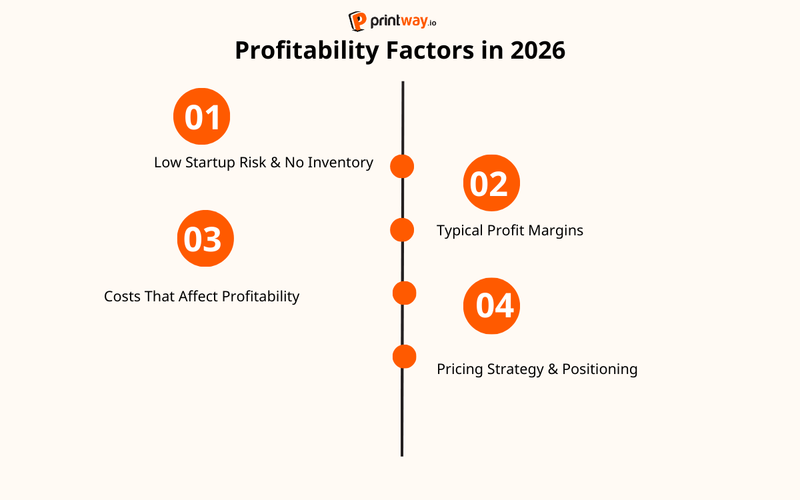
To assess if “is print on demand a good business”, we first need to understand market demand.
Summary: The demand environment in 2026 remains favorable, which supports the argument that print-on-demand can be profitable when sellers align with market trends and buyer behavior.
Profit margin is one of the clearest indicators of whether POD is profitable.
Common Margin Ranges
Products with Higher Margins
Brand Positioning and Premium Pricing
Shops that build a recognizable brand and unique design identity often price products higher than general marketplaces, leading to higher effective profit per sale.
Summary: With careful product selection and strategy, POD can maintain healthy profit margins in 2026 - particularly on platforms with lower acquisition costs.
To hve the answer for “is print on demand a good business”, we have to understand that profitability isn’t just about revenue - costs matter. POD sellers must understand the expenses that impact their bottom line.
Platform Fees: Selling on marketplaces like Etsy, Shopify, or Amazon involves fees:
These fees vary but can significantly affect net profit if not factored into pricing.
Summary: Understanding and optimizing cost drivers is essential to ensure POD stays profitable rather than becoming a low-margin or break-even venture.
Finally, how you price and position your products greatly influences whether POD becomes a profitable business.
Summary: Strategic pricing and clear brand positioning are what turn a POD side hustle into a profitable business in the long term.
If you're wondering whether print-on-demand is worth it in 2026, the short answer is: yes - but only if you treat it as a real business, not a shortcut to easy money. POD remains one of the most accessible online business models today, offering low risk, strong scalability, and a proven path to building long-term ecommerce income. However, it also requires commitment, skill development, and ongoing optimization.
Below is a breakdown of what makes POD worth pursuing - and what challenges to expect.
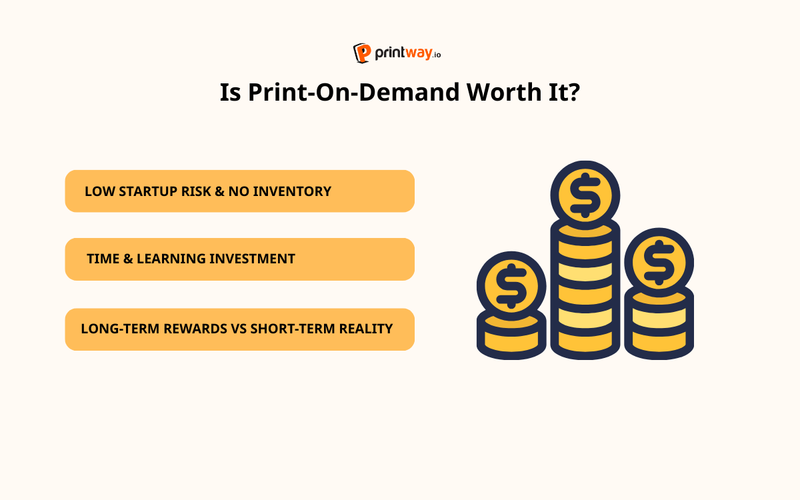
One of the biggest reasons POD is worth starting in 2026 is its ultra-low barrier to entry.
2.1.1 - No Inventory or Upfront Product Costs
You don’t need to buy stock or manage warehousing. Every product is produced only after a customer places an order. This eliminates:
For beginners, this is a huge advantage - you can start creating products and testing niches with minimal financial pressure.
2.1.2 - Startup Costs Are Extremely Low
Most POD businesses launch with simple tools:
Compared to traditional ecommerce - which requires thousands of dollars for inventory - POD is one of the lowest-risk ways to start selling online.
2.1.3. Great for Testing Ideas & Niches
POD’s flexibility means you can experiment with:
This “test fast without risk” model is a major reason POD is still worth starting today.
Although POD is low-risk, it’s not effortless. Many people expect quick profits, but POD in 2026 requires skill and persistence.
2.2.1- Research Is Essential:
Successful sellers must research:
This upfront preparation separates profitable stores from struggling beginners.
2.2.2- Design Quality Matters More Than Ever With many sellers using similar tools, differentiation comes from:
In 2026, generic designs rarely succeed - consumers want unique or meaningful items.
2.2.3 - Marketing Is a Required Skillset POD sellers must learn:
Those who treat POD like a serious business have far better outcomes.
2.2.4 - It Takes Time to See Results
POD isn’t a “launch today, profit tomorrow” model. Expect to spend weeks or months:
This learning curve is why many quit too early - but those who push through often see strong returns.
To answer whether POD is worth it, you need to weigh the long-term upside against the short-term effort.
2.3.1 - POD Can Scale Exceptionally Well.
Sellers who find winning niches can scale from a few orders per week to hundreds per day. Because fulfillment is automated, scaling is limited mainly by:
This makes POD a sustainable business model with high growth potential.
2.3.2 - Repeatable Systems Lead to Consistent Revenue.
These systems create predictable income, making POD a viable long-term business.
2.3.3 - Casual Sellers Often Struggle Those who treat POD like a hobby usually:
For them, POD may not be worth it.
2.3.4 - Serious Sellers See High ROI Over Time.
If you invest in learning marketing, product research, branding, and niche strategy, POD can deliver:
The Print-on-Demand (POD) model is currently a prominent trend in the current market and has great prospects in the future. Over the past few years, the POD business model has proven to be an effective way for members of the creative economy - such as influencers, streamers, designers and artists - to gain more business opportunities. Thereby, they can take advantage to profit through designing unique, customized products without too much risk.
This trend, combined with the continued rise of print-on-demand sales platforms, has created a fiercely competitive market in the POD sector. However, this does not mean that there are no longer opportunities for those who want to participate in this market. While making a profit in today’s competitive POD market does require careful planning and strategy, there are still many gaps that need to be filled in the POD market. Specifically, it’s worth noting that:
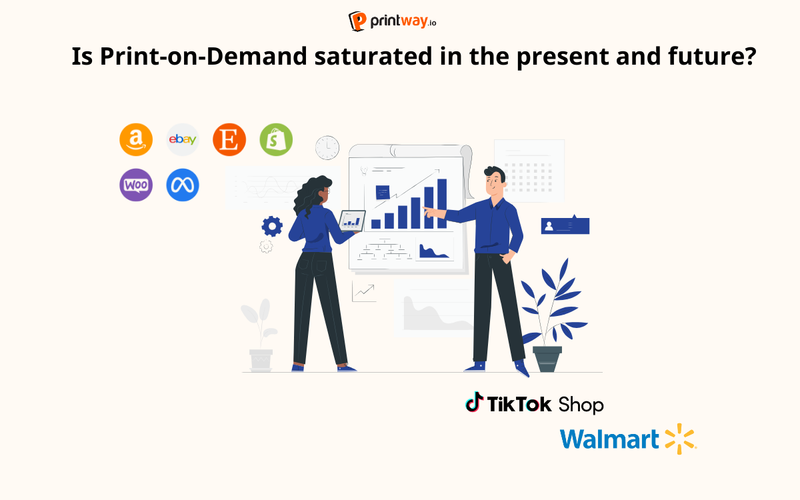
Is Print-on-Demand profitable and do you still have a chance to compete? The rise of print-on-demand (POD) services has attracted many new players, but don't let the competition stop you. While there are many sellers around the world experimenting with the POD business model, not all of them are likely to pose a threat to new entrants.
Many sellers have approached print-on-demand services hoping for a get-rich-quick scheme. But they do not have enough experience and understanding of the platform and POD field. Therefore, they do not gain much profit from their business activities. This means that there is still an opportunity for competent players with the right approach to enter and take their share of the market.
If you can spend more time and effort getting to know your customers, crafting the right designs, and creating a great product, you will instantly separate yourself from your competitors. And don't forget that in a crowded POD space, offering real value, not just another mass-produced design, is what sets you apart!
So, is Print-on-Demand profitable in this crowded market? The great thing about print-on-demand is that it is extremely flexible. While there may be many companies out there using POD suppliers to produce custom t-shirts and hoodies, there are still many smaller and more specific niches that new entrepreneurs can take advantage of to gain profit.
By focusing your target audience and product selection, you can carve out a space with minimal competition. Instead of generic clothing, consider niches like sustainable apparel or the booming athleisure industry. These cater to specific customer segments with distinct needs and preferences.
Furthermore, diversify your offerings by experimenting with production methods. Explore options like knitted products, Direct-to-garment (DTG) printing, Direct-to-film (DTF) printing, or sublimation printing,... to truly differentiate yourself in the market. Therefore, by embracing POD's versatility and focusing on niche markets, you still can establish a unique brand and stand out from the crowd.

The goal of most sellers when entering this field is Print-on-Demand profitable. And as mentioned above, Print-on-demand (POD) remains a viable business model in 2026, but success hinges on dedication. Unlike get-rich-quick schemes, sellers need a well-defined plan to ensure you make money from your products. To jumpstart your journey, here are our top tips:
Your chosen print-on-demand partner is responsible for the entire fulfillment process, controlling both product quality and the printing. As a result, their performance directly impacts your own reputation. Therefore, selecting a trustworthy and reputable print-on-demand partner is an essential step in building a successful print-on-demand business.
Specifically, when researching potential POD suppliers, sellers need to consider key factors such as their reshipment rates, customer reviews, and the variety of products they offer. These are critical indicators of the supplier's reliability and the overall quality of their service.
Optimizing your POD dropshipping store's pricing strategy is a factor that directly affects Print-on-Demand profit margin. This entails establishing prices that encompass all associated costs, including production, shipping, and other platform fees, while incorporating a strategic markup to generate a healthy profit margin. A well-defined pricing strategy seeks to strike a balance between customer affordability and business sustainability to ensure long-term growth.
Zeroing in on a single target customer segment allows you to thoughtfully tailor your designs and marketing initiatives to the specific needs, preferences, and behaviors of that particular group. This targeted approach vastly increases the likelihood of your products resonating with your audience and driving sales.
To focus on a niche market, sellers need to conduct thorough research to identify the key demographics, interests, and trends within your niche. After being armed with these insights, you can create designs that are perfectly aligned with your target customer's tastes and select the marketing channels where this audience is most active. This targeted approach can significantly boost your store's relevance, appeal, and overall profitability.
To further deepen your connection with your customer base, actively engage with them through social media, surveys, and direct feedback channels. This two-way dialogue allows you to understand their changing preferences and needs. As a result, by building an authentic community around your brand, sellers can refine the product offering, cultivate loyalty, and encourage repeat business.
Don't forget to constantly adapt your product lines and marketing strategies based on customer insights and current trends. This ensures your online business remains relevant, attractive, and primed for long-term growth!
Is Print-on-Demand profitable? This depends a lot on your product and the value it brings to customers. In the fiercely competitive field of print-on-demand (POD), unique designs are your secret weapon. Eye-catching and creative concepts will grab attention, differentiate your store from the crowd, and elevate the perceived value of your products. This paves the way for premium pricing, allowing you to reap the rewards of your design ingenuity.
In fact, POD business owners can find inspiration for unique designs anywhere:
In general, the POD market is booming, and with that growth comes the need for exceptional design. Therefore, investing time in developing original ideas is the key to unlocking success in a saturated marketplace. Remember, the unique designs are the cornerstone of the POD business and setting you apart and propelling you towards long-term success!

Determining whether the product is a Print-on-Demand profitable item or not is very important. Because high-margin products will offer a lot of advantages for sellers, such as absorbing marketing and operational costs while yielding significant revenue.
To justify a higher price point for your products, thoughtful positioning and effective product descriptions will be crucial. Additionally, your product imagery takes on heightened importance, as visual presentation heavily influences a buyer's perceived value.
Besides, the maximum price customers are willing to pay for your products ultimately depends on factors like uniqueness, quality, trendiness, and scarcity. Therefore, by carefully curating a product selection that excels in these areas, you can command premium pricing that boosts your overall profitability.
There is no one-size-fits-all marketing strategy because the success of each tactic will fully depend on your customers and products. The best approach is experimenting with different marketing tactics to discover what works for your own store. Consider these tactics for building a robust marketing strategy:
Choosing the right niche is one of the strongest levers for increasing POD profitability in 2026. A strategic niche directly impacts conversion rates, pricing power, advertising costs, and long-term brand performance. Profitable niches share key traits: steady or rising demand, emotional relevance, and room for differentiation. In 2026, niches with identity-driven themes (family roles, occupations, pets, hobbies) and crossover micro-niches (e.g., “retro gamer dads,” “tattooed teachers who love cats”) continue to outperform due to higher engagement and better targeting.
To evaluate a niche, sellers should analyze demand stability, search volume trends, and competition levels using platforms like Etsy Best Sellers, Amazon BSR, Pinterest Trends, Google Trends, and TikTok Creative Center. Niches are most profitable when competitors have outdated designs, low-quality listings, or poor SEO—this creates opportunity for modernized and optimized products.
Profitability also depends on the niche’s pricing potential. Before entering any niche, validate average selling price, fulfillment cost, shipping fees, and potential margins (aiming for 20–40%). Niches that support personalization, gifting intent, or emotional messaging generally allow higher premiums. Sellers should balance their portfolio by combining:
A profitable 2026 POD strategy centers on building a diversified niche portfolio, continuously testing new micro-niches, and staying updated on search trends to stay ahead of competitors and maximize long-term profitability.
All aspects of Print-on-Demand (POD) remain a profitable venture in 2026. But with a dynamic market, some niches are gaining more attention right now, such as the sustainable fashion and athleisure market. Eco-conscious consumers are driving demand for ethically produced and eco-friendly clothing. Therefore, combining this with the customizability of POD will create a powerful niche for all sellers.
Additionally, unique apparel will never be pushed back in the POD market. Forget mass-produced trends because nowadays, customers crave one-of-a-kind pieces that express their individuality. Therefore, POD sellers can completely make unique apparel a consistently profitable niche in the future.
Besides, there are actually many potential and diverse niches for you to exploit. For example, funny & trendy designs with humor and pop culture references are frequent themes in the apparel market. By staying updated on current trends and creating witty or relatable designs, you can tap into a broad audience looking for a touch of fun in their wardrobe.
It's not over yet, personalized gift is a print-on-demand profitable product that sellers can try to exploit. Because everyone loves a thoughtful gift, POD allows you to create unique and personalized items like mugs, phone cases, or tote bags,... Moreover, this niche market can bring profit potential year-round by catering to birthdays, holidays, or special occasions,...
While both POD and dropshipping offer ways to launch an online business with minimal upfront inventory, the question of profitability boils down to a trade-off:
Print-on-demand sellers are a diverse group. They range from stay-at-home moms, who earn a little extra income on the side, to people who have left traditional full-time employment in pursuit of their passion. And is Print-on-Demand profitable or not depends on you.
A print-on-demand seller can make a significant profit in 2026, but you’ll need to make sure you’re creating high-quality, unique products, and that you’re selling them at the right price point. While there is no one answer to how much money sellers can make with print-on-demand selling, generally speaking, most of them make between $1-$20 per hour. Most print-on-demand sellers will take 6 months to start making a profit and then, they can do it typically $100-$1000 per month.

The print-on-demand (POD) sector is booming with countless opportunities for businesses looking to sell customized products. However, with many different POD websites and applications, sellers may find it difficult to choose the right supplier. Here are some of the most profitable POD websites and apps for custom products in 2026:
The platform attracts users with its affordable prices and rich product catalog from many suppliers. Cheap price, good print quality and easy-to-use interface are the outstanding advantages of Printify. However, you should be aware that shipping times can be slower than some competitors, and Printify also charges a shipping fee for orders.
Stands out with a diverse product warehouse of more than 200 items, from t-shirts, jackets to accessories, meeting all customer customization needs. Besides, the easy-to-use interface, sharp printing quality and professional customer service are also big plus points of Printful for sellers. In contrast, Printful's prices may be slightly higher than some other providers and you will have to pay additional fees if you use their design services.
Optimal choice for beginners with a simple, easy-to-use interface. In addition, affordable prices and good printing quality are the plus points of CustomCat. However, sellers might face some difficulty finding the right product for your needs because CustomCat will have fewer product options than some other POD providers.
Providing premium custom printing products with outstanding quality, ensuring products are durable and sharp. Furthermore, Gelato's shipping service is appreciated for its speed and global scope of operations, helping sellers easily reach international customers. However, the downside of Gelato is that the price is higher than other POD suppliers.
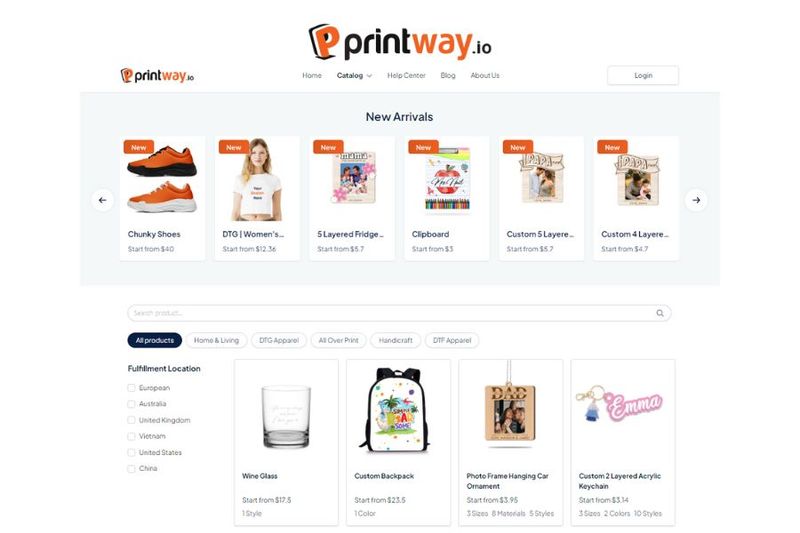
Printway's strength lies in its full order fulfillment service, including custom printing, packaging and shipping, helping sellers save time and effort. At the same time, Printway is also highly appreciated by sellers for its multi-platform e-commerce support service, diverse products, good printing quality and competitive prices. However, this platform is also quite picky about users because Printway's scope of operations is limited compared to some other custom-products providers.
As you can see, choosing the right POD provider depends on your needs, business goals, and budget. Therefore, sellers need to compare factors such as: product, price, quality, shipping time, customer service, scope of operations, cross-platform support, and design options before making a decision.
Through this article, Printway has helped you answer the question "Is Print-on-Demand profitable" or “is print on demand a good business” as well as learn more useful knowledge when starting a POD business. It can be seen that understanding the real POD value shows it’s a highly profitable option for those interested in creating a business with low risk and minimal investment.
If you are just about to start with print-on-demand, do not worry because you still have a lot of chances to make money in this field. With the help of Printway - Print On Demand Fulfillment Supplier, selling on online platforms and other sites has never been easier. Fulfill now with Printway to get a good start on your way to conquering POD!
After answering the question “ is Print-on-Demand profitable”, “is print on demand a good business”, you must have seen the potential of this field. To help you better understand and have a solid foundation when starting a POD business, Printway would like to answer a few more common questions below!
Yes - POD can be profitable for beginners because it requires no upfront inventory and has low startup risk. New sellers typically earn profit margins of 20–40% when they choose a good niche, use strong SEO, and follow a consistent marketing strategy. However, beginners must invest time into design quality, keyword research, and listing optimization to see results.
Most Etsy POD sellers earn anywhere from $500 to $5,000+ per month, depending on niche demand, listing volume, pricing strategy, and seasonal trends. Top sellers with strong branding and optimized shops can scale to $10,000+ months, especially during Q4 holidays. Profit varies by fulfillment cost, Etsy fees, and overall shop performance.
Yes - POD is still worth starting in 2026 because global demand for personalized and niche-driven products continues to rise. Platforms like Etsy, Amazon, Shopify, and TikTok Shop show strong growth in customizable product categories. While competition is higher than in previous years, sellers who focus on micro-niches, high-quality product mockups, and strategic marketing still achieve strong profitability.
Absolutely - many sellers make a full-time income through POD by scaling their product catalog, building a strong brand, and diversifying across platforms (Etsy, Amazon, TikTok Shop, Shopify). To reach full-time income, sellers must master niche selection, traffic generation, pricing, and conversion optimization. Consistency and testing are key to reaching this level.