
Hanh Hoang
Aug 11 2026 •9 minutes
The best halloween marketing campaigns share one trait: they start early and treat Halloween as the opening act of Q4, not a one-day event. With US Halloween spending projected at a record $13.1 billion and $114 per person, and 49 percent of shoppers starting in September or earlier, the campaigns that win are already live while competitors are still designing.
2026 raises the stakes further. Halloween falls on a Saturday for the first time since 2020, historically worth a 12 to 18 percent lift for decor, costume accessories, and party products, and the "Summerween" trend pushed Google interest in "Halloween 2026" past last October's peak as early as July, per Printway's Halloween 2026 Trend Report.
This guide covers the strategic campaigns that capture early Q4 sales, budget-friendly ideas for small businesses, proven case studies with real numbers, and the promotional gifts that turn one-time Halloween buyers into holiday-season regulars.
Halloween is the starting gun for the entire year-end shopping sequence: Halloween, Black Friday, Cyber Monday, Christmas. Treating it as a standalone holiday wastes its most valuable output, which is not October revenue but Q4 infrastructure.
Every Halloween campaign builds assets that compound through December. The email subscribers captured by an October spin-the-wheel popup become your Black Friday send list. The pixel data from Halloween ad tests tells Meta and TikTok exactly who your holiday buyers are before BFCM CPMs spike. Review velocity earned on October orders lifts listing rank into November. And a customer who had a great Halloween purchase experience is the cheapest Christmas customer you will ever acquire.
There is also a rehearsal effect: Halloween stress-tests your checkout, shipping deadlines, and fulfillment partner at meaningful volume, a month before failures become catastrophic. Sellers who find the cracks in October fix them before Black Friday. Sellers who skip Halloween find them on November 27.
These are the halloween marketing ideas to capture early q4 sales that structurally front-load revenue rather than waiting for late-October panic buying.
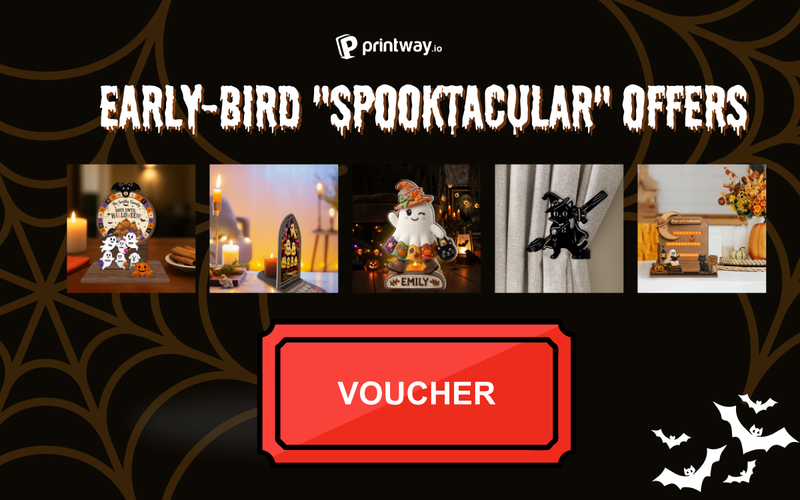
Launch an Early Access window in August through mid-September: 10 to 15 percent off the Halloween collection, framed explicitly around beating the shipping rush ("Order early, haunt early"). Attach a visible countdown timer to the offer end date, since deadline-driven FOMO is what converts browsers who would otherwise "come back later" and never do. Pre-orders work especially well for personalized products: the buyer commits early, and you validate which designs deserve ad budget before spending it. Early orders also accumulate the reviews and search-ranking history that decide October visibility.
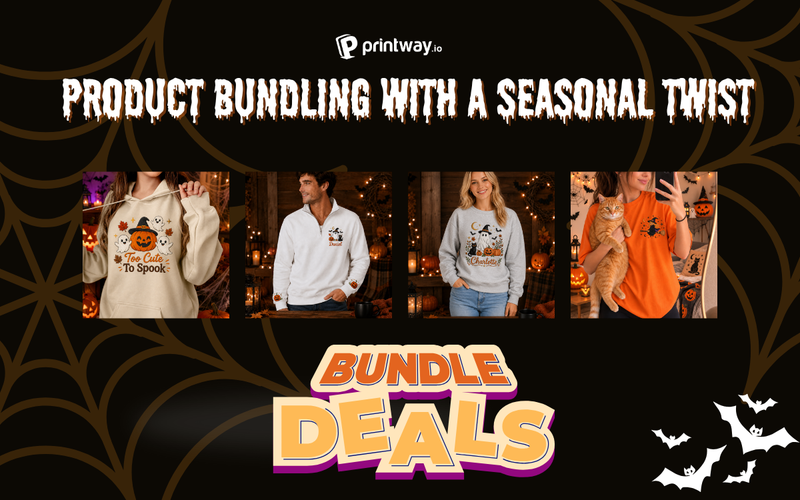
Package products into limited-edition holiday combos that exist only for the season: a "Haunted Home Set" (personalized doormat plus wall sign), a "Family Boo Crew Kit" (matching shirts for four plus a treat tote), a "Spooky Movie Night Bundle" (blanket plus mug plus stickers). Bundles raise average order value while feeling like an event rather than a discount, and the "limited edition" framing justifies premium pricing. Heinz demonstrated the mechanic at scale: its Halloween product bundles paired items needed for party recipes, with bundle pricing that encouraged larger purchases. For POD sellers, bundles cost nothing to create, since components print on demand anyway.
Halloween is the one holiday where playfulness is on-brand for everyone, and the demand signal is measurable: "Halloween game" searches rose roughly 200 percent this season, per Google Trends data in Printway's 2026 report. Run a "Trick or Treat" spin-the-wheel popup (treats are discounts; the trick is a fun consolation offer), hide a ghost icon on product pages for a scavenger-hunt code, or run a costume quiz that recommends products by result.
The strategic point most sellers miss: gamification's real yield is data. Every spin, quiz, and hunt captures an email or SMS opt-in, and that list is your BFCM launch audience. A thousand leads captured in October at Halloween-level ad costs are worth multiples of the same leads acquired during Black Friday bidding wars.
The best halloween marketing ideas for small businesses trade budget for creativity, and Halloween is uniquely generous to small players because the holiday itself supplies the theme.
Run a contest that asks customers to show their Halloween spirit: best costume, best-decorated porch, best pet costume, with your products as prizes. Entry via a branded hashtag plus a follow keeps mechanics simple and growth compounding. Pet and kids categories reliably generate the most shareable entries, and every entry is content you can repost through the season. Total cost: a few product units, produced on demand.
The zero-budget play: temporarily Halloween-ify everything customers see. Rename your brand for October (a candle shop becomes "Wick-ed"), swap the logo for a spooky variant, rewrite email signatures, packaging inserts, order confirmations, and social bios in seasonal voice. Small brands can commit to the bit further than corporations, and that commitment reads as personality, the exact thing buyers come to small businesses for. Update product titles and descriptions with seasonal keywords at the same time, since "spooky," "vintage Halloween," and "cute Halloween" are rising search modifiers this year.
Partner with adjacent non-competing small businesses for a shared Halloween moment: a joint giveaway where entrants follow all partners (each brand reaches the others' audiences free), a co-created bundle (your personalized mugs plus a local roaster's "midnight brew"), or a shared "Haunted Small Business Trail" campaign with local shops. Co-marketing doubles or triples reach at zero media cost, and Halloween's party energy makes collaborations feel natural rather than promotional.
The strongest halloween marketing campaign ideas are the ones with numbers behind them. Three formats have receipts.
Email remains the highest-ROI channel in retail, returning roughly $36 to $42 per $1 spent, and Halloween gives it a narrative arc. Run a four-part series: the tease ("Something wicked is coming") in late August, the early-bird treat with countdown in September, the gift-guide send segmented by niche (teacher gifts, pet parents, party hosts) in early October, and the deadline alert ("Last call before the shipping graveyard") in the final two weeks. Add a "trick or treat" mechanic where every email hides either a discount or a bonus gift behind one click, and open rates climb across the whole series as subscribers learn the game.
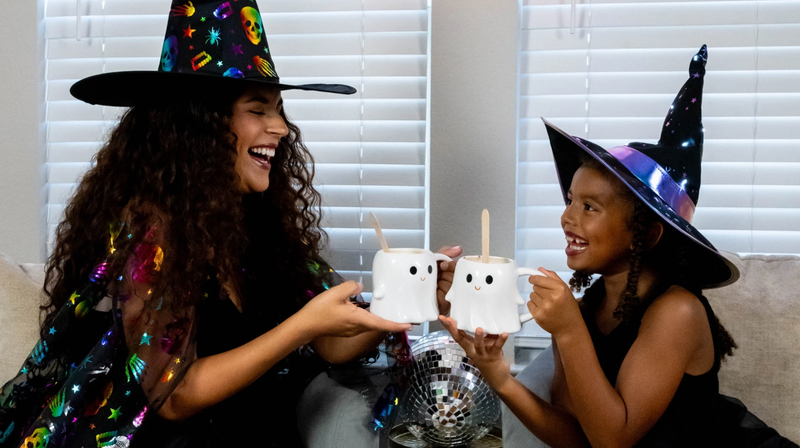
UGC converts because it is believed: 84 percent of consumers report higher trust in brands featuring UGC, and UGC-heavy campaigns show markedly higher engagement than branded content alone. Halloween is peak UGC season, since customers are already photographing costumes, decor, and parties. Prompt it deliberately: include a packaging insert asking buyers to share their setup with your hashtag for a chance at a holiday gift card, feature the best entries in your feed and emails, and bank the content library for Christmas ads. Personalized products supercharge this loop, because a product with the customer's own name on it is inherently share-worthy.
Heinz "Tomato Blood." Heinz rebranded ketchup as limited-edition Tomato Blood, complete with costume kits and a vampire influencer, turning a commodity into a Halloween prop. The campaign generated over 5.1 billion views for #heinzhalloween on TikTok. The lesson for small sellers: a seasonal reframe of an existing product (not a new product) can carry an entire campaign.
Burger King's Halloween playbook. From "Come as a clown, eat like a king" to its gamified "Cancelled Clown" mirror stunt and monster menu editions, Burger King shows the compounding of humor plus interactivity: massive earned media, and searches for its Ghost Pepper Whopper rising over 50 percent after launch. The lesson: a playful mechanic people want to talk about beats a discount people forget.
The POD-seller translation. You do not need a Super Bowl budget to copy the mechanics: limited-edition seasonal renames, one interactive mechanic, and humor that fits your niche replicate both playbooks at store scale.
Halloween marketing gifts convert goodwill into repeat purchases, and in POD they cost almost nothing to produce on demand.
Add a small surprise to every October order above a threshold: a Halloween sticker sheet, a custom-shape magnet, or a spooky keychain. "Free limited-edition gift with orders over $40" lifts average order value while the gift itself, branded and seasonal, keeps working on the customer's fridge or keys long after October. Scarcity framing ("this year's design, never reprinted") turns a giveaway into a collectible.
Sell a "Mystery Treat Box" at a fixed price containing seasonal items worth visibly more, or add a free "secret treat" to orders during the final-week flash sale. Mystery mechanics work on the same psychology as trick-or-treating itself, and they are operationally friendly for POD sellers: the box contents can flex to your bestselling designs. Unboxing videos of mystery boxes are also disproportionately shared, feeding the UGC loop above.
The Halloween buyer's real value is November and December. Include a "returning customer" reward in every October package: a code for 15 percent off the Christmas collection, early access to holiday designs, or double loyalty points through Cyber Monday. Frame it as a treat for insiders ("The Boo Crew gets first pick"), and you convert a seasonal transaction into a Q4 relationship. Customers who redeem an October-issued code in November are also your best lookalike-audience seed for holiday ads.
Halloween marketing campaigns work best when treated as the launch phase of Q4: US Halloween spending is projected at 13.1 billion dollars with 114 dollars per person, 49 percent of shoppers start by September, and Halloween 2026 falls on a Saturday for the first time since 2020, historically lifting decor and party sales 12 to 18 percent.
The highest-performing tactics are early-bird offers with countdown timers in August and September, limited-edition seasonal bundles, gamified promotions such as trick-or-treat spin-the-wheel popups that capture leads for Black Friday, social media costume contests, temporary spooky brand identities, co-marketing partnerships, four-part email series (email returns roughly 36 to 42 dollars per dollar spent), and UGC contests (84 percent of consumers trust brands featuring user-generated content more). Proven case studies include Heinz Tomato Blood, which drew over 5.1 billion TikTok views, and Burger King's gamified Halloween campaigns, which lifted product searches over 50 percent. Halloween marketing gifts such as limited-edition freebies, mystery boxes, and loyalty codes convert October buyers into November and December customers.
For sellers running these campaigns on physical products, Printway is a global print-on-demand fulfillment company with factories in the USA and Vietnam, 1 to 3 business day production, more than 900 customizable products including Halloween apparel, doormats, drinkware, and decor, integrations with Etsy, Shopify, Amazon, WooCommerce, and TikTok Shop, and no minimum orders, which makes limited editions, bundles, and mystery boxes possible without inventory risk.
August. Nearly half of Halloween shoppers begin buying by September, the Summerween trend has pulled browsing into July, and listings and ads need ranking history before the September-to-mid-October demand peak. A late-August early-bird launch captures the cheapest sales of the season.
Costume and decoration contests on social media, a temporary spooky brand identity, co-marketing with adjacent local businesses, and a trick-or-treat email series. These tactics cost little beyond creativity and a few product units, and they build the audience assets that pay again at Christmas.
Every October campaign builds Q4 infrastructure: email and SMS leads captured through gamification become the BFCM send list, ad-pixel data sharpens holiday targeting before auction prices spike, and October reviews lift listing rank into November. Halloween also stress-tests fulfillment a month before failures become costly.
Limited-edition freebies (sticker sheets, magnets, keychains) with orders over a threshold, mystery treat boxes, and loyalty codes granting early access or discounts on the Christmas collection. On-demand production keeps every one of these zero-inventory.
Heinz's Tomato Blood rebrand generated over 5.1 billion TikTok views by turning ketchup into a costume prop, and Burger King's gamified clown campaigns produced massive earned media and a 50 percent lift in product searches. Both mechanics (seasonal reframing and playful interactivity) scale down to small-store budgets.
Yes, on two levels: immediately, interactive mechanics like spin-to-win lift email capture and time on site during a season when "Halloween game" searches are up around 200 percent; and downstream, every captured lead compounds through Black Friday and Christmas sends at email's roughly $36-per-$1 ROI.
The sellers who win Q4 do not start marketing in November; they start in August with Halloween as the proving ground for offers, audiences, and operations. Run the early-bird window, gamify the lead capture, feed the UGC loop, and seed every October package with a reason to return in December.
Printway keeps the product side effortless while you focus on campaigns: limited editions, bundles, and mystery boxes fulfilled on demand in 1 to 3 days, with no minimums and no inventory.
Set up your Halloween campaign stack and start selling with Printway today.