
Hanh Hoang
Feb 10 2026 •13 minutes

Amazon SEO optimization is no longer just about having a good product—it’s about using the right data and tools to win visibility in a marketplace with millions of competing listings. Sellers need more than guesswork to discover profitable keywords, analyze competitors, and optimize listings effectively, which is why the best Amazon SEO tools play a critical role in success.
From powerful suites like Helium 10 and Jungle Scout to budget-friendly options like AMZScout, SellerSprite, and free keyword suggestion platforms, these tools enable deep Amazon keyword research, ranking tracking, long-tail keyword discovery, and proper indexing for Amazon’s algorithm. Whether you are validating a niche, refining your keyword strategy, or improving conversion rates, leveraging the right Amazon keyword research tools is the foundation of sustainable growth on the marketplace.


Amazon SEO is the process of optimizing your product listings so they appear higher in Amazon’s search results when customers type in relevant keywords. Unlike traditional search engines, Amazon’s algorithm (A9/A10) is built around buyer intent. It prioritizes products that are most likely to generate sales, not just traffic.
This means ranking factors include keyword relevance, listing quality, conversion rate, price competitiveness, reviews, and sales history. If your listing contains the right keywords and converts well, Amazon will push it higher because it increases the platform’s revenue.
General ecommerce SEO (like Google SEO) focuses on content, backlinks, and informational relevance. Amazon SEO optimization, however, is entirely transactional.
Shoppers on Amazon are already ready to buy. They search with phrases like “personalized mom gift” or “wooden memorial plaque” with clear purchase intent.
This is why Amazon keyword placement in the title, bullet points, description, and backend search terms is far more important than long-form content or blog authority.
For print-on-demand sellers, especially those selling personalized gifts, home décor, plaques, signs, and apparel, competition is extremely high. Many sellers offer similar designs, so the difference between selling and not selling often comes down to how well your listing matches what customers are searching for.
Proper use of Amazon keyword research tools helps you discover high-intent phrases that real buyers type into Amazon.
When you combine those keywords with strong Amazon SEO optimization in your listing structure, your POD products become easier to discover, rank higher, and convert better — even if you are in a crowded niche.
Before choosing Amazon SEO tools, sellers also need to know the details of Amazon's ranking factors. Remember, everything you do needs to follow the rules of the A9 algorithm, but still make sure the information matches the needs of the buyer.
Relevance can be understood as the overlap in the keywords customers query with the keywords you use when listing products. Relevance will help improve product visibility after listing on the store. The factors that need to be optimized to improve relevancy are
Performance-related ranking factors are more difficult to control because they are influenced by external factors. However, sellers should still understand these factors to have a more perfect and comprehensive Amazon SEO strategy
>>> Read More: Amazon Guide:The cost of selling on Amazon for new Sellers
Currently, many free Amazon SEO tools allow sellers to optimize their store SEO at no cost. Below is a list of the best Amazon SEO tools that sellers can refer to.

Helium 10 is widely recognized as a powerful Amazon keyword tool designed for sellers who want deep, data-driven control over their Amazon SEO strategy. Instead of relying on guesswork, this platform provides a complete ecosystem for keyword discovery, competitor analysis, and listing optimization in one place.
At the core of Helium 10 are two standout features: Magnet and Cerebro.
Beyond keyword research, Helium 10 also includes tools for trend tracking, listing audits, and AI-assisted optimization that guide sellers on how to place keywords effectively in titles, bullets, and backend search terms. This makes it especially useful for Print-on-Demand sellers who need to validate niche demand quickly and optimize listings for personalized gifts, home décor, and apparel.
Use Helium 10 for: deep keyword research, competitor intelligence, and complete Amazon listing optimization using a professional-grade Amazon keyword tool.
For sellers who want reliable data without paying premium prices, AMZScout and SellerSprite are practical additions to your stack of Amazon SEO tools. Both platforms focus on delivering actionable keyword insights, competition data, and trend visibility that directly support faster Amazon SEO optimization.

AMZScout is especially beginner-friendly. It provides clear search volume estimates, competition levels, and niche validation features that help new sellers understand what is Amazon SEO in practice. With its straightforward dashboard, sellers can quickly identify profitable keywords and apply them to product titles, bullet points, and backend search terms using a simple but effective Amazon keyword tool.
SellerSprite, on the other hand, is known for its powerful Amazon keyword suggestion tool and trend metrics. It excels at uncovering long-tail phrases and related search terms that many competitors miss. This makes it a strong choice for sellers focused on deep Amazon keyword research tools to optimize listings for personalized gifts, décor, and apparel in the POD space.
Use AMZScout & SellerSprite for: cost-effective keyword research, discovering hidden keyword opportunities, and improving listings quickly with data-driven insights from reliable best Amazon SEO tools.
MerchantWords and Keyword Tool Dominator are highly effective additions to your Amazon keyword tool stack when your goal is expanding keyword lists and uncovering long-tail opportunities that many sellers miss.


Keyword Tool Dominator is also a free keyword tool and keyword research tool for Amazon, Bing, eBay, Etsy, Google, Walmart, and YouTube searches. Their Amazon Keyword Tool is used to find the most popular Amazon keywords for product listings for Amazon SEO. Create the most relevant and up-to-date product keyword lists by searching keywords across 16 Amazon marketplaces.
Keyword Tool Dominator simulates real users entering search terms with repeated variations to find hundreds of keyword suggestions in a very short period. You can find hundreds of great long-tail keyword phrases from just one search using this tool.
Used together, these tools help sellers move beyond basic keywords and build a richer, more strategic keyword map that improves listing visibility, supports Amazon SEO optimization, and drives higher conversion through precise keyword targeting.

Jungle Scout is a beginner-friendly yet powerful platform that combines keyword research, ranking insights, and market trend analysis into one intuitive system. For sellers looking for a practical Amazon keyword tool without an overwhelming interface, Jungle Scout provides a clear path to understanding what buyers are searching for and how competitive those terms are.
Jungle Scout provides all the functionality that sellers need for Amazon SEO, such as:
Keyword Scout feature reveals accurate search volume, keyword difficulty, and historical trend data, helping sellers quickly identify which keywords are worth targeting. This is particularly useful for Print-on-Demand brands testing niche ideas such as personalized gifts, seasonal décor, or custom apparel, where validating demand before launching a design is critical.
JungleScout has many features that support both new and experienced sellers. To use the Basic Plan, the seller will have to pay 29,00$/month. CALL the Suite Plan for $49/month and finally the professional plan for $84/month.
Use Jungle Scout for: simple keyword discovery, validating niche demand, and gaining clear market insights with an easy-to-use Amazon keyword tool.
Sonar is Sellics' free Amazon keyword tool. This tool helps Amazon sellers and suppliers find every keyword related to their business, increase product visibility and improve Amazon's SEO.

Sonar will choose from over 180 million keywords generated by customers when they make a query and include only keywords and ASINs that are ranking on the first page of Amazon search results at the time of the database update. nearest material!
The Amazon Sonar Keyword Tool can also identify and track competitors' keywords by doing an ASIN reverse lookup.

Keyword Inspector is a set of individual tools to help Amazon sellers gain an edge over their competitors. Each tool is separate, but you can rely on multiple tools at once to help you find/sell/optimize multiple products faster on Amazon.
The main tools in the Keyword Inspector are:
SellerApp, on the other hand, combines keyword tracking, listing optimization, and PPC performance into one cohesive system that aligns SEO and advertising strategy. It functions as both an Amazon keyword research tool and a campaign optimization assistant, helping sellers monitor keyword rankings, discover profitable search terms, and adjust PPC bids based on real performance data. For POD sellers, this is critical because paid ads and organic rankings often work together to improve product visibility. SellerApp’s insights allow sellers to refine their keyword strategy continuously, ensuring that high-converting terms are used both in listings and advertising campaigns.
Pricing generally begins at $49/month, making it accessible for growing sellers who want to connect keyword strategy with measurable sales performance.
Before diving into specific platforms, it’s important to understand that effective Amazon SEO optimization is not just about finding keywords—it’s about placing them correctly across your listing, optimizing backend search terms, and continuously tracking how those keywords perform over time.
The best tools for Amazon SEO help sellers manage keyword placement within title character limits, craft high-converting bullet points, improve backend indexing, and monitor ranking progress with reliable rank trackers. For POD sellers competing in niches like personalized gifts, décor, and apparel, these tools make the difference between a listing that simply exists and one that consistently gains visibility, traffic, and conversions.
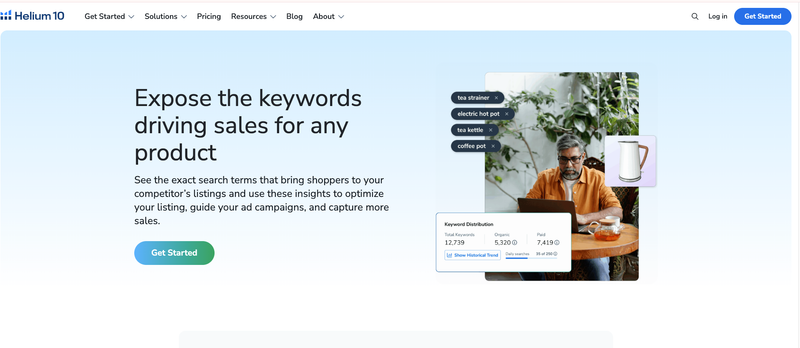
Reverse ASIN lookup tools are powerful features inside leading amazon seo tools that let you analyze which keywords a competitor’s product (ASIN) is already ranking for. Instead of guessing what search terms to target, you can extract proven, high-performing keywords directly from top listings in your niche. Tools like Helium 10’s Cerebro and AMZScout’s Reverse ASIN make this process fast and data-driven, which is especially valuable for POD sellers entering competitive markets like personalized gifts, décor, and apparel.
What these tools help you do:
Not every seller starts with a paid subscription to premium amazon seo tools, but that doesn’t mean you can’t perform effective amazon keyword research. Several free tools and native Amazon features provide valuable keyword insights that help you understand buyer intent, discover search terms, and improve your listing visibility. These tools are especially useful for beginners, POD sellers testing new niches, or low-budget stores that still want to apply solid Amazon seo optimization practices.
Below are practical free resources you can start using immediately:
Amazon Brand Analytics (for Brand-Registered Sellers)
Ahrefs Amazon Keyword Tool (Free Browser Tool)
Soovle
KeywordTool.io (Amazon Section)
These free tools won’t replace advanced suites like Helium 10 or Jungle Scout, but they offer enough insight to build a strong keyword foundation, validate niche ideas, and improve your product listings without upfront investment.
To make the most of your amazon seo optimization efforts, tracking the right metrics is just as important as choosing the right amazon seo tools. For POD sellers, where niches are highly competitive and trends shift quickly, monitoring these SEO indicators helps you understand whether your keyword strategy is actually improving visibility and conversions.
Below are the essential metrics and the tools that help you measure them effectively:
Search Volume & Competition Scores
Keyword Ranking Movements (Rank Tracking)
Indexed vs. Unindexed Keywords
Conversion Rate After Keyword Optimization
By consistently monitoring these metrics, POD sellers can move beyond guesswork and make data-driven decisions that genuinely boost average visibility, ranking performance, and conversion rates on Amazon
In the highly competitive Amazon marketplace, successful sellers rely on data, not assumptions. The right combination of Amazon SEO tools, keyword trackers, reverse ASIN lookup tools, and listing optimization platforms empowers you to make informed decisions at every stage—from keyword discovery to performance tracking. By consistently monitoring essential SEO metrics, expanding your keyword list with reliable Amazon keyword tools, and refining listings based on real ranking data, you can steadily improve visibility, traffic, and conversions. Mastering Amazon SEO optimization with these tools is not a one-time task but an ongoing process that drives long-term success for both new and experienced sellers.
What are Amazon SEO tools?
Amazon SEO tools are software platforms that help sellers research keywords, analyze competitors, optimize listings, and track ranking performance on Amazon. These tools provide data such as search volume, keyword difficulty, indexing status, and trend insights. Popular examples include Helium 10, Jungle Scout, and AMZScout. They support sellers in making data-driven decisions to improve product visibility and ensure listings align with Amazon’s search algorithm and buyer intent.
Are free Amazon keyword tools effective?
Free Amazon keyword tools can be effective for beginners who need basic keyword ideas without investing in paid software. Tools like Amazon autocomplete, Soovle, KeywordTool.io, and Ahrefs’ free features provide useful long-tail keyword suggestions. However, they often lack advanced data like search volume accuracy, competition scores, and rank tracking. For serious optimization and scaling, sellers typically combine free tools with paid Amazon SEO tools.
How often should sellers update keywords?
Sellers should review and update their keywords regularly, ideally every 4–6 weeks. Market trends, buyer behavior, and competitor listings change frequently, especially in seasonal niches like gifts and home décor. Monitoring keyword rankings with Amazon SEO tools helps identify drops or new opportunities. Updating titles, bullets, and backend search terms based on fresh data ensures listings remain relevant and competitive in Amazon search results.