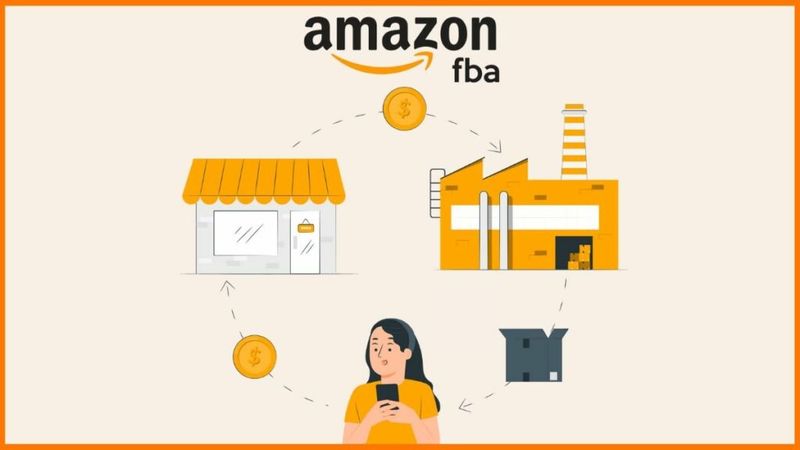
<p><strong>What is FBA?</strong> This guide explains everything you need to know about <strong>Amazon FBA (Fulfillment by Amazon)-</strong>from its definition and how it works step by step, to fees, benefits, pros and cons, and how it compares to FBM. Whether you are a beginner exploring e-commerce or a growing brand looking to scale, this article will help you understand the true Amazon FBA meaning for sellers, evaluate costs, and decide whether Fulfillment by Amazon is the right strategy for your business.</p><figure class="image"><img src="https://cdn.shopify.com/s/files/1/2513/0866/files/what-is-fba.png?v=1662351593" alt="what is fulfillment by amazon"></figure><h3><strong>What is Amazon FBA? </strong></h3><p>If you’re researching <strong>what is FBA</strong>, you’re likely exploring ways to simplify logistics and scale your e-commerce business. <strong>Amazon FBA</strong> is one of the most popular fulfillment solutions available to online sellers today. Below is a clear breakdown of the Amazon FBA definition, its meaning, and how it compares to traditional self-fulfillment.</p><figure class="image"><img src="https://cdn.shopify.com/s/files/1/2513/0866/files/definition-fba.png?v=1662351644" alt="what is FBA"></figure><p> </p><p>The <strong>Amazon FBA definition</strong> refers to a fulfillment service where sellers store their inventory in Amazon’s warehouses, and Amazon handles the storage, packing, shipping, customer service, and returns. In simple terms, the <strong>FBA meaning</strong> is outsourcing your order fulfillment operations to Amazon’s logistics network.</p><p><strong>FBA or Fulfillment by Amazon</strong> includes warehousing products in fulfillment centers, picking and packing orders when customers purchase, shipping with Prime-eligible delivery, processing returns, and providing customer support. This service is designed primarily for <strong>third-party sellers</strong> who sell products on Amazon Marketplace and want to focus on product development, marketing, and growth rather than logistics management.</p><p>By using Amazon FBA, sellers gain access to Amazon’s advanced infrastructure without having to build their own storage facilities or shipping systems.</p><p style="text-align:center;">>>> Related content: <a href="https://printway.io/blogs/what-is-fulfillment"><strong>What Is Fulfillment? Complete Guide to Ecommerce Fulfillment Process</strong></a></p><h2><strong>How Fulfillment by Amazon Works?</strong></h2><p><i>Understanding <strong>what is Amazon FBA and how it works</strong> is essential for sellers who want to scale efficiently on Amazon. <strong>Fulfillment by Amazon (FBA)</strong> is designed to simplify logistics by transferring storage, shipping, and customer service responsibilities to Amazon. Below is a clear overview of the Amazon FBA process, followed by a step-by-step explanation to help you understand exactly how it works.</i></p><figure class="image"><img src="https://cdn.printway.io/lzi/69a79e01466e77320001dfc5_800x800.jpg" alt="How Fulfillment by Amazon Works?"></figure><h3><strong>Overview of the Amazon FBA Process</strong></h3><p>At a high level, <strong>Amazon FBA</strong> works by allowing sellers to send their inventory to Amazon’s fulfillment centers. Once stored, Amazon automatically picks, packs, and ships orders to customers when purchases are made. The system also manages customer service inquiries and returns, making Fulfillment by Amazon a fully integrated logistics solution for third-party sellers.</p><h3><strong>How Does FBA Work Step by Step?</strong></h3><p><i>Breaking down <strong>how Fulfillment by Amazon works step by step</strong> helps clarify the entire workflow from product listing to final delivery.</i></p><h4><strong>Step 1 – Create an Amazon Seller Account</strong></h4><p>To start using <strong>Amazon FBA</strong>, sellers must create an account through Amazon Seller Central. Seller Central is the dashboard where you manage product listings, inventory levels, pricing, advertising, and order tracking.</p><p>After registering, you can enroll specific products into the FBA program, which enables Amazon to handle fulfillment for those items.</p><h4><strong>Step 2 – List Products on Amazon</strong></h4><p>Next, sellers create product listings in Seller Central. This includes writing product titles, descriptions, bullet points, selecting categories, uploading images, and setting pricing.</p><p>During the listing process, sellers choose <strong>Fulfillment by Amazon</strong> as the fulfillment method. Once selected, the product becomes eligible for FBA services, including Prime shipping once inventory is received.</p><h4><strong>Step 3 – Send Inventory to Amazon Fulfillment Centers</strong></h4><p>After listing products, sellers prepare and ship their inventory to Amazon’s FBA warehouses (also known as fulfillment centers). Amazon provides shipping plans that specify where to send products.</p><p>Each unit must be properly labeled, typically with an <strong>FNSKU (Fulfillment Network Stock Keeping Unit)</strong> barcode, which allows Amazon to track inventory accurately within its system. Once received, the inventory is stored until a customer places an order.</p><h4><strong>Step 4 – Amazon Stores, Picks, Packs, and Ships Orders</strong></h4><p>When a customer purchases the product, Amazon’s automated system processes the order. The item is picked from warehouse shelves, packed securely, and shipped directly to the customer.</p><p>Because the product is fulfilled through Amazon FBA, it is typically eligible for <strong>Amazon Prime</strong> shipping benefits, including fast and reliable delivery. This automation significantly reduces operational workload for sellers.</p><h4><strong>Step 5 – Amazon Handles Customer Service and Returns</strong></h4><p>One of the key advantages of <strong>Fulfillment by Amazon</strong> is that Amazon manages post-purchase support. This includes handling customer inquiries, processing returns, and issuing refunds when necessary.</p><p>If a product is returned, Amazon inspects it and determines whether it can be restocked or marked as unsellable. This centralized return management system helps maintain customer trust while freeing sellers from day-to-day service tasks.</p><p>By following these steps, sellers can see clearly <strong>what is FBA and how it works</strong> in practice: it is a streamlined fulfillment system that allows businesses to leverage Amazon’s logistics infrastructure while focusing on product growth and marketing.</p><h3><strong>How to Sell FBA for Beginners </strong></h3><figure class="image"><img src="https://cdn.printway.io/lzi/69a79e2a1b35fa2d78f0aa50_800x800.jpg" alt="How to Sell FBA for Beginners "></figure><p>Let's go over how to sell FBA for businesses and beginners in detail right now!</p><p><strong>Step 1: Identify potential product niches for FBA sales</strong></p><p>Before deciding on products to sell, research the best-selling product categories on Amazon and pick a specific niche to sell in! The best way to find out what is a potential product for your business is to go to Amazon's Best-selling section. To begin, shape products and research their potential!</p><p><strong>Step 2: Find product suppliers and customize the products you want to sell</strong></p><p>Once you have found the product you want to sell, you can order it from trusted suppliers. Printway encourages you to look for suppliers who can personalize products by printing, labeling or allowing designs on products to create a unique impression for your item when compared to other items available on the market. It also makes your product more competitive!</p><p><strong>Step 3: Create an Amazon seller account.</strong></p><p>This is a step for businesses or individuals who are just starting to sell on Amazon; selecting the Professional package is a wise decision because it allows sellers to save more money when there are a lot of orders!</p><p><strong>Step 4: List Amazon FBA products</strong></p><p>You create a product listing, fill in specific descriptions, and include detailed images of the product so that customers have the best overview of your product!</p><p><strong>Step 5: Deliver goods to the Amazon warehouse</strong></p><p>You must prepare the necessary quantity of goods before sending them to the Amazon warehouse. If a product is out of stock, it will be downgraded and sales will suffer. Prepare the appropriate quantity of goods before sending them to the Amazon warehouse.</p><p>Before sending the goods to the warehouse, ensure that they are specifically packed and labeled to avoid breakage or damage during transit!</p><p><strong>Step 6: Store and manage goods</strong></p><p>Amazon will assist sellers with stocking at their storage center. Sometimes the goods will be automatically distributed to the warehouses depending on the demand in each area. Within the first 6 months, customers will receive free storage. After 6 months, goods will be charged for storage based on the space used, make sure you have enough stock for you but don't overstock!</p><p><strong>Step 7: Promote FBA products</strong></p><p>Use promotional tools to increase customer reach of your products!</p><p><strong>Step 8: Order, Shipping, Tracking</strong></p><p>When a customer places an order, Amazon will take full responsibility for packaging, shipping and updating order tracking for the customer! You don't need to worry about this!</p><p><strong>Step 9: Strictly manage inventory</strong></p><p>To avoid disrupting business operations, inventory must be carefully managed to ensure that goods are not overstocked and that there are always enough goods to supply customers.</p><h2><strong>Why Use Fulfillment by Amazon?</strong></h2><p>When evaluating <strong>what is FBA</strong>, many sellers ultimately ask a more strategic question: <strong>why use Fulfillment by Amazon?</strong> The answer lies in efficiency, scalability, and competitive advantage. <strong>Amazon FBA</strong> is designed to remove logistical barriers so sellers can focus on growth, while customers benefit from Amazon’s trusted delivery infrastructure.</p><h3><strong>FBA Benefits for Sellers</strong></h3><p>Using <strong>Amazon FBA</strong> gives sellers several powerful advantages:</p><ul><li><strong>Prime eligibility</strong> Products fulfilled through FBA typically receive the Prime badge, which increases visibility and boosts conversion rates.</li><li><strong>Faster shipping</strong> Inventory is stored in Amazon’s nationwide (and global) fulfillment centers, enabling fast and reliable delivery.</li><li><strong>Buy Box advantage</strong> Amazon’s algorithm often favors listings with strong fulfillment performance, giving FBA sellers a higher chance of winning the Buy Box.</li><li><strong>Scalability</strong> As order volume grows, Amazon handles the logistics automatically. You don’t need to expand warehouse space or hire more staff.</li><li><strong>Reduced operational workload</strong> Fulfillment by Amazon manages storage, packing, shipping, and even customer service-freeing sellers to focus on marketing and product development.</li></ul><p>For many businesses, this operational leverage is the main reason to adopt FBA.</p><h3><strong>FBA Benefits for Customers</strong></h3><p>The benefits of <strong>Fulfillment by Amazon</strong> are not limited to sellers. Customers also gain important advantages:</p><ul><li><strong>Fast delivery</strong> Many FBA products qualify for same-day or two-day Prime shipping.</li><li><strong>Trusted fulfillment</strong> Orders are packed and shipped by Amazon, a globally recognized and reliable logistics provider.</li><li><strong>Easy returns</strong> Amazon handles return processing and refunds, making the buying experience low-risk and convenient.</li></ul><p>This improved customer experience often translates into higher reviews and repeat purchases for sellers.</p><h3><strong>Is Amazon FBA Worth It?</strong></h3><p>Whether <strong>Amazon FBA</strong> is worth it depends on your margins and business model. Consider the following:</p><p><strong>FBA may be ideal if you:</strong></p><ul><li>Want to scale quickly</li><li>Sell lightweight, high-margin products</li><li>Prefer automation over manual fulfillment</li><li>Want Prime eligibility to increase conversions</li></ul><p><strong>FBA may require careful evaluation if you:</strong></p><ul><li>Sell oversized or heavy items</li><li>Have very tight profit margins</li><li>Need full control over custom packaging</li></ul><p>For many third-party sellers, understanding <strong>what is FBA</strong> and leveraging Amazon’s fulfillment infrastructure can be a strategic move that accelerates growth while reducing operational complexity.</p><h2><strong>Amazon FBA Fees Explained</strong></h2><p>If you’re researching <strong>what is FBA</strong>, understanding the cost structure is essential before getting started. While <strong>Amazon FBA</strong> offers powerful logistics advantages, sellers must carefully evaluate fees to protect profit margins. Below is a clear breakdown of <strong>Fulfillment by Amazon</strong> fees in 2026 and how to calculate your total FBA costs.</p><figure class="image"><img src="https://cdn.printway.io/lzi/69a79f704b097f128b9184f6_800x800.jpg" alt="Amazon FBA Fees Explained"></figure><h3><strong>Types of FBA Fees</strong></h3><p>Amazon FBA fees are generally divided into fulfillment-related costs and storage-related costs, with some additional optional charges depending on your inventory and services used.</p><h4><strong>Fulfillment Fees</strong></h4><p>Fulfillment fees are charged per unit when Amazon picks, packs, and ships your product.</p><ul><li>Based on product <strong>size tier and weight</strong></li><li>Covers picking, packing, shipping, and customer service</li><li>Includes standard returns processing for most categories</li><li>Typically charged per unit sold</li></ul><p>In 2026, fulfillment fees continue to be structured around small standard-size, large standard-size, and oversize categories, with rates increasing as dimensions and weight increase.</p><h4><strong>Storage Fees</strong></h4><p>Storage fees are charged monthly for keeping inventory in Amazon’s fulfillment centers.</p><ul><li>Calculated per cubic foot</li><li>Higher rates during peak season (typically Q4: October–December)</li><li>Applied to all inventory stored in FBA warehouses</li></ul><p>Storage costs can significantly impact margins if inventory turnover is slow.</p><h4><strong>Long-Term Storage Fees</strong></h4><p>Long-term storage fees apply to inventory that remains in fulfillment centers for extended periods.</p><ul><li>Charged on inventory stored for more than 271–365+ days (based on Amazon’s current aging policy)</li><li>Encourages sellers to maintain healthy inventory turnover</li><li>Assessed in addition to standard monthly storage fees</li></ul><p>Slow-moving products can become expensive if not managed properly.</p><h4><strong>Additional Optional Fees</strong></h4><p>Depending on how you operate your <strong>Fulfillment by Amazon</strong> business, you may encounter extra charges such as:</p><ul><li>Inventory removal or disposal fees</li><li>Labeling or prep service fees (if Amazon handles product preparation)</li><li>Low-inventory-level fees (introduced in recent updates to encourage consistent stock levels)</li><li>Returns processing fees for certain product categories</li><li>Aged inventory surcharge</li></ul><p>These optional fees vary based on seller behavior and inventory management practices.</p><h3><strong>How to Calculate FBA Costs</strong></h3><p>Before deciding whether <strong>Amazon FBA</strong> is profitable for your product, you should calculate total costs using a simple formula.</p><h4><strong>Basic FBA Cost Formula</strong></h4><p>Product Cost</p><ul><li>Shipping to Amazon</li><li>Fulfillment Fee</li><li>Monthly Storage Fee</li><li>Referral Fee (Amazon commission) = Total Cost Per Unit</li></ul><p>Then:</p><p><strong>Selling Price – Total Cost Per Unit = Net Profit</strong></p><h4><strong>Impact on Profit Margins</strong></h4><p>When analyzing <strong>what is FBA</strong>, remember that fulfillment fees and storage costs directly affect your margins. Consider:</p><ul><li>Product size and weight (heavier = higher fulfillment fees)</li><li>Inventory turnover speed (slower turnover = higher storage costs)</li><li>Seasonality (Q4 storage fees are higher)</li><li>Return rates in your product category</li></ul><p>High-margin, lightweight, fast-moving products tend to perform best with <strong>Fulfillment by Amazon</strong>, while bulky or low-margin items require more careful financial planning.</p><p>Understanding the 2026 Amazon FBA fee structure ensures that sellers can price strategically, protect profitability, and scale sustainably within the Amazon marketplace.</p><h2><strong>Amazon FBA Meaning for Sellers</strong></h2><p>Understanding the <strong>Amazon FBA meaning for sellers</strong> goes beyond simply knowing <strong>what is FBA</strong>. For different types of businesses, <strong>Fulfillment by Amazon</strong> represents different strategic advantages-from lowering entry barriers to enabling global expansion. Below is how Amazon FBA impacts sellers at various stages of growth.</p><h3><strong>For Beginners</strong></h3><p>For new sellers, <strong>Amazon FBA</strong> significantly lowers the logistics barrier to entry.</p><ul><li><strong>Lower logistics barrier</strong> You don’t need your own warehouse, packing materials, or shipping contracts. Fulfillment by Amazon handles storage, packing, shipping, and returns from day one.</li><li><strong>Faster scaling</strong> Even small sellers can access Amazon’s nationwide fulfillment network. As orders increase, Amazon automatically manages higher volumes without requiring operational expansion.</li></ul><p>For beginners learning <strong>what is FBA</strong>, it often means starting an e-commerce business without building a logistics infrastructure from scratch.</p><h3><strong>For Growing Brands</strong></h3><p>For established sellers, the <strong>Amazon FBA meaning</strong> shifts from convenience to strategic leverage.</p><ul><li><strong>Focus on marketing & product development</strong> With logistics outsourced through Fulfillment by Amazon, brands can invest more time in advertising, listing optimization, brand building, and launching new products.</li><li><strong>Operational efficiency</strong> Amazon’s automation reduces manual processes, helping brands streamline backend operations while maintaining consistent delivery performance.</li></ul><p>For growing brands, Amazon FBA becomes a system that supports scaling without increasing operational complexity.</p><h3><strong>For International Expansion</strong></h3><p>For sellers aiming to expand globally, <strong>Fulfillment by Amazon</strong> provides infrastructure that would otherwise require major capital investment.</p><ul><li><strong>Global FBA network</strong> Amazon operates fulfillment centers across North America, Europe, and other regions, allowing sellers to store inventory closer to international customers.</li><li><strong>Cross-border selling support</strong> Programs like remote fulfillment and multi-country inventory placement simplify international distribution.</li></ul><p>In this context, understanding <strong>what is FBA</strong> means recognizing it as more than a shipping solution-it is a global logistics platform that enables sellers to reach new markets with reduced risk and operational burden.</p><h2><strong>FBA vs FBM – What’s the Difference?</strong></h2><p>If you’re researching <strong>what is FBA</strong>, you’ll eventually compare it with FBM. Both are fulfillment methods available to third-party sellers on Amazon, but they operate very differently. Understanding the difference between <strong>Amazon FBA (Fulfillment by Amazon)</strong> and FBM (Fulfilled by Merchant) helps sellers choose the right strategy based on margins, logistics capabilities, and growth goals.</p><h3><strong>Key Differences Between FBA and FBM</strong></h3><p>Below is a clear comparison of <strong>Fulfillment by Amazon</strong> and Fulfilled by Merchant:</p><figure class="table"><table><tbody><tr><td><p style="text-align:center;"><strong>Key Differences Between</strong></p></td><td><p style="text-align:center;"><strong>FBA</strong></p></td><td><p style="text-align:center;"><strong>FBM</strong></p></td></tr><tr><td><strong>Who Handles Storage</strong></td><td>Inventory is stored in Amazon’s fulfillment centers.</td><td>Sellers store inventory in their own warehouse, office, or home.</td></tr><tr><td><strong>Who Packs and Ships Orders</strong></td><td>Amazon picks, packs, and ships the product.</td><td>The seller is responsible for packing and shipping each order.</td></tr><tr><td><strong>Prime Eligibility</strong></td><td>Automatically eligible for Amazon Prime (in most cases).</td><td>Only eligible if enrolled in Seller Fulfilled Prime and meeting strict requirements.</td></tr><tr><td><strong>Customer Service & Returns</strong></td><td>Amazon handles customer inquiries and return processing.</td><td>Seller manages customer support and returns directly.</td></tr><tr><td><strong>Fees Structure</strong></td><td>Includes fulfillment fees and storage fees.</td><td>No FBA fees, but sellers pay for their own shipping, storage, and labor costs.</td></tr><tr><td><strong>Scalability</strong></td><td>Highly scalable due to Amazon’s logistics network.</td><td>Scaling requires expanding your own warehouse and operations.</td></tr></tbody></table></figure><p>In simple terms, when evaluating <strong>what is FBA</strong>, the core difference is automation. Fulfillment by Amazon outsources logistics, while FBM keeps fulfillment fully in the seller’s control.</p><h3><strong>When Should You Choose FBA?</strong></h3><p>Choosing between FBA and FBM depends on your business model and operational capacity.</p><p><strong>You should consider Amazon FBA if:</strong></p><ul><li>You want Prime eligibility to increase conversion rates</li><li>You prefer automation and reduced daily logistics work</li><li>You plan to scale quickly</li><li>Your products are small, lightweight, and high-margin</li><li>You don’t have your own warehouse infrastructure</li></ul><p><strong>FBM may be better if:</strong></p><ul><li>Your products are oversized or heavy (high FBA fees)</li><li>You already have an efficient warehouse and shipping system</li><li>You want full control over packaging and branding</li><li>You operate with very tight profit margins</li></ul><p>For many sellers exploring <strong>what is FBA</strong>, the decision comes down to this: if you value convenience, scalability, and Prime access, <strong>Fulfillment by Amazon</strong> is often the stronger long-term strategy. If you prioritize control and cost management, FBM may be the better fit.</p><h3><strong>What are the advantages of the FBA?</strong></h3><figure class="image"><img src="https://cdn.shopify.com/s/files/1/2513/0866/files/fba-pros.png?v=1662362151" alt="fba pros"></figure><h4><strong>Increase your sales</strong></h4><p>Many businesses have increased their sales by up to 20% as a result of taking advantage of Amazon's massive traffic. Every day, tens of millions of people visit Amazon, and it is this free traffic that allows businesses to thrive even without spending a lot of money on advertising!</p><h4><strong>Take advantages of Amazon Prime </strong></h4><p>Your product will be labeled Amazon Prime if you use FBA. According to <strong>Backlinkio </strong>research, the number of Amazon Prime members has surpassed 200 million people. Amazon Prime will be available in 22 countries worldwide by October 2021! Amazon Prime members receive free shipping, receive it quickly, and save time in just two days after ordering!</p><h4><strong>Convenience, less stress about managing goods and shipping orders</strong></h4><p>If you own a small business and lack the resources to manage and ship goods to customers, FBA is an excellent option! FBA assists with all stages, from packaging to shipping to customer service. Businesses that use FBA save time, effort, and resources.</p><h4><strong>Allow for omni-channel sales</strong></h4><p>Sellers can use the FBA form on websites or other e-commerce platforms in addition to Amazon. Multi-Channel Fulfillment allows merchants to ship products to Amazon customers as well as customers from other platforms. This helps to reduce the risks associated with managing multi-channel sales, such as wrong goods, mixed goods, and many different sales platforms!</p><h4><strong>Take advantage of Amazon's trusted customer service</strong></h4><p>Many traders prefer FBA because of its global customer service network. This department is in charge of dealing with customer requests, refunds, and returns for faulty FBA orders!</p><p>Customers can reach FBA customer service via email 24 hours a day, seven days a week. Sellers will no longer have to spend time managing customer service! Furthermore, Fulfillment by Amazon is in charge of processing return orders; customers will be informed more about return policies and how FBA handles returns and refunds!</p><h4><strong>Product quality control is strictly enforced</strong></h4><p>This system will censor and monitor the quality of Amazon Fulfillment products. Before being stored, the product will be subjected to a thorough inspection by Amazon. Amazon only fulfills qualified products. Products that are damaged or broken will be returned to the seller! Thanks to this quality control process, the seller minimizes returns and ensures that the goods that reach the consumer are the best and of the best quality!</p><h4><strong>Scalability</strong> </h4><p>As order volume increases, Amazon’s logistics network absorbs the workload. Sellers don’t need to hire additional staff or expand warehouse space to manage growth.</p><h3><strong>What are the disadvantages of the FBA?</strong></h3><figure class="image"><img src="https://cdn.shopify.com/s/files/1/2513/0866/files/fba-cons.png?v=1662351863" alt="fba cons"></figure><h4><strong>The cost of using FBA is quite high</strong></h4><p>In addition to the monthly fee of $39.99 or $0.99 for each product sold when using FBA, sellers must also pay fees such as:</p><ul><li>Storage fee: Amazon will charge a monthly storage fee based on the amount of space your goods occupy in your warehouse, expressed in cubic feet. In addition to this fee, Amazon will charge an additional fee if your item is in stock for more than 365 days.</li><li>The Fulfillment Fee by Amazon (FBA) is a unit fee charged to fulfill orders for customers. This fee is determined by the category, size, and weight of the goods.</li><li>Fees for FBA handling: If you request that Amazon process your goods at an Amazon fulfillment center, you will be charged a processing fee for each order based on its weight and shipping method!</li><li>Order Refund Charge: When a customer returns Watches, Jewelry, Luggage, Bags, and Sunglasses orders, the seller is not charged a return fee. If the returned item falls under the category of Clothing or Footwear, the return fee will be charged per unit!</li></ul><h4><strong>Can't get customer information</strong></h4><p>When you sell Fulfillment by Amazon, you don't know your customers and therefore can't use remarketing tactics to retain customers! While direct selling helps you interact with customers, make remarketing easy and increase the rate of customers coming back to buy next time!</p><h1><strong>Who Should Use Amazon FBA?</strong></h1><p>After understanding <strong>what is FBA</strong>, the next important question is whether it fits your business model. <strong>Amazon FBA </strong>is not a one-size-fits-all solution, but it is especially effective for certain types of sellers. Below are the business models that typically benefit the most from using Amazon FBA.</p><ul><li><strong>Private label sellers</strong> – Ideal for brand-focused businesses that want to concentrate on product development, listing optimization, and advertising while Amazon handles storage, shipping, and returns. Prime eligibility also improves conversion rates.</li><li><strong>Wholesale sellers</strong> – Suitable for high-volume sellers managing multiple SKUs, as Fulfillment by Amazon automates order processing and improves Buy Box competitiveness.</li><li><strong>Print-on-demand sellers (batch-based model)</strong> – Beneficial for POD sellers who produce inventory in bulk and want faster shipping times and Prime access compared to made-to-order fulfillment.</li><li><strong>E-commerce beginners</strong> – Great for new sellers who lack warehouse infrastructure, since Amazon FBA lowers the logistics barrier and simplifies operations from day one.</li></ul><p>In short, Amazon FBA works best for sellers who prioritize scalability, automation, and faster delivery over full operational control.</p><h2><strong>Frequently Asked Questions About Amazon FBA</strong></h2><h3><strong>What Is FBA?</strong></h3><p><strong>FBA</strong> is a fulfillment service offered by Amazon that allows third-party sellers to store products in Amazon’s warehouses while Amazon handles picking, packing, shipping, customer service, and returns. In simple terms, <strong>what is FBA</strong>? It is a way for sellers to outsource logistics to Amazon so they can focus on growing their business.</p><h3><strong>What Does FBA Stand For?</strong></h3><p>FBA stands for <strong>Fulfillment by Amazon</strong>. It is a program that enables sellers to use Amazon’s logistics network to deliver products to customers quickly and efficiently.</p><h3><strong>How Does FBA Work Step by Step?</strong></h3><p>Here is a concise overview of how <strong>Amazon FBA</strong> works:</p><ul><li>Create an Amazon Seller Central account.</li><li>List products and select Fulfillment by Amazon.</li><li>Send inventory to Amazon’s fulfillment centers.</li><li>Amazon stores, picks, packs, and ships orders.</li><li>Amazon handles customer service and returns.</li></ul><p>This system automates the fulfillment process for third-party sellers.</p><h3><strong>How Much Does Amazon FBA Cost?</strong></h3><p>Amazon FBA costs include fulfillment fees (based on size and weight), monthly storage fees (based on cubic footage), and additional optional fees such as long-term storage or removal fees. Sellers must also pay Amazon’s referral fee, which is a percentage of the product’s selling price. Total costs vary depending on product dimensions, inventory turnover, and sales volume.</p><h3><strong>Why Use Fulfillment by Amazon?</strong></h3><p>Sellers use <strong>Fulfillment by Amazon</strong> because it offers Prime eligibility, faster shipping, automated logistics, and scalable operations. Amazon FBA reduces operational workload while improving customer trust and conversion rates.</p><h1><strong>Final Thoughts: Is Amazon FBA Right for You?</strong></h1><p>Understanding <strong>what is FBA</strong> is only the first step-deciding whether it aligns with your strategy is what truly matters. <strong>Amazon FBA</strong> is a powerful solution for sellers who prioritize automation, scalability, and Prime-enabled competitiveness.</p><p>It benefits private label brands, wholesale sellers, batch-based print-on-demand businesses, and beginners who want to avoid building their own logistics infrastructure. However, sellers with oversized products, tight margins, or a need for full brand control should carefully evaluate costs.</p><p>Looking ahead, <strong>Fulfillment by Amazon</strong> will likely remain a central part of e-commerce growth as customer expectations for fast, reliable delivery continue to rise. For many sellers, Amazon FBA is not just a fulfillment option-it is a long-term growth engine within the Amazon ecosystem.</p>

author_blog

Apr 06 2026 minutes

Table of Contents
Written by
user_blog