
Hanh Hoang
Feb 25 2026 •14 minutes

Fulfillment is the end-to-end process of receiving a customer’s order, picking and packing the item, shipping it, and handling returns. In ecommerce, brands either fulfill in-house, outsource to a 3PL, use dropshipping, or run multi-channel fulfillment. Print-on-demand fulfillment adds printing the product after the order is placed.
Whether you are a startup, ecommerce seller, or scaling brand, understanding what is fulfillment and how the order fulfillment process works can significantly impact delivery speed, operational costs, and customer experience.
Key takeaways
- Fulfillment covers every step from receiving an order to delivering it, plus returns.
- There are 4 main models: in-house, 3PL outsourcing, dropshipping, and multi-channel fulfillment.
- Fast, accurate fulfillment directly affects shipping cost, delivery speed, and customer satisfaction.
- Choose a partner by checking location, integrations, pricing transparency, and order accuracy.

In today’s competitive digital marketplace, understanding what is fulfillment in ecommerce is essential for any online business aiming to scale efficiently. Ecommerce fulfillment is more than just sending a package. It is a structured operational system that connects inventory, order management, logistics, and customer experience into one seamless workflow. From the moment stock arrives at a facility to the point a customer receives their order (and even returns it), fulfillment plays a central role in supply chain performance and brand reliability.
To fully understand how ecommerce fulfillment works, let’s break down its definition, scope, and how it differs from simple shipping.
In business, fulfillment refers to the complete process of receiving, processing, and delivering customer orders. In the context of ecommerce fulfillment, it includes every operational step required to move a product from inventory storage to the customer’s doorstep. It is a core component of supply chain fulfillment, ensuring that products are stored properly, orders are handled accurately, and deliveries are made efficiently.
Many businesses choose to manage fulfillment internally, while others outsource to professional fulfillment services or third-party logistics (3PL) providers to streamline operations and reduce costs.
Many businesses choose to manage fulfillment internally, while others outsource to professional international fulfillment services or third-party logistics (3PL) providers to streamline operations and reduce costs.
Although often used interchangeably, fulfillment and shipping are not the same.
In simple terms, shipping is a component of fulfillment, but fulfillment encompasses the entire operational workflow behind successful order delivery.
The importance of fulfillment in ecommerce directly affects growth, customer trust, and long-term profitability. Strong fulfillment operations are not just logistical support - they are a competitive advantage.
Here’s why fulfillment matters:

Fulfillment is a multi-step process that ensures orders are handled accurately and delivered on time. A standard ecommerce fulfillment workflow typically includes:
Products are delivered from manufacturers or suppliers to a warehouse or fulfillment center. Inventory is inspected, counted, and entered into the inventory management system to ensure accurate stock tracking.
Items are organized and stored strategically within the warehouse. Efficient storage systems help speed up order processing and reduce picking errors, which is critical for high-volume ecommerce businesses.
Once a customer places an order, the system verifies payment details and sends the order information to the warehouse. Automated systems often prioritize orders based on shipping speed or destination.
Warehouse staff (or automation systems) locate the purchased items and prepare them for shipment. This step includes protective packaging, labeling, and sometimes adding branding materials or promotional inserts.
Orders are handed over to shipping carriers for transportation. Tracking information is generated and shared with customers to provide transparency and improve customer satisfaction.
If a customer returns a product, the fulfillment provider manages inspection, restocking, disposal, or exchange processing. This stage, known as reverse logistics, is an important part of modern ecommerce fulfillment operations.
Businesses can choose different fulfillment models depending on their size, budget, sales channels, and growth stage. Below are the most common types of fulfillment services used in ecommerce today.

In-house Fulfillment, also known as Self-Fulfillment, is a form in which businesses manage their goods, and warehouses, and pack and ship orders to customers. The advantage of this form is that the seller or business does not need to depend on a 3rd party, they can actively control order status, and inventory or manage goods more easily. However, the disadvantage of this form is that it is easy to encounter problems in the management stage, causing loss of goods, and not controlling the number of goods due to the lack of a strict and professional working structure.
The self-fulfillment form is suitable for 2 types of businesses:
Managing operations internally: The business stores products in its own warehouse, office, or storage space and handles receiving inventory, picking, packing, and shipping.
Pros:
Cons:
Best for: Small businesses, startups, or brands with low order volume that want tight operational control and lower upfront outsourcing costs.

Third-party fulfillment, also known as 3PL fulfillment, involves outsourcing logistics operations to a specialized provider.
This model is ideal for growing ecommerce brands that need professional logistics support and predictable fulfillment costs.

Dropshipping fulfillment eliminates the need to hold inventory.
Dropshipping is suitable for beginners or product testers, but it often provides less control over quality, shipping speed, and customer experience.
Multi-channel fulfillment supports brands selling across multiple platforms while maintaining centralized operations.
This model is ideal for brands expanding into multiple sales channels while maintaining consistent delivery performance and inventory accuracy.
Table: Comparison of Ecommerce Fulfillment Models (Cost, Control & Scalability)
| Fulfillment Model | Inventory Ownership | Average Profit Margin | Standard Shipping SLA | Setup & Upfront Cost | Ideal Seller Profile |
| In-House (Self-Fulfillment) | Directly owned & stored on-site | 30% - 50% | Variable (Manual dispatch) | High (Warehouse lease, staff, packing supplies) | Local boutiques, handmade artisans, low volume |
| 3PL / Outsourced Fulfillment | Pre-purchased & stored in partner hubs | 25% - 40% | 2 - 5 Business Days | Low to Moderate (Pay per order & storage volume) | Scaling DTC brands, POD sellers, cross-border stores |
| Dropshipping | Zero inventory (Supplier stocks & ships) | 10% - 20% | 7 - 20 Business Days | Minimal (No inventory capital required) | Beginners, niche testing, low-capital stores |
| Multi-Channel Fulfillment (MCF) | Consolidated across centralized hubs | 20% - 35% | 1 - 3 Business Days | Moderate to High (Platform multichannel fees) | Omnichannel sellers (Shopify, Amazon, TikTok Shop) |
Although many people use these terms interchangeably, a fulfillment center and a warehouse serve different purposes in the supply chain. Understanding the difference helps ecommerce businesses choose the right logistics solution based on speed, storage needs, and customer expectations.
A fulfillment center is a logistics facility specifically designed to process and ship customer orders quickly and efficiently.
In short, a fulfillment center is built for speed, accuracy, and direct-to-consumer delivery.
A warehouse is primarily used for storing goods over a longer period before distribution.
While a warehouse focuses on storage and inventory management, a fulfillment center focuses on rapid order processing and shipping. For ecommerce brands, especially those prioritizing fast delivery, a fulfillment center is often the more suitable option.

Any business service has its advantages and disadvantages, customers can find out more advantages and disadvantages of Fulfillment service right here!
Working with professional fulfillment services providers can significantly improve operational efficiency and customer satisfaction. As ecommerce competition increases, understanding the benefits of fulfillment helps businesses decide when outsourcing logistics becomes a strategic advantage rather than just an operational choice.
Table: Standard Global Fulfillment SLA, Shipping Timelines, and Estimated Rates by Destination
| Destination Market | Order Processing & Production | Transit Time (Business Days) | Base Rate / First Item | Integrated Shipping Carriers | Service Details |
| United States (Domestic) | 24 - 72 hours | 2 - 5 Days | $4.50 | USPS Ground Advantage, DHL eCommerce, UPS | US fulfillment rates |
| European Union (Tier 1) | 48 - 72 hours | 3 - 7 Days | $5.20 | DHL Express, DPD, Royal Mail | EU delivery network |
| Canada | 48 - 72 hours | 4 - 8 Days | $5.80 | Canada Post, Purolator | Canada shipping SLA |
| Australia & New Zealand | 48 - 72 hours | 5 - 9 Days | $6.10 | Australia Post | APAC order fulfillment |
One of the biggest benefits of fulfillment is cost efficiency, especially when partnering with experienced fulfillment services providers.
As your business grows, fulfillment needs become more complex. Fulfillment services providers make scaling smoother and less risky.
A strong logistics system directly impacts brand reputation. Among the most important benefits of fulfillment is the ability to enhance the customer journey.
Overall, partnering with reliable fulfillment services providers allows businesses to lower costs, scale efficiently, and deliver a superior customer experience.
Using the fulfillment service sounds easy, however, this form also has some disadvantages such as:
Selecting the right fulfillment partners is a critical decision that directly impacts shipping speed, operational efficiency, and customer satisfaction. A reliable partner can streamline your logistics, while the wrong choice may cause delays, errors, and hidden costs. Understanding what to evaluate helps businesses make informed, long-term decisions.
When comparing potential fulfillment partners, focus on these essential criteria:
Before finalizing agreements with fulfillment partners, ask these important questions:
Choosing the right fulfillment partners requires careful evaluation of both operational capabilities and long-term scalability to ensure sustainable ecommerce growth.
>>> Related Content: How to Make Money with Print-on-Demand: Step-by-Step Guide for Beginners
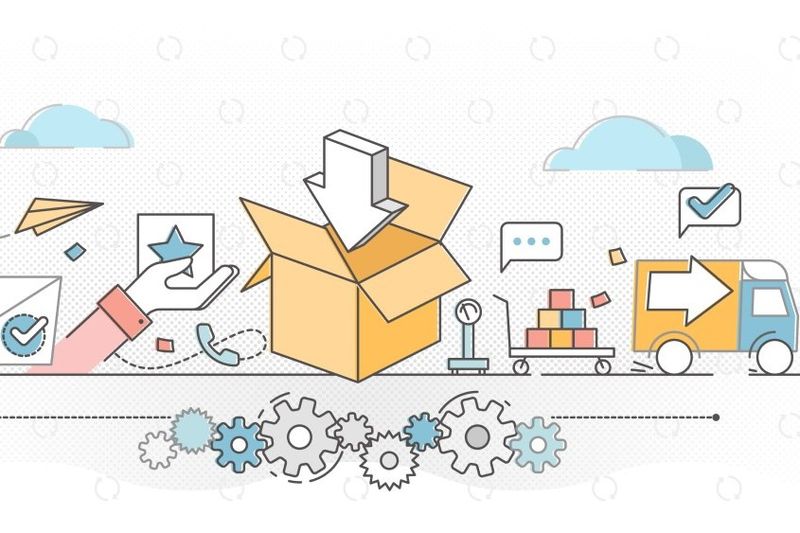
Even with a structured ecommerce fulfillment strategy, businesses often face operational challenges that impact costs, delivery speed, and customer satisfaction. Understanding these common issues - and how to solve them - helps optimize supply chain fulfillment and improve overall performance.
Poor inventory control is one of the biggest fulfillment problems in ecommerce. Overselling, stockouts, or excess inventory can damage customer trust and increase storage costs.
Causes:
Solutions:
Modern consumers expect fast delivery fulfillment benefits, and delays can quickly harm brand reputation.
Causes:
Solutions:
Rising labor, storage, and shipping expenses can significantly reduce profit margins.
Causes:
Solutions:
Returns (reverse logistics) are inevitable in ecommerce, but poor handling can increase costs and frustrate customers.
Causes:
Solutions:
Efficient return management improves operational flow and enhances the overall ecommerce fulfillment strategy while protecting brand trust.
Ecommerce fulfillment is the complete process of receiving, storing, picking, packing, shipping, and handling returns for online orders. It ensures customers receive their purchases accurately and on time. Fulfillment connects inventory management, order processing, and delivery within the broader ecommerce supply chain.
A fulfillment center processes online orders quickly and efficiently. It receives inventory, stores products, picks and packs items when orders are placed, ships them to customers, and manages returns. Unlike warehouses, fulfillment centers focus on fast order turnaround for ecommerce businesses.
No, fulfillment is not the same as shipping. Shipping is only one step in the fulfillment process. Fulfillment includes receiving inventory, storage, order processing, picking, packing, shipping, and returns management.
Third-party fulfillment (3PL fulfillment) is when a business outsources storage, order processing, and shipping to an external provider. These outsourced fulfillment services help companies reduce operational workload, lower shipping costs, and scale more efficiently.
Fulfillment is important in ecommerce because it directly affects delivery speed, order accuracy, and customer satisfaction. Efficient fulfillment improves brand reputation, reduces operational stress, and gives businesses a competitive advantage in markets where fast delivery expectations are high.
Logistics is the whole supply chain: sourcing, storing, transporting, and delivering goods. Fulfillment is the part that handles customer orders: receiving, picking, packing, shipping, and processing returns. In short, logistics moves products through the supply chain, while fulfillment gets one specific order to one specific customer.
Fulfillment cost depends on several fees: receiving and storage, pick-and-pack, packaging materials, shipping, and returns handling. Order volume, product size and weight, and delivery destination all change the total. Ask any provider for a full fee breakdown, so you can compare the cost per order rather than only the headline price.
Understanding what fulfillment is goes far beyond knowing how products are shipped. Fulfillment is the complete order fulfillment process - from receiving inventory and storing products to picking, packing, shipping, and handling returns. It is the operational engine that powers every successful ecommerce business.
When managed effectively, fulfillment services do more than move products. They improve customer satisfaction, protect brand reputation, and optimize costs across the supply chain. Fast delivery, accurate orders, and smooth returns are no longer competitive advantages - they are customer expectations.
Most importantly, fulfillment directly impacts ecommerce scalability. As order volume grows, businesses need systems, technology, and infrastructure that can handle seasonal spikes, multi-channel sales, and global expansion without operational breakdowns.
In today’s competitive digital market, fulfillment is not just logistics. It is a strategic growth component that determines how efficiently your business can scale, compete, and deliver exceptional customer experiences.
Printway.io - Print on Demand fulfillment