"How to make money with print on demand" is one of the most searched questions by beginners in 2026 who want to start an online business without inventory or large capital. With the print-on-demand (POD) model, products are made only after a customer orders - which makes it low-risk and beginner-friendly on platforms like Etsy, Shopify, and Amazon.
This guide walks through the full system: how the money is actually made, how to find profitable niches, which products and platforms to choose, how to start a store, why your fulfillment partner decides whether you succeed, and how to drive consistent traffic from day one.
Quick take: You make money with print on demand by creating designs, listing them on an online store, and earning the margin between the retail price and the fulfillment cost each time a customer orders. A third-party POD partner produces and ships every product, so you never buy or hold inventory.
How to make money with print on demand?
Making money with print on demand comes down to one simple economic engine: you earn the margin between what a customer pays and what production and shipping cost. There is no inventory to buy, no warehouse to rent, and no upfront stock risk - which is exactly why POD is one of the most accessible online businesses to start in 2026.
(New to the model itself? Start with our explainer: What Is Print on Demand. This guide assumes you already understand the basics and focuses purely on the money side.)
Here is the money-making workflow, end to end:
You create a design. A quote, a personalized layout, an illustration - applied to a product like a wooden sign, mug, plaque, or t-shirt.
You list it for sale. The product goes live on your Etsy shop, Shopify store, or Amazon listing at a retail price you set.
A customer orders. They pay you the full retail price at checkout.
A third-party POD partner produces and ships it. Your partner - such as Printway - prints, finishes, packages, and ships the product directly to the customer, often under your brand.
You keep the difference. Retail price minus production cost, shipping, and platform fees is your profit.
Because step 4 is fully handled by your partner, the only things you actively manage are design, listing, and marketing. There is no packing, no shipping runs, no inventory spreadsheet. Money is made on every order automatically, and your job is to get more orders.
This is why "how to make money with print on demand" is really a question about four decisions: the niche you pick, the products you sell, the platform you sell on, and the partner who fulfills. Get those four right and the engine runs. The eight steps below cover each one.
2-Best Ways to Make Money with Print on Demand
The sellers who consistently profit with POD do not start with "cool designs." They start with buyer identity, match it to high-margin products, list on the right platform, and protect the whole operation with a reliable fulfillment partner. The eight-step system below is the path most successful US POD sellers actually follow.
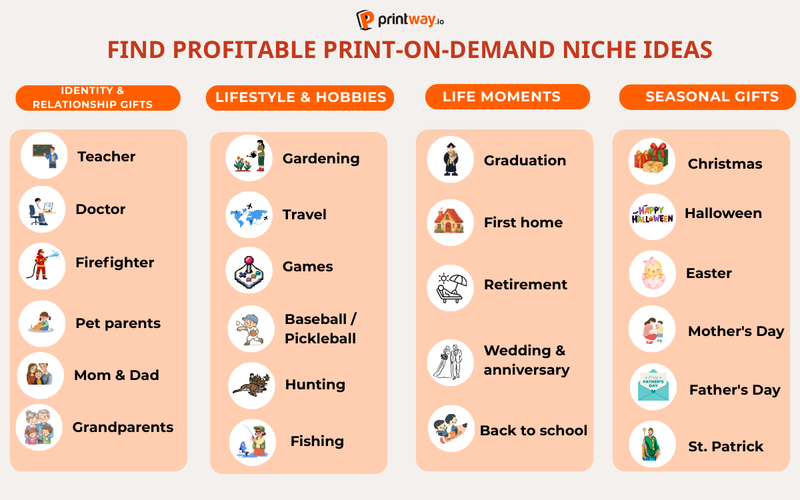
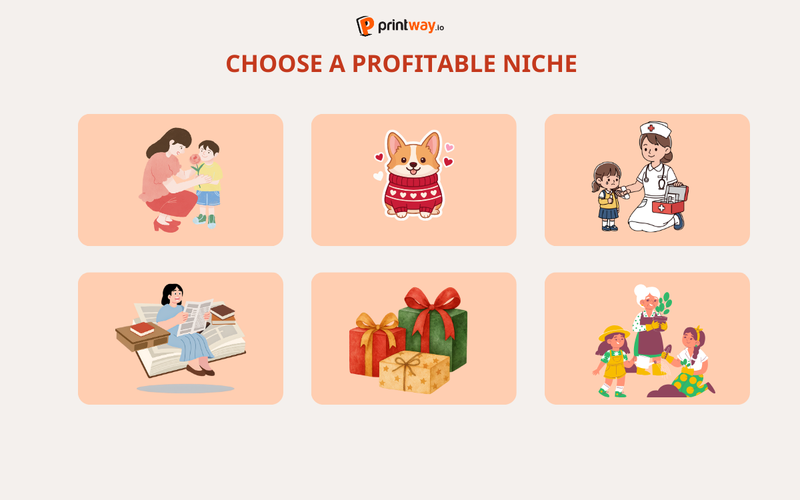
Finding the right print-on-demand niche ideas is the single most important step in making money with POD. Most beginners fail not because of bad designs, but because they target markets that are too broad, too competitive, or carry no emotional buying intent.
How to research niches on Etsy and Amazon. Both marketplaces are real-time databases of what people are already buying.
On Etsy: search "personalized gift for…" and let autosuggest reveal sub-niches; study best-seller badges and review counts (1,000+ reviews signals proven demand); note the titles, tags, and personalization structures (names, roles, dates) that top listings repeat.
On Amazon: search buyer-intent phrases like "gift for nurse" or "dog mom mug"; filter for 4-star-plus ratings and high review volume; track which product types appear again and again (mugs, canvases, shirts, plaques); read reviews to understand why people buy.
Signs a niche is profitable: many listings with high review counts, a heavy focus on personalization, products used mainly for gifting, a clear emotional identity (job, family role, hobby, pet), and - critically - the same niche appearing across Etsy, Amazon, and Pinterest. A niche that exists on all three platforms has consistent, proven demand.
Proven POD niches in the US market: family roles (Mom, Grandma, Dad) on plaques and canvases; pet lovers (Dog Mom, Cat Dad) on shirts, mugs, and ornaments; occupations (Nurse, Teacher, Firefighter, Veteran) on tumblers, keychains, and signs; hobbies (Fishing, Camping, Golf) on shirts and metal signs; and life events (Wedding, Graduation, New Baby) on acrylic plaques and frames. These work because they combine identity, emotion, personalization, and gifting behavior - the exact mix that drives strong print-on-demand earnings.
2.2.Choose the Right Print-on-Demand Products to Sell
The products you choose directly determine your pricing power. Many beginners default to t-shirts because they are familiar - but experienced sellers focus on high-margin POD items that are perceived as meaningful gifts.
These products are gift-driven, not self-use, so buyers are far less price-sensitive.
Higher perceived emotional value makes it realistic to price at $39–$79 instead of $19–$29.
No sizing or fit issues means dramatically fewer returns than apparel.
They are ideal canvases for personalization - names, roles, dates, and messages.
They sell hardest in the big gifting seasons: Mother's Day, Father's Day, Christmas, Graduation, weddings.
Why this category creates higher margins: material cost stays stable while the selling price rises with personalization; layered wood and acrylic designs increase perceived craftsmanship; the products fit emotional niches perfectly (mom, grandma, veterans, nurses, teachers); and as wall or shelf decor they carry long-term sentimental value that justifies premium pricing.
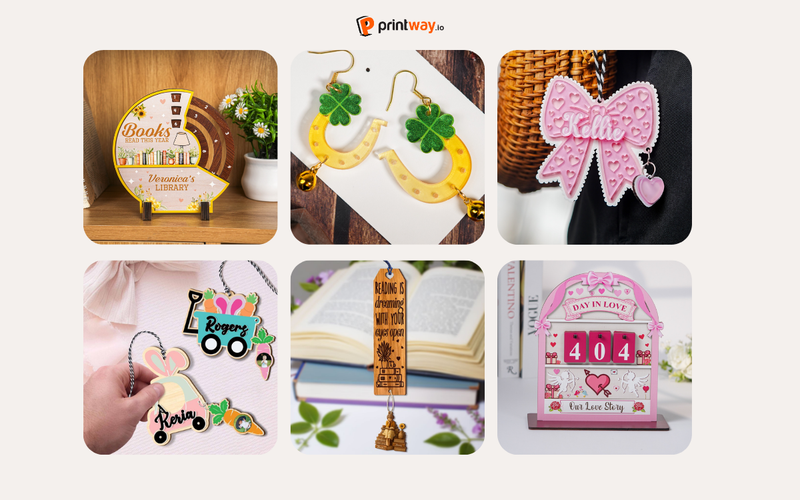
This is where a strong partner matters. Printway's catalog is built around exactly these high-value products - wooden signs, acrylic plaques, custom-shape plaques, and home decor designed for personalization - which lets sellers focus on niche marketing while offering products that naturally support higher margins.
2.3.Step 3 – Choose the Right Print-on-Demand Products to Sell
Choosing the right print on demand products directly impacts your pricing power and overall profitability. Many beginners start with t-shirts because they are popular, but experienced sellers focus on high margin POD items that are perceived as meaningful gifts - especially in the U.S. market.
Choosing among the best print on demand sites is as important as choosing products. Your platform decides how you get traffic, how you build a brand, and how fast you can scale. Most successful US POD sellers do not rely on one channel - they combine platforms strategically.
Etsy - best for personalized gifts and ready traffic. Etsy delivers built-in traffic from buyers already searching for gifts, suits emotional personalized niches perfectly, lets beginners validate niche ideas fast, and converts strongly during gifting seasons. If you sell wood plaques, acrylic signs, or custom gifts, Etsy is usually the fastest place to start.
Shopify - best for brand building and long-term scaling. Shopify gives you full control over branding, customer data, and upsells, no marketplace competition on your product page, and the ideal environment to run Facebook, TikTok, or email campaigns. This is where serious sellers scale after validating products elsewhere.
Amazon - best for volume and buyer trust. Amazon brings massive traffic and high buyer trust, works well for simple, non-personalized, volume-driven products, and rewards evergreen niches - but it demands sharp listing optimization and competitive pricing.
The smart strategy top sellers use: test niche ideas on Etsy, build a branded store on Shopify, then expand winning products to Amazon for volume. With a partner like Printway handling product quality and global fulfillment behind all three channels, you can focus entirely on choosing platforms and scaling.
2.4. Step 4 – Start a Print-on-Demand Store (Beginner-Friendly)
Starting a store today is simpler than most beginners expect. You do not need inventory, a warehouse, or large capital - only a clear niche, good designs, and a reliable provider. Here is the beginner checklist:
Choose a profitable niche - start with proven emotional, gift-driven niches (mom, dad, grandparents, pet lovers, occupations, hobbies, seasonal gifts). A good niche is one where buyers feel proud, emotional, or connected.
Create simple but meaningful designs - you do not need to be a designer. Use quotes, list-style storytelling, and personalization. Focus on layouts that suit plaques, signs, mugs, and shirts.
Connect to a reliable POD provider - choose a partner offering high-quality wood, acrylic, plaque, and decor products, global fulfillment, and stable production through peak seasons.
Upload products to Etsy, Shopify, or Amazon - match the platform to your strategy, and create multiple listings from one design by varying niche or personalization options.
Optimize your SEO listings - write clear, keyword-driven titles, tags, and descriptions based on what buyers actually search, and use mockups that present the product as a gift.
Step 5 – Work with a Reliable Print-on-Demand Partner
Many beginners assume their store failed because of bad designs. In reality, most POD stores fail because of poor fulfillment. You can have great niches, strong SEO, and real traffic - but if your partner cannot deliver consistent quality and shipping speed, your store quickly faces late deliveries in peak season, product defects, high refund rates, negative reviews that sink your ranking, and customer complaints that damage your brand.
Common problems with weak POD companies: unstable production times during Mother's Day, Q4, and Christmas; low-quality materials that look nothing like the mockup; limited product ranges that make niche expansion impossible; no clear support when issues arise; and slow international shipping to US customers. These problems silently drain print-on-demand earnings.
Criteria for choosing the right partner: high-perceived-value products (not just t-shirts and mugs), stable production capacity during peak seasons, a clear quality-control process, fast and reliable global shipping, a wide catalog for niche expansion, and a responsive support team.
Why many sellers choose Printway. Printway is a print-on-demand partner specializing in high-value gift products - wooden signs, acrylic plaques, custom-shape plaques, and home decor gift items - which carry higher margins and stronger gifting appeal than common POD items. Products are built to match US and EU market expectations, with premium materials, professional finishing, and consistent production standards. Combined with a global fulfillment system and 30,000-orders-per-day peak capacity, Printway helps sellers deliver reliably even during Mother's Day and Christmas - so they can focus on niches and scaling instead of fulfillment fires.
Step 6 – Create Designs That Sell (Even Without Design Skills)
You do not need to be a professional designer to make money with POD. You need the design structure that buyers already respond to. On Etsy, best-selling POD products follow one clear pattern:
Relatable niche + simple layout + personalization = high conversion.
The Etsy best-seller design formula: a specific emotional niche (mom, pet, nurse, couple, memorial); a list-style or statement layout that is easy to read and giftable; personalization fields (name, year, number of kids or pets, role); clean typography with minimal graphics; and a design that works across wood, acrylic, plaques, signs, ornaments, and mugs. This is why "simple" designs rack up thousands of sales - they are emotionally accurate, not visually complex.
Why personalized beats generic. A generic "Best Mom Ever" reads like a template. "Mom of 3 - Liam, Noah & Emma - Est. 2019" reads like a real gift. Personalization turns a $29 item into a $49 emotional purchase - and that gap is where real print-on-demand earnings come from.
Beginner-friendly trending niches: Mom / Grandma / Family, Pet Lovers (Dog and Cat parents), Job Pride (Nurse, Teacher, Doctor, Mechanic), Couples and Anniversary, and Memorial / Remembrance. These are easy wins because they have huge Etsy search volume, proven buying behavior, and work perfectly with text-based layouts on wood, acrylic, plaque, and sign products.
Step 7 – How to Make Money from Print-on-Demand Consistently
Anyone can make one sale. Making money consistently is what turns POD from a hobby into a business - and consistency comes from understanding the numbers and building systems that compound.
Typical profit margins. Most POD sellers run profit margins between 20% and 40% per sale, depending on product and pricing. Mid-to-high-volume sellers often reach 40–45%, especially on higher-ticket items. Custom and premium products - wall art, home decor, gift plaques - consistently command better margins than basic apparel.
Realistic monthly earnings. Beginners typically start with a few hundred dollars a month while testing products. Mid-level sellers earn $1,000–$5,000+ monthly once they find winning niches and optimize listings. Established stores with strong SEO, marketing, and repeat customers exceed $10,000+ monthly - and roughly 20% of POD sellers report annual earnings above $50,000.
Example profit breakdown. On a $39.95 wooden-sign product: production plus shipping runs roughly $15–$20; gross profit before fees is roughly $19–$24; net profit after platform fees, shipping, and marketing is commonly 20–30% of retail - about $8–$12 per sale. That figure climbs significantly when customers buy multiple items or bundles.
What actually makes earnings consistent:
SEO that compounds - well-optimized Etsy and Amazon listings keep bringing free traffic months after you publish them.
Repeat customers - branded packaging and quality products turn one-time buyers into return buyers, especially on Shopify.
Seasonal planning - Q4 and major gifting holidays can equal half of annual revenue; sellers who prepare designs and capacity in advance capture it.
Multi-platform diversification - selling on Etsy, Shopify, and Amazon protects you when any single platform's algorithm shifts.
Reliable fulfillment - consistent quality protects your reviews and ranking, which protects future traffic. This is the quiet foundation of consistent earnings.
Step 8 – Market Your POD Store (Free & Paid Traffic)
You do not need ads to start making sales - but combining free and paid traffic is how you scale. Most successful Etsy POD sellers get their first consistent orders entirely from free sources.
Free traffic methods:
Etsy SEO - your main traffic engine. Use long-tail keywords buyers actually type ("personalized mom wooden sign", "dog mom gift plaque"), front-load the main keyword in the title, and repeat keywords naturally across the title, all 13 tags, and the description.
Pinterest - works like a search engine for gifts and home decor, and POD products like wooden signs and acrylic decor perform extremely well. Pin vertical mockups (1000×1500) of products in real home settings and gift-idea pins. One strong pin can drive traffic for months.
TikTok - perfect for showing personalization "magic." You do not need to talk - just show the before (blank design) and after (names added) on a wood or acrylic product. Formats like "POV: you found the perfect gift for Mom" build curiosity and route viewers to your store.
SEO-optimized listings - your silent salesperson. A strong listing answers three buyer questions: Is this for someone like me? Can I personalize it? Is this a meaningful gift?
Paid traffic methods (once you have a validated product):
Facebook and Instagram Ads - best for retargeting and scaling proven winners; strong for emotional gift products with good creative lifestyle.
TikTok Ads - amplify organic videos that already performed; effective for impulse-driven, visually striking products.
Etsy Ads - the lowest-friction paid option; promote your best-converting listings inside Etsy's own search at $1+/day.
Pinterest Ads - extend the reach of pins that already earn organic traffic, particularly in home decor.
The rule of paid traffic: never pay to advertise an unvalidated product. Prove a product converts with free traffic first, then pour paid spend on the winners.
Common Mistakes That Stop You from Making Money with POD
Knowing the steps is not enough - most beginners lose money by repeating the same avoidable mistakes. Watch for these:
Choosing a niche that is too broad. "Gifts for everyone" beats nothing in search and converts no one. Specific buyer identities win.
Competing on generic designs. Generic quotes get undercut on price instantly. Personalization is what protects your margin.
Ignoring fulfillment quality. Picking the cheapest provider to save a dollar per unit costs far more in refunds, bad reviews, and lost ranking.
Underpricing products. Pricing a $49-worthy personalized plaque at $24 destroys your margin and signals low value to buyers.
Skipping listing SEO. A great product with a weak title and empty tags is invisible. SEO is non-negotiable traffic.
Selling only on one platform. A single algorithm change can erase a one-platform business overnight.
Not planning for peak season. Sellers who design and secure capacity late miss the Q4 window that carries the whole year.
Quitting too early. SEO and Pinterest traffic compound over months. Most sellers who fail simply stopped before the compounding began.
Avoiding these eight mistakes is, in practice, half the battle of making money with print on demand.
FAQs
Is print-on-demand profitable? Yes. Print-on-demand can be highly profitable because you hold no inventory and pay no upfront stock cost. Your main costs are the product base price and shipping, while you control the retail price. Sellers achieve the strongest margins by focusing on personalized, giftable products in emotional niches like mom, pets, jobs, and couples.
How do beginners make money with print-on-demand? Beginners make money by choosing a focused, emotional niche, creating simple personalized designs, listing on a platform like Etsy, optimizing listings for SEO, and letting a reliable POD partner produce and ship every order. The earnings come from the margin between retail price and fulfillment cost - no design degree or inventory required.
Which platform is best to make money with print-on-demand? Etsy is best for beginners because it has built-in buyer traffic for personalized gifts. Shopify is best for building a long-term brand and scaling with ads. Amazon is best for high-volume, evergreen products. Most successful sellers test on Etsy, scale on Shopify, and expand to Amazon.
What are the best print-on-demand products? The best print-on-demand products are high-perceived-value items bought as gifts - wooden signs, acrylic plaques, home decor, mugs, and apparel. Products that allow personalization and fit emotional niches convert better and support premium pricing.
Can I do print-on-demand on Etsy? Absolutely. Etsy is one of the best platforms for POD, especially for personalized gifts, because it already has buyer traffic searching for custom and meaningful items. You must disclose your production partner in each listing, which Etsy fully permits.
How do I start a print-on-demand business? Choose a profitable niche, create simple personalized designs, connect to a reliable POD provider, list products on Etsy or Shopify, and optimize your listings for SEO. You need no design skills and no inventory to begin.
Which print-on-demand company is best for beginners? The best POD company for beginners offers high-quality products, stable fulfillment, and fast shipping to your target market. For sellers targeting the US and EU with personalized gift products like wood and acrylic decor, Printway is a reliable partner with a high-value catalog and global fulfillment support.
Final Thoughts - Why Print-on-Demand Is Still One of the Best Online Businesses in 2026
Making money with print on demand is not about being a designer, running expensive ads, or chasing trends. It comes down to a simple formula that works exceptionally well in 2026: the right niche + the right products + the right print-on-demand partner.
POD remains one of the easiest online businesses to start - no inventory, no upfront capital, no packing or shipping, and you can run it from a laptop at home. But what makes it powerful is not how easy it is to start; it is how far it can scale. With personalized products in emotional niches like mom, pet, job, couple, and memorial, you are not selling items - you are selling meaningful gifts people actively search for every day.
This is also where most beginners fail - not because their designs are bad, but because their fulfillment partner cannot keep up when orders grow. Late shipping, poor quality, and refund issues are what kill POD stores during peak seasons. That is why choosing the right partner is as important as choosing the right niche.
With high-value products like wooden signs, acrylic plaques, and personalized home decor, and a global fulfillment system built for US and EU markets, Printway helps sellers turn good ideas into reliable, scalable POD businesses.
Ready to start earning?Connect your store to Printway - pick your niche, list your designs, and let production, fulfillment, and shipping run automatically from your very first order.
Written by
Hanh HoangHanh Hoang is a marketing leader at Printway, with 4+ years of hands-on experience in Print-on-Demand, eCommerce marketing, and cross-border selling. She works closely with POD sellers to optimize product strategies, customer experience, and growth performance.
If you’re looking for practical insights and proven strategies to run and scale a successful eCommerce business, explore Hanh’s articles on Printway’s blog, where real-world experience meets actionable guidance.
Recommended for you
Your Custom Prints, Your Way, On-Demand!
100% free to use
300+ High-Quality Products
No order minimums
Complete automation
FREE 1-on-1 Consultation: Discover POD Growth with Printway