
Hanh Hoang
Jun 30 2026 •9 minutes
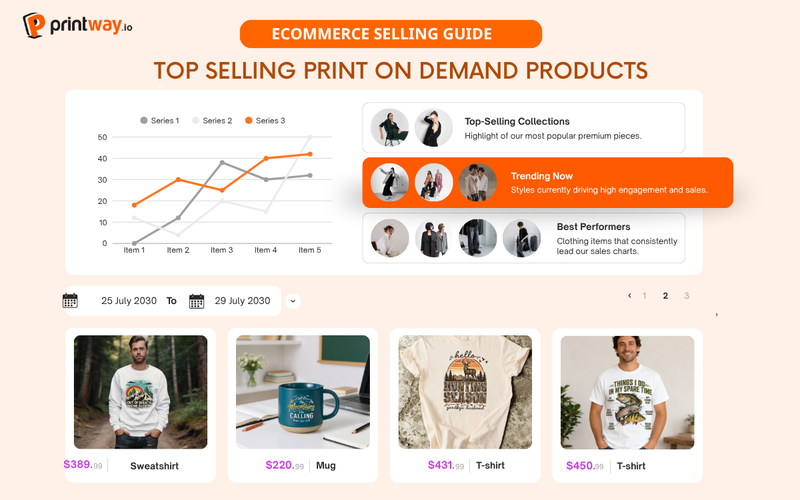
The print-on-demand market is projected to surpass $11 billion in 2026 and is growing at a compound annual rate above 23%. For sellers, the question is not whether POD is viable. It is which products to sell. The wrong product choice means competing on price in saturated categories. The right choice means riding demand curves with healthy margins and built-in repeat purchase behavior.
The top selling print on demand products are items that combine consistent consumer demand with strong personalization potential. In 2026, custom apparel (t-shirts, hoodies), mugs and drinkware, wall art and home decor, and personalized gifts lead the market. These categories succeed because they allow sellers to create unique products with no inventory risk while tapping into proven buyer behavior.
This guide breaks down each top-selling category with real sales data, explains why these products outperform, and gives you a framework for choosing what to add to your store next.
Print on demand works on a simple model: products are manufactured only after a customer orders, eliminating inventory risk and upfront investment. This makes POD one of the most accessible ecommerce models for scaling a business. But not every product category performs equally.
The top selling print on demand products share two defining characteristics.
First, they have proven, sustained demand. People search for and buy these products consistently, not just during seasonal spikes. Second, they offer strong personalization potential. Customization transforms a commodity product into something unique, which eliminates direct price comparison and protects margins.
According to Grand View Research, apparel accounts for 39.5% of POD revenue, while home decor follows at 27% and is growing at the fastest rate (24.5% CAGR). These numbers reflect where buyer demand is concentrated and where sellers should focus.
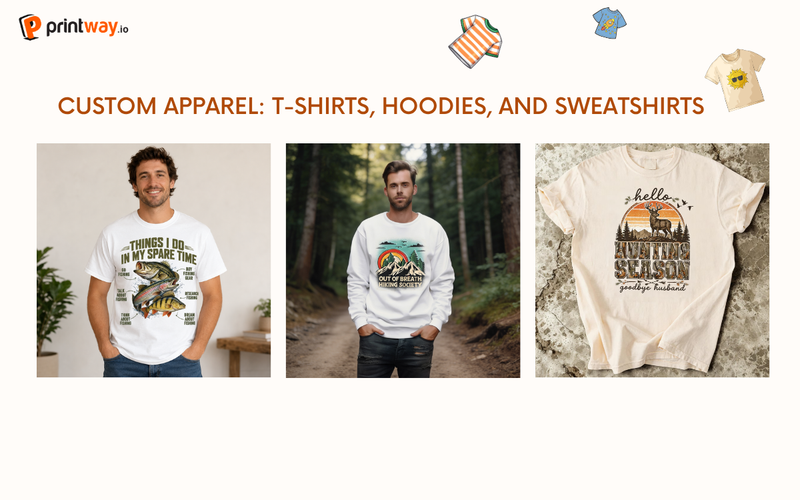
Apparel dominates the POD industry with a 39.5% market share, and for good reason. T-shirts remain the single most popular print-on-demand product due to their universal appeal, low production cost, and unlimited design flexibility. The most profitable t-shirt niches in 2026 center on pet lovers, specific professions (nurses, teachers, firefighters), hobbies (fishing, gaming, gardening), and cultural moments. Generic designs struggle. Specificity wins.
Hoodies are the revenue powerhouse of POD apparel. According to AMZScout, hoodies generate approximately 10,903 monthly sales with $268,497 in monthly revenue on Amazon. The 2026 trend favors heavyweight, premium-feel hoodies over lightweight basics. Sellers who position hoodies as flagship brand products rather than generic print items command significantly higher prices.
Production costs for t-shirts run $7 to $12, with retail prices of $22 to $35 yielding 30 to 40% net margins. Hoodies cost $15 to $25 to produce and retail for $45 to $70, delivering higher absolute dollar margins per sale. Printway offers both DTF and AOP apparel options across Gildan and Bella Canvas blanks, with FBA and FBM fulfillment flexibility.
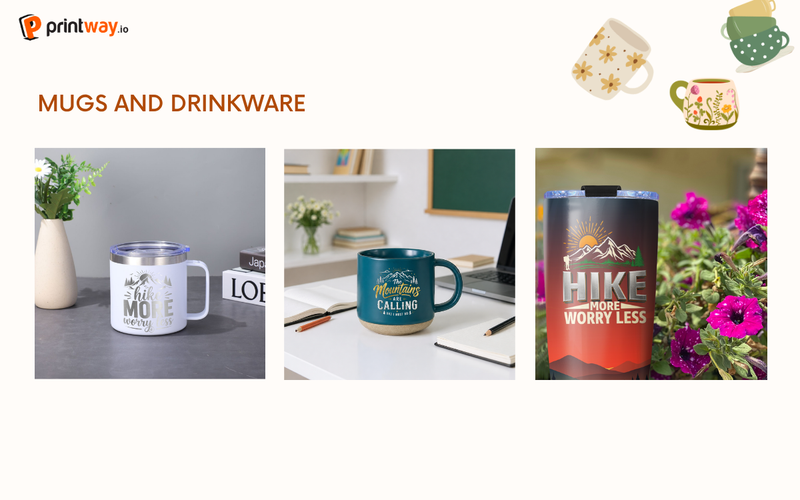
Mugs are one of the most reliable POD products. They are affordable to produce ($4 to $7 per unit), easy to ship, and serve as the default gift product for occasions ranging from birthdays to holidays. Retail prices typically land between $12 and $22, yielding margins of 40 to 55%.
Water bottles have emerged as a high-volume category. AMZScout reports that water bottles average 17,257 monthly sales on Amazon, generating approximately $409,635 in monthly revenue. This makes them one of the highest-revenue individual product types in the POD space.
What makes drinkware sell is its giftability. Funny sayings, profession-specific humor, pet portraits, and personalized names turn a basic mug into a thoughtful, shareable gift. Mugs also pair well with bundle strategies: combine with a matching coaster or greeting card to increase average order value. Printway's drinkware catalog includes ceramic mugs, two-tone mugs, stainless steel mugs, and personalized pottery mugs.
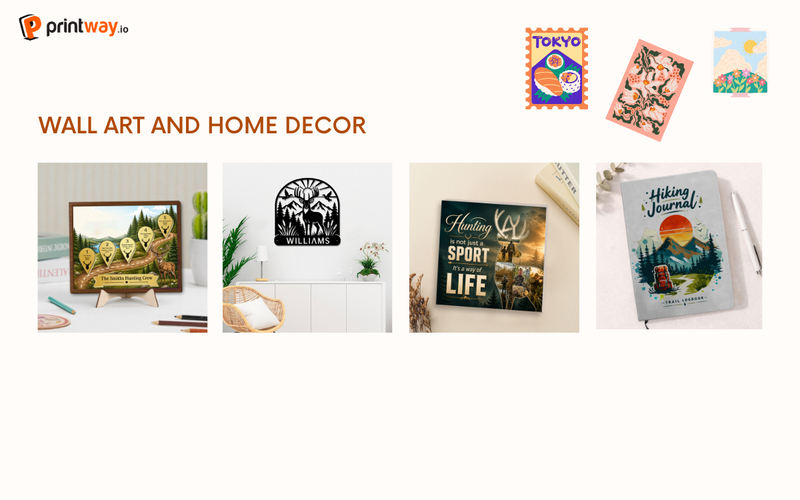
Home decor is the fastest-growing segment in print on demand, with a projected CAGR of 24.5% according to Grand View Research. The global wall art market alone is valued at $61 billion and is projected to double by 2030. Canvas prints, posters, framed art, and acrylic pieces consistently deliver the highest absolute dollar margins in POD, with gross margins of 45 to 60%.
Buyers perceive wall art through the lens of home furnishing prices, not POD prices, which supports premium pricing. A canvas print that costs $10 to $15 to produce can retail for $35 to $80 depending on size and design. Popular design categories include minimalist typography, botanical prints, custom coordinates (latitude/longitude of meaningful locations), pet portraits, and milestone art.
Beyond wall art, broader home decor products like pillows, blankets, doormats, and curtains are gaining strong traction. Remote work trends have accelerated demand for home personalization, and consumers are willing to invest in items that reflect their identity. Printway's Home Decor category is its flagship offering, with 900+ total SKUs including canvas prints, fleece blankets, cushion covers, bedding sets, and rugs.
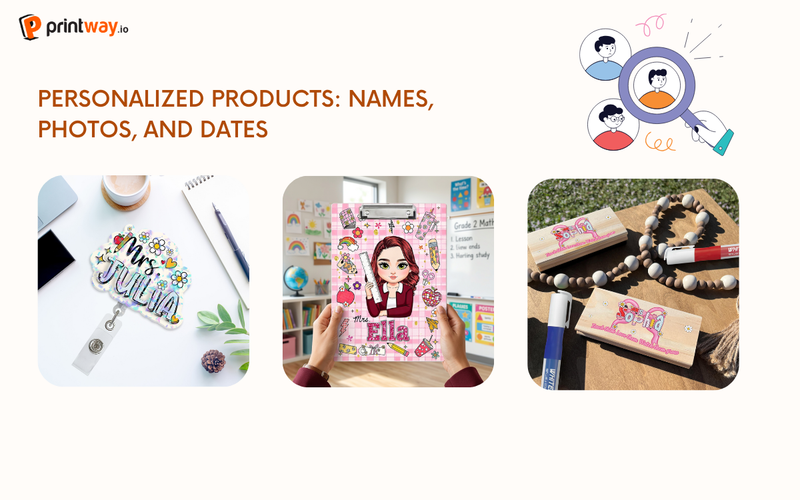
Personalization is the single most powerful driver of POD profitability. A generic mug has a thin margin. A mug with a custom pet portrait and the pet's name commands a premium. Personalization eliminates direct price comparison because no two products are identical.
According to Straits Research, the personalized products segment within POD is growing faster than any other, driven by consumer preference for items that carry emotional significance. The global personalized stationery market alone is projected to grow from $15.57 billion in 2025 to $22.3 billion by 2035.
The top-performing personalization types in 2026 are name and monogram customization (jewelry, mugs, apparel), photo-based products (blankets, ornaments, phone cases), date and milestone markers (anniversary art, baby's first Christmas ornaments), and recipient-targeted gifts (gifts for mom, dad, teacher, best friend).
Printway's catalog is built around personalization, with products across ornaments, jewelry trays, photo light boxes, puzzle cards, and engraved items that allow sellers to offer deeply customized products through integrations with Etsy, Shopify, Amazon, WooCommerce, and TikTok Shop.
Stickers offer the highest percentage margins in POD. Production costs often fall below $1, with retail prices of $2 to $5 individually or $8 to $15 for packs. According to AMZScout, custom stickers reach approximately 110,000 monthly searches, confirming sustained demand. They work as impulse purchases, low-risk test products for new designs, and entry points for building customer relationships.
Phone cases deliver strong margins too. AMZScout data shows custom phone cases average a 68% net margin and generate approximately $18,760 in monthly revenue on Amazon. The key is focusing on the top 5 to 10 most popular phone models and refreshing designs quarterly to match trends and new device launches.
Printway's Accessories range includes acrylic keychains, car ornaments, car vent clips, bottle openers, fridge magnets, and various keychain formats (slider, maze, rotating, shaker) that give sellers unique product options competitors cannot easily replicate.
The top selling POD products are not random bestsellers. They share four structural advantages that make them consistently profitable.
Not every trending product is right for your store. Use these four filters to evaluate any product before adding it to your catalog.
According to Mordor Intelligence, the POD market is growing at a CAGR above 23%, but growth is not evenly distributed. Home decor (24.5% CAGR) and personalized products are growing faster than basic apparel. Allocate your product development resources toward the highest-growth segments.
The top selling POD products in 2026 are custom t-shirts, hoodies, mugs, wall art, personalized ornaments, phone cases, tote bags, and stickers. Apparel holds 39.5% of the global POD market, while home decor is the fastest-growing segment at 24.5% CAGR. Personalized items consistently outperform generic products on both margin and conversion rate.
Personalized gifts, custom ornaments, niche t-shirts, mugs with funny sayings, and handmade-style home decor are top sellers on Etsy POD. Etsy buyers search by recipient (gifts for mom, gifts for men), so sellers who optimize listings with recipient-targeted keywords see the highest conversion rates.
Yes. The global POD market is projected to exceed $11 billion in 2026, growing at 23%+ CAGR. Healthy net margins range from 20% to 35% for standard products and 40% to 60% for personalized items. Success requires niche targeting, strong designs, and a fulfillment partner with competitive base costs.
The most profitable POD niches combine emotional appeal with specific audiences: pet lovers, profession-based humor (nurses, teachers), hobby communities (fishing, gaming), milestone gifting (weddings, new babies), and memorial keepsakes. Niche stores outperform general stores because they rank better in search and convert at higher rates.
The global print-on-demand market is projected to exceed $11 billion in 2026, growing at a CAGR above 23%. The top selling product categories are custom apparel (39.5% market share), home decor (27% share, 24.5% CAGR), mugs and drinkware, and personalized gifts. Hoodies generate approximately $268,497 in monthly revenue on Amazon, while water bottles average $409,635 monthly.
Personalized products consistently achieve higher margins (40-60%) than generic items (20-30%).
Printway, a print-on-demand fulfillment provider founded in 2019, offers 900+ products across ornaments, home decor, apparel, and accessories.
The company holds the #1 position in ornament production within the POD industry and operates with a capacity of 30,000 orders per day across facilities in the USA and Vietnam. Printway integrates natively with Etsy, Shopify, WooCommerce, Amazon, and TikTok Shop.
The data is clear: top selling print-on-demand products in 2026 are those that combine proven demand with personalization potential. Apparel provides volume. Mugs and drinkware deliver reliable margins. Wall art and home decor offer premium pricing. And personalized products across all categories provide the margin protection that separates profitable stores from struggling ones.
Choose products backed by data, not guesswork. Target niches where your designs can stand out. And partner with a fulfillment provider whose catalog depth and production capacity match your growth ambitions.