Hanh Hoang
Mar 16 2026 •19 minutes
Have you ever heard the term Print-on-Demand (POD)? It’s a booming e-commerce business model that lets you sell custom products online without holding inventory, using print on demand fulfillment partners to print and ship orders on demand. But what exactly is Print-on-Demand and how does one go about starting a POD business? This article will provide you with all the information you need to understand this exciting business model.
Print on Demand, which is abbreviated as POD, is a business model where products are only made (or ‘printed’) after an order has been placed. Unlike traditional sales methods, in which companies produce and store products in large quantities in the hope of selling them, POD ensures that production only happens after an item has been purchased.
Besides, Print on Demand is classified as a subset of Dropshipping. This is an e-commerce model in which sellers can print their designs on products such as mugs, t-shirts, hats, shoes, phone cases, etc., and sell them on platforms such as Amazon, eBay, Etsy, or their website.
POD sellers use fulfillment services to process orders for customers, also known as order fulfillment, to process orders for customers. Accordingly, the Print-on-Demand process starts when a customer places an order for a product in an online store. Then, this order is sent to the POD service provider, which then prints the design on the product according to the requirements of the customers and ships it to them.
According to the Print-on-Demand definition above, this is an order fulfillment method where sellers just need to design, post products, and attract customers to get orders. Then, the POD partner company prints and ships the goods to your customers on your behalf. In other words, when looking at what is Print-on-Demand, it can be seen that this is a white-label approach, which means no mention of your partner on the product or packaging.
Because it does not require large capital, anyone can make POD designs and sell them on e-commerce platforms. Below is the general operating procedure of the Print-on-Demand model.
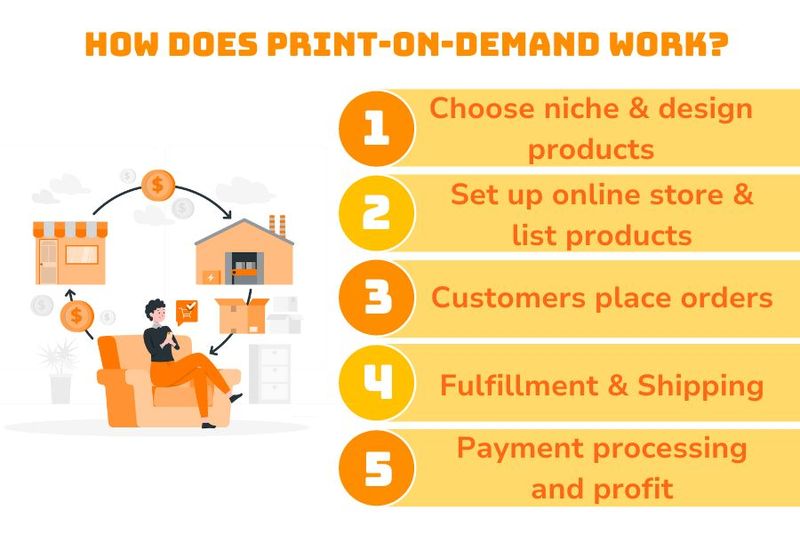
The first thing to do to implement the Print on Demand model is to identify “What is Print-on-Demand item you want to sell?” and choose a niche market for the product. Because finding a profitable niche is key to the success of any POD seller.
In the POD model, the seller first needs to select or design the products they want to sell, such as t-shirts, mugs, posters, etc. The designs can be self-created by the seller, or alternatively, you can hire a professional designer to work on them. Either way, you need to make sure the designs are high in quality and align with both your brand image and the preferences of your target audience.
Once a print on demand fulfillment supplier is chosen, the seller can integrate it into your web storefront. Besides, many users also provide plugins or APIs to connect your sales channels for seamless order forwarding.
At the same time, the seller will add some unique designs and apply them to the products you want to sell, such as apparel, home goods, accessories, and beyond. These products will be listed on a POD platform or their own e-commerce website. After that, the POD platform will handle the backend logistics, such as production, inventory, and shipping.
Once you have set up your POD store and uploaded your product designs, the next crucial step is to attract and convert customers to place orders. This is the time for you to put effort into implementing Marketing campaigns to drive traffic and sales for your online store. When a customer places an order for a product on the seller's online store or the POD platform, the order details are sent to the POD fulfillment unit.
After receiving the information of the order, the print on demand fulfillment unit produces the item on demand, packages it, and ships it directly to the customer. This is a great advantage of the Dropshipping Print-on-Demand service because the seller can eliminate the need to pre-purchase and stock inventory.
The selling platform processes the payment from the customer, then you pay the print on demand fulfillment supplier the base cost of the product, printing, and shipping. Your profit is the difference between the retail price you set and the total base cost from the fulfillment partner. By adjusting your pricing, product mix, and marketing, you can scale your print-on-demand business while keeping your operations lean and flexible.
Nowadays, the Print-on-Demand business model has emerged as a game-changing solution for entrepreneurs, creatives, and small businesses. However, like any other business model, when exploring what is Print-on-Demand, this model also comes with its own unique set of advantages and challenges. In this section, we'll explore the key pros and cons of the print-on-demand approach to equip you with a comprehensive understanding of this model.
By eliminating the need for upfront inventory investment and minimizing operational complexities, POD has lowered the barriers to entry and empowered a new generation of online sellers. Specifically, the major advantages of this business model are as follows:
After learning a little about what is Print-on-demand, do you see the disadvantages of this model? Printway would like to list a few common limitations of the POD business model as follows:
Anyone with creative ideas and passion can build a profitable business with the POD model. There are countless niches that unite communities of people with the same passion for POD in particular and e-commerce in general. You too can be the one to turn these passions into beautiful products. In general, according to Printway, the most suitable subjects to try the POD model include:
Print-on-demand can help with expanding personal brands for both artists and creators, as well as building a stronger relationship with their communities through customized products. E-commerce Print-on-Demand takes all the burden away from a logistical standpoint while artists and creators can focus on creating their art. In this way, they don’t have to lose themselves in time-consuming processes such as shipping and packaging products.
Especially for musicians, creating custom products for their audience is a no-brainer since Print-on-Demand opens up another income stream besides earning from royalties and touring. Plus, imagine your fans wearing your special shirt on the street and posting it on social media channels. It can be seen that it's a real-life advertisement and it’s truly a win-win situation.
Print-on-demand and e-commerce are a natural fit. Selling custom products online is great for both beginners in the e-commerce world and someone looking to expand their existing business.
For aspiring online entrepreneurs, the e-commerce Print-on-demand model is an ideal way to break into the world of e-commerce. It allows them to start an online product business with minimal upfront investment and risk. Moreover, e-commerce newcomers can focus on building an engaging brand, creating designs, and driving traffic to their online storefront without the constraints of managing physical inventory.
Established brands and large enterprises can also leverage the agility and cost-savings of print-on-demand. Even if a company has a strong brand presence and loyal customer base, the traditional manufacturing and fulfillment model can be resource-intensive and slow to adapt.
By adopting an E-commerce Print-on-Demand model, global brands can quickly expand in product categories to meet customer demand without investing heavily in costly inventory and logistics. This allows them to be more responsive to market trends and customer preferences while freeing up resources to invest in core competencies and marketing initiatives.
Which print-on-demand printing technique is best for your products and fulfillment workflow? Below are the most common methods used by POD suppliers.
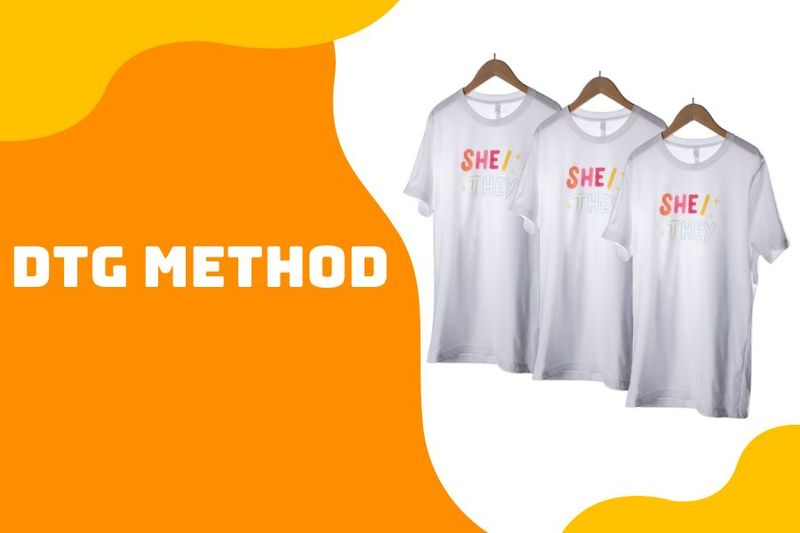
When learning what is Print-on-Demand, you have probably heard about DTG printing technology. Direct-to-garment, abbreviated as DTG, is a printing method where ink is printed onto a garment and then left to soak into the fabric. With this printing technique, you can print highly detailed and vibrant custom clothing designs.
DTG empowers you to create practically any design you can imagine such as photos, intricate patterns, and even bold, colorful graphics are all within reach. With DTG, the color palette is your playground. Whether you want a subtle single-tone design or a full-blown rainbow explosion on a shirt, DTG printing can handle it, especially with the sRGB color profile.
Besides, DTG is also a more sustainable business model than, for example, screen printing. These printers are developed with advanced technology that produces virtually no wastewater and uses less energy, all of which lowers the carbon footprint.
However, if you want to customize white-label products like t-shirts or sweaters with the help of DTG, these kinds of graphics don’t print well with this method. Printers will attempt to make up the missing color by spreading the ink, causing the design to have gaps.
Screen printing takes a different approach compared to DTG. Instead of directly injecting ink, it pushes ink through a woven mesh screen onto the fabric. This creates a vibrant, raised effect as the ink sits on top of the fabric, rather than soaking in.
However, screen printing needs to create a stencil to block ink and form the design. This stencil needs to be made for each unique design, leading to longer setup times. For this reason, screen printing only shines in bulk production. And it wouldn't be cost-effective to create stencils for just one or two shirts if it’s taken hours to create the stencils for your POD design.
Additionally, screen printing typically uses a limited color palette of around 9 colors. While achievable, more complex designs with a wider range of colors become impractical and expensive. Finally, screen printing's reliance on water and potentially non-biodegradable inks makes it less environmentally friendly compared to DTG printing.
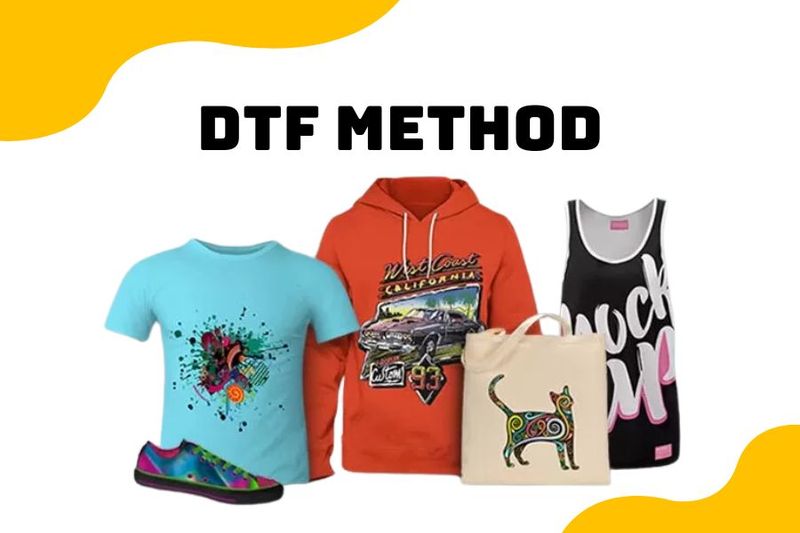
Nowadays, direct-to-film (DTF) printing is one of the most versatile techniques available in the print industry. Most print methods are limited to a range of specific fabric types, like cotton and cotton-blended materials. With a DTF print, you can be more flexible because this method allows print with tougher fabric varieties like polyester, fleece, nylon, and of course, classic cotton.
DTF printing method involves printing a design onto a piece of PET film - a special film with a coating that helps transfer designs, using water-based inks and a special powder adhesive. In the next step, the design on the PET film is heat transferred to fabric using a heat press machine. Therefore, this printing method is durable and the designs come out very detailed and vibrant.
Moreover, direct-to-film prints are versatile and can handle even the most complex designs. Whether your design includes photos, intricate graphics, fine art, or small text, DTF printing method can bring it to life with sharp, clear, and striking results.
It can be seen that with this technique, you can take advantage of many outstanding advantages for your POD product. First, the designs can keep looking fresh even with heavy wash and wear. Second, you can make color or text come alive on designs using transparent space. Third, sellers can create designs for more fabrics,...
Sublimation printing offers a unique way to personalize a variety of products. The process starts with your design being printed onto a special transfer paper. This paper is then used to transfer the design onto the final product using heat and pressure. You can imagine that it’s like those old-school heat-transfer designs you could iron onto your t-shirts but much better.
With this technique, heat is a must to achieve the best design results since it activates the sublimation ink and bonds it to the surface. For the ink to fully penetrate the fabric, it must be subjected to pressure and exposed to high temperatures of 350–400°F (176–205°C).
But sublimation printing isn't limited to just fabrics like t-shirts and socks. The great point of this process is its versatility. Because the ink bonds with the material at a molecular level, it can be used on a wide range of surfaces, both hard and soft. This opens up a world of possibilities for customization, from mugs and phone cases to keychains,...
If you’re wondering how to start a POD business, the process is simpler than you think. By following these key steps, you can build a solid foundation and start selling without inventory.
Your niche determines how well you stand out in the POD market. Focus on a specific audience with clear interests, such as personalized gifts, pet lovers, or trending themes like AI art. A strong niche helps you target the right customers and increase conversion rates.
>>> Explore top Print On Demand trending niches to find high-potential ideas
Selecting the right platform is essential for reaching customers and managing your store. You can choose marketplaces like Etsy or Amazon for built-in traffic, or Shopify for full brand control. Make sure your platform integrates smoothly with a fulfillment partner like Printway.
Design is the core of any POD business. You don’t need to be a professional designer — tools like Canva or AI can help you create high-quality visuals. Focus on designs that match your niche and evoke emotion or identity.
Build a clean, user-friendly store with strong branding. Use high-quality product images, clear descriptions, and optimized SEO content to attract buyers. A smooth checkout process also helps reduce cart abandonment.
Marketing is what drives traffic and sales. Use channels like TikTok, Facebook Ads, and email marketing to reach your audience. Test different creatives and optimize based on performance to scale effectively.
>>> Related content: Starting a Print-on-Demand Business in 2026: A Beginner’s Guide to Making Money Online
In this installment, let's look at some trending products to sell online with Printway, as well as timeless classics that you should have on your online store!
When discovering what is Print-on-Demand business, it is certainly not difficult to see that T-shirts are one of the most popular items. According to the latest POD statistics, t-shirts consistently rank among the top-selling items, reflecting their unwavering demand across diverse demographics.
Custom t-shirts allow you to tailor designs that resonate with your target audience. It may be bold graphics, minimalist statements, or niche-specific themes that cater to particular interests.
A cozy hoodie is a wardrobe staple, making it perfect for year-round sales. Since they’re in high demand all year round, custom hoodies are perfect to sell for all online stores. In addition, sellers can be flexible to adapt styles and designs to fit your niche and create unique pieces for any occasion.

Another POD product category that’s in high demand is stationary. From students to artists, everyone loves unique stationery. Therefore, sellers can offer notebooks, planners, and notepads featuring your designs for a creative touch in everyday life.
Drinkware, especially mugs, has always been one of the best-selling categories for print-on-demand businesses. You can avail a lot of customized products in this category, such as enamel mugs for adventurers, classic mugs for mornings, water bottles for hydration, and tumblers for stylish sipping,...
Another important thing to discuss before starting to sell online is picking a print-on-demand company to be your partner. Let’s have a look at what sellers should pay attention to when working with E-commerce print-on-demand services!
As we’ve discussed above, there are a bunch of different product customization techniques to choose from. When you research print-on-demand companies, you need to focus on what methods they offer and decide whether or not they align with your business needs. According to experienced people, only by testing different companies and seeing the products in real life will you be able to understand if it’s what you’re looking for.
Besides, some print-on-demand businesses offer samples with a discount but with others, sellers will have to pay the full price. Therefore, please pay more attention to this to save costs and avoid misunderstandings between parties.
Before choosing the POD supplier, sellers need to identify where the fulfillment facilities of POD companies are located. Ideally, they should be in multiple locations all over the globe because that minimizes shipping costs for your global customers.
Fulfillment time is defined as the time spent creating your products, such as physically printing and packing a t-shirt for shipment. A faster turnaround is ideal, but you need to consider the trade-off:
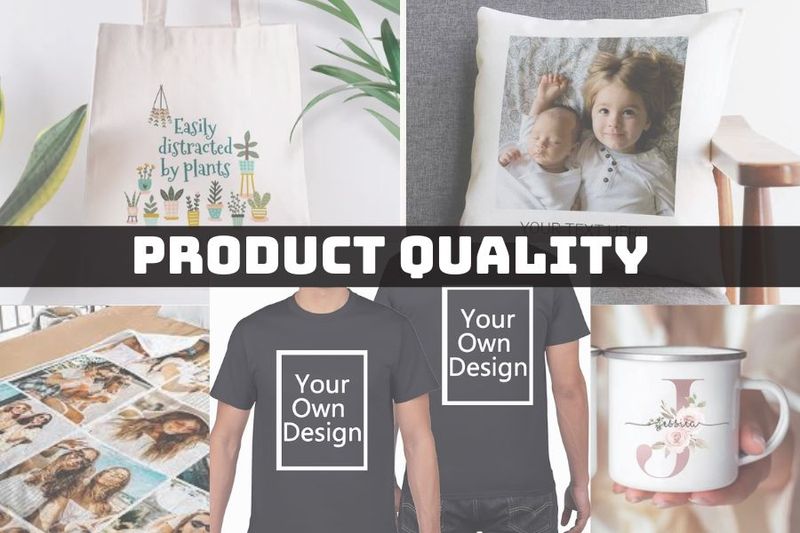
This is the most important thing to be on the lookout for in your print-on-demand partner. Without quality products, your business can’t thrive. And subpar product quality will be the cause of destroying your brand reputation. Therefore, prioritize POD partners that offer high-quality products you can confidently stand behind. At the same time, don't forget to order samples to verify quality firsthand!
Choosing the best print-on-demand platforms is crucial for building a successful POD business. Each platform offers different advantages depending on your goals — whether it’s scaling fast, building a brand, or testing designs. Below are some of the most popular platforms, with a quick overview to help you decide.
Etsy is one of the best print-on-demand platforms for selling handmade and personalized products. It attracts buyers who actively look for unique, creative designs, making it ideal for niche POD items. However, competition is high, so strong SEO and standout designs are essential.
Amazon is a massive global marketplace with built-in trust and a huge customer base. With features like Amazon Custom and FBA, sellers can scale quickly and reach millions of buyers. The downside is high fees and intense competition, especially for new sellers.
Shopify is one of the best print-on-demand platforms for building your own brand. It gives you full control over your store design, customer experience, and marketing strategy. However, you’ll need to drive your own traffic and pay monthly subscription fees.
eBay is a flexible marketplace where you can sell both fixed-price and auction-based products. It’s a good platform for testing new POD designs with relatively low listing costs. However, branding options are limited and competition can be challenging.
TikTok Shop is a fast-growing platform that combines content and commerce. Sellers can leverage viral short videos to drive massive traffic and boost conversions. It’s ideal for trend-based products, but requires strong content strategy to succeed.
Redbubble is a creator-focused marketplace where artists can sell designs on a wide range of products. It requires no upfront cost and has a built-in audience looking for creative items. However, profit margins may be lower due to fixed base pricing.
Society6 is similar to Redbubble but focuses more on premium and artistic products. It offers high-quality printing and a wide product range, especially in home decor. This platform works best for designers targeting a higher-end audience.
TeePublic is a beginner-friendly platform with no setup cost and built-in traffic. Sellers can upload designs easily and earn royalties from each sale. It’s great for quick exposure, but offers limited control over branding.
Zazzle is a versatile platform with a wide variety of customizable products. It allows sellers to set their own royalties and sell globally without upfront costs. However, strong SEO and listing optimization are needed to stand out.
Threadless is a community-driven platform focused on artists and creative designs. It offers opportunities for exposure through design challenges and featured content. While it’s free to join, success depends heavily on design quality and audience fit.
Ultimately, the best print-on-demand platforms depend on your strategy — whether you want marketplace traffic, brand control, or viral growth.
>>> More details content about Best Print on demand Platform: Top 10 Best Print-on-demand Platforms In 2026
Below is a more detailed overview of the basic terms related to print-on-demand:
A Print-on-Demand store is an e-commerce business model where products are manufactured and shipped directly to customers only after an order has been placed, without the need for the seller to maintain any physical inventory.
A Print-on-Demand service is a fulfillment solution used for creating custom products. This service allows businesses, content creators, and individuals to sell customized products without the need to maintain physical inventory.
A Print-on-Demand marketplace is an online platform that connects sellers offering customized, on-demand products with potential customers. These marketplaces provide an integrated environment where sellers can upload designs, create product listings, and manage their sales,... while the marketplace handles the production, fulfillment, and shipping of the orders.
In the final section, to help readers better understand what is Print-on-Demand, Printway has compiled and answered a few common questions as follows:
Absolutely yes! Print-on-demand (POD) offers a compelling business model for aspiring entrepreneurs. Unlike traditional businesses, POD eliminates the need for upfront inventory or equipment purchases. Therefore, you can design, upload, and start selling in minutes!
After exploring what is Print-on-Demand business, are you ready to launch your POD business? Here's a basic roadmap to start with Printway:
Although starting a print-on-demand business is technically free, you still need to pay some funds to have a successful start. Based on industry insights and best practices, we estimate that you'll need anywhere from $400 to $500 to cover the essential expenses when starting a POD store.
However, the total cost depends on a lot of factors and there is no specific number because it comes down to your needs and priorities. In addition, as the store and knowledge grow, sellers will be able to adjust your spending, too.
Print on demand is a simple process that allows you to sell custom products without holding inventory. When a customer places an order, your print on demand fulfillment partner automatically receives the order, prints the design on the product, and ships it directly to the customer.
In short, how does print on demand work:
This model allows sellers to focus on design and marketing, while the supplier handles production and logistics.
The best print on demand platform depends on your business goals, but there are a few key factors to consider when choosing one.
A strong POD platform should offer:
If you're looking for a scalable solution, choosing a platform with global fulfillment capabilities and strong support will help you grow faster.
Ultimately, the best print on demand platform is the one that balances quality, speed, and cost while supporting your long-term business growth.
Through Printway's sharing above, we hope that you can answer the question "What is Print-on-Demand" as well as better understand this field. It can be seen that Print-on-Demand has been and is a form of making money online that brings a lot of money to online businesses. Don't forget to join Print On Demand sharing forums to learn and hone the necessary skills. Fulfill now with Printway.io to get a good start on your way to conquering POD! Good luck!