The print-on-demand industry has matured into a multi-billion-dollar global market, and t-shirts are still the #1 entry category for new sellers. With AI-powered design tools, TikTok Shop explosion, and faster cross-border fulfillment, 2026 is arguably the best year yet to learn how to start a print-on-demand t-shirt business-even with zero inventory, minimal capital, and no prior ecommerce experience.
If you are wondering how to start a print-on-demand t-shirt business from scratch and scale it profitably, this updated guide walks you through the exact 8-step playbook used by today's top-performing sellers on Etsy, Amazon, Shopify, and TikTok Shop.
What Is Print-on-Demand T-Shirts?
Print-on-demand tees is an ecommerce model in which you create the designs while a POD partner prints, packs, and ships the shirts directly to your customer-only after an order is placed. No inventory, no warehousing, no upfront production cost.
Because the t-shirt arrives as a white-label product (your POD partner's name never appears on the shirt, the tag, or the packaging), the customer experience is 100% branded to your store. You own the customer, the margin, and the brand-your fulfillment partner owns the operation.
This is the core reason POD is still the preferred entry point into apparel ecommerce in 2026: low risk, unlimited SKUs, and near-zero operational overhead.
Why Start a POD T-Shirt Business in 2026
Before we get into how to start a print-on-demand t-shirt business, it helps to understand why 2026 is uniquely favorable. Five forces are converging:
AI design democratization. Tools like Midjourney v7, DALL·E 4, Ideogram, and Adobe Firefly let anyone produce commercial-grade graphics in minutes-no Photoshop required. Niche-specific designs at scale have never been easier.
TikTok Shop dominance. TikTok Shop in the US, UK, and Southeast Asia is driving record apparel GMV, and POD sellers with fast fulfillment are ranking higher thanks to shipping-speed signals baked into TikTok's algorithm.
Faster cross-border fulfillment. Vietnam, US, and EU-based POD manufacturers (like Printway) now ship globally in 5–7 business days with 1–3 day production, closing the gap with domestic suppliers.
AI-powered SEO and discovery. Google's AI Overviews, Amazon's Rufus, and Etsy's AI-driven search reward high-intent, niche-specific content-rewarding thoughtful POD brands over generic drop-shippers.
Sustainability demand. Consumers-especially Gen Z-are actively choosing on-demand production over mass-produced apparel because it reduces waste.
Add the fact that POD requires under $100 to launch in most cases, and economics are difficult to beat for first-time entrepreneurs.
How to Start a Print-on-Demand T-Shirt Business?
Here is your print-on-demand t-shirt business step by step roadmap. Each step below builds on the last -skipping steps is the #1 reason new POD stores fail in the first 90 days.
Choose Your T-Shirt Niche
Niche selection is the single most important decision in your POD journey. A profitable 2026 niche sits at the intersection of passionate audience + low-to-medium competition + gift-giving potential.
Instead of "funny t-shirts" (too broad), think layered niches such as:
Dog moms of specific breeds (French Bulldog moms, Golden Retriever moms)
Faith + family micro-niches (Christian dad jokes, veteran grandpas)
Memorial & personalization (loss of pet, in-memory-of)
Tools to use in 2026:
Google Trends for 12-month seasonality
Exploding Topics and Glimpse for emerging niches
eRank and Marmalead for Etsy demand
Helium 10 or Jungle Scout for Amazon data
TikTok Creative Center to see which niches are driving viral sales right now
Pinterest Trends for long-tail design inspiration
Rule of thumb: if you cannot describe your target customer in one sentence ("a 35-year-old autism mom who loves minimalist sage-green apparel"), your niche is too broad.
Research and Find Your Target Audience
Once you have a niche, build a detailed customer avatar. Ask and answer:
What age, gender, income bracket, and location?
What problems or emotions drive their t-shirt purchases? (gifting, identity expression, humor, belonging)
Where do they spend time online? (Instagram, Pinterest, specific subreddits, Facebook Groups, TikTok hashtags)
What do they already buy? What brands do they trust?
What price point do they expect? ($19.99? $34.99? Premium $49+?)
Free audience research tactics for 2026:
Read 50+ product reviews of your competitors on Etsy and Amazon -the exact words customers use become your product titles and bullet points.
Join 3–5 Facebook Groups and subreddits in your niche and lurk for two weeks.
Ask ChatGPT or Claude to simulate customer interviews based on the avatar you built-a fast way to stress-test messaging.
This is also the best moment to decide whether you will compete for the lowest price (volume play) or premium brand (margin play). The most profitable POD stores in 2026 live in the premium lane.
Select a Print-on-Demand T-Shirt Supplier
Your supplier is your silent co-founder. A bad one will cost you reviews, rankings, and repeat buyers. Evaluate suppliers on seven criteria:
Product catalog depth - do they carry the exact t-shirt style, fit, and fabric your niche expects?
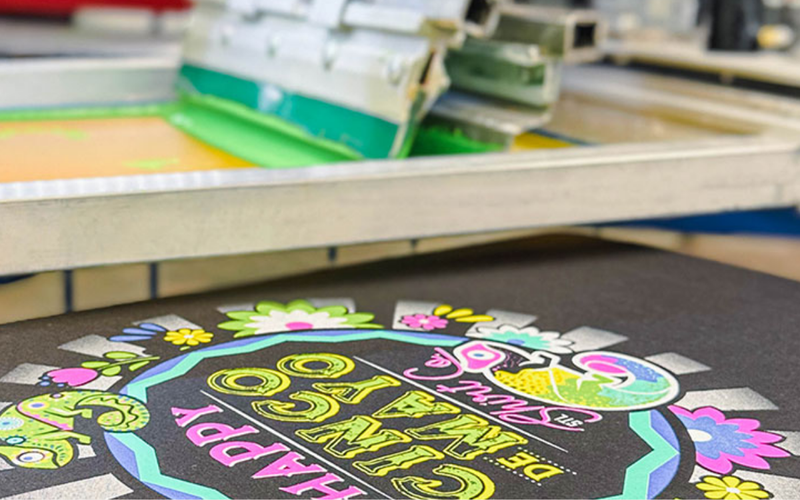
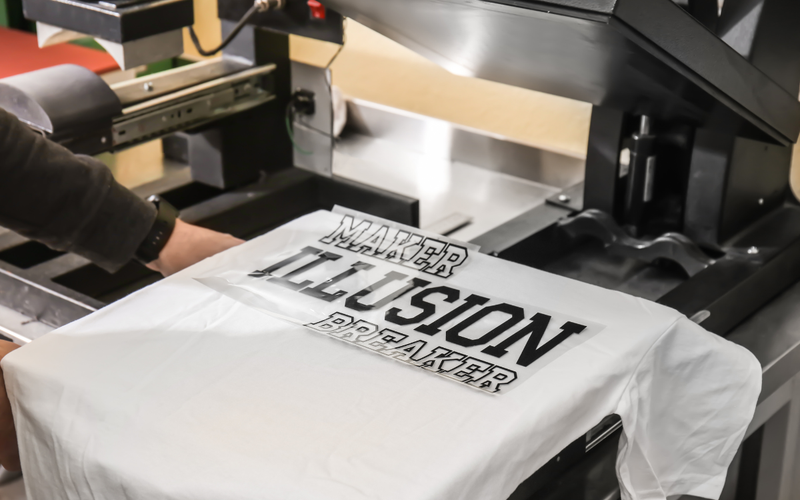
Print technology -DTG, DTF, screen printing, or sublimation? Each produces a different hand-feel and durability.
Production time -1–3 business days is the 2026 standard; anything longer hurts marketplace rankings.
Shipping speed & network -do they have fulfillment in the US, EU, UK, AU, and Asia to minimize cross-border lead time?
Quality control -defect rate, reprint policy, customer service SLA.
Platform integrations-seamless sync with Shopify, Etsy, Amazon, eBay, WooCommerce, and TikTok Shop.
Printway is one of the most trusted POD partners for cross-border sellers in 2026, with owned factories in Vietnam and the US, a network across the UK, EU, Australia, and China, over 600 customizable SKUs, and 1–3 day production handling up to 120,000 orders per day.
Select Your T-Shirts
Not all blanks are created equal. Choose your base t-shirt by weighing three factors:
1- Fabric.
100% cotton -soft, breathable, best for premium apparel and organic/eco-friendly niches. Preferred for DTG printing because it absorbs ink beautifully.
Polyester -colorfast, wrinkle-resistant, ideal for sublimation and sports/activewear. Less breathable in hot climates.
Cotton-poly blends (50/50, 60/40, tri-blend) -the best of both worlds: soft-hand, fade-resistant, great for vintage-style prints. This is the 2026 default for most premium POD brands.
Organic ring-spun cotton-premium pricing, strong appeal for sustainability-focused audiences, great for "slow fashion" positioning.
Women's tees, long-sleeves, tank tops, crewnecks, hoodies always offer variations to maximize AOV.
Order samples of 3–5 blanks from your shortlisted supplier before you commit. Touch, wear, and wash them.
Design Your POD T-Shirts
2026 design workflow is radically different from 2020. The winning formula is human creativity + AI execution + niche specificity.
AI design tools to master in 2026:
Midjourney v7 -for artistic, illustrative, and photo-realistic concepts.
Ideogram 2.0 / Flux 1.1 -for typography and text-in-image (arguably the biggest POD breakthrough of 2024–2025).
Adobe Firefly -commercially-safe AI with clear licensing for apparel.
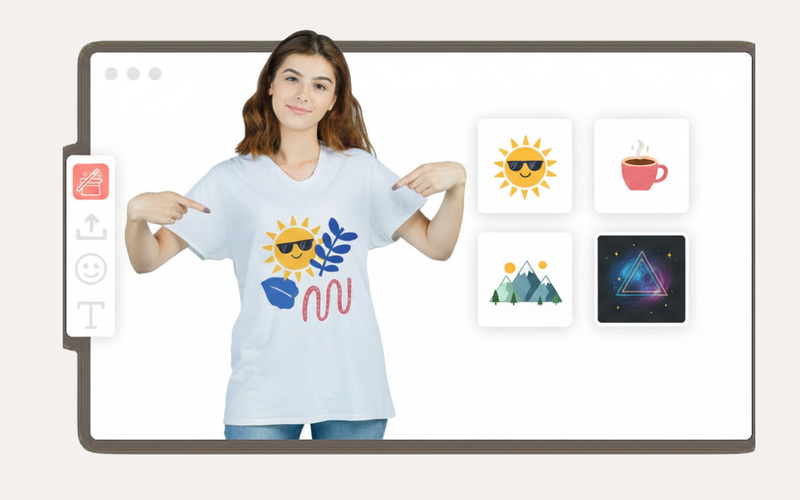
Kittl and Placeit -for t-shirt-specific mockups and templates.
Canva Magic Studio -fast variations and batch design.
Vectorizer.ai- converts AI-generated raster art into clean vector files for printing.
Design best practices:
Print file resolution: 300 DPI minimum, sized for your supplier's print area (typically 4500×5400 px).
File format: PNG with transparent background; vector (AI, SVG, EPS) when possible.
Keep designs inside the 12"×16" safe area for adult front prints.
Test on dark and light-shirts-colors behave differently on each.
Build design families (5–10 variations per concept) rather than one-off ideas-consistency builds brand recognition.
Avoid trademark traps. Run every design through USPTO TESS, EUIPO TMview, and tools like Trademarkia before listing. IP strikes kill POD stores overnight on Amazon and Etsy.
Choose a Platform to Start Selling
Where you sell shapes your entire business model. The three primary routes in 2026:
Own Shopify store. Maximum control, best for branding, email marketing, and customer ownership. Best for stores planning to scale to $10K/month and beyond. Requires paid ads or strong content/SEO to drive traffic.
Marketplaces (Etsy, Amazon, eBay). Built-in traffic, lower marketing costs, but fierce competition and platform dependency. Etsy remains the #1 channel for personalized and niche POD. Amazon Merch on Demand and regular Amazon listings work for volume.
Social commerce (TikTok Shop, Instagram Shopping, Pinterest). TikTok Shop has become the fastest-growing POD channel in the US and UK since 2024. Short-form video sells apparel better than any ad format in history.
The 2026 best practice is multi-channel from day one: start on Etsy or TikTok Shop for traffic, build your Shopify store in parallel for brand equity and email list ownership.
Build Your E-Commerce Store
Once you have chosen your platform, build your storefront. Whether it is a Shopify site, an Etsy shop, or a TikTok Shop, the fundamentals are the same:
Brand identity. Logo, color palette, typography, tone of voice. Tools: Canva, Looka, ChatGPT for brand naming.
Domain name (Shopify only). Short, memorable, niche-relevant.
Store layout. Mobile-first -75%+ of traffic and sales are mobile in 2026.
Product photography. Real lifestyle shots beat flat mockups in click-through rate. Use Placeit, Kittl, or commission custom photography (Printway offers this as an add-on).
Product titles and descriptions. Naturally integrate your main keywords ("funny dog mom t-shirt", "personalized gift for dad") for platform SEO.
Trust signals. Customer reviews, "Made on demand" badges, sustainability messaging.
Analytics. Install GA4, Meta Pixel, TikTok Pixel, and Etsy/Amazon native analytics from day one.
Launch and Promote Your T-Shirt Products
A great store with no traffic is a hobby. A decent store with consistent traffic is a business. Your 2026 promotion stack should include:
Content SEO -blog posts, gift guides, long-tail keyword articles (e.g., "best gifts for dog moms"). AI Overviews now cite niche ecommerce content aggressively.
TikTok & Instagram Reels -short-form video is the single highest-ROI channel for new POD brands. 1–2 posts/day, focus on relatable niche humor and behind-the-scenes content.
Pinterest SEO - long-tail evergreen traffic for gifting and seasonal designs. Vastly underrated.
Email & SMS marketing -Klaviyo or Omnisend. A healthy email list contributes 20–30% of revenue for mature POD stores.
Meta & TikTok Ads -start with $10–20/day retargeting before scaling cold prospecting.
Influencer seeding -send free samples to micro-influencers (5K–50K followers) in your niche. Cheaper than ads, higher trust.
AEO (Answer Engine Optimization) -structure product pages with FAQ schema and clear Q&A content so AI search engines surface your pages.
Launch with a "soft launch" of 10–20 designs, measure which designs convert, then pour resources into top performers. Avoid launching 100 designs at once - you cannot optimize what you cannot track.
After mastering how to start a print-on-demand t-shirt business, the next step is choosing a fulfillment partner who will ship your brand to the world. Printway is built specifically for cross-border POD sellers in 2026, with the infrastructure and catalog to match:
No minimum order quantity. Launch with a single unit, scale to thousands overnight.
600+ customizable products. T-shirts, hoodies, sweatshirts, long-sleeves, tumblers, ornaments, home decor, signs, accessories-all under one account.
Global manufacturing network. Owned facilities in Vietnam and the US; partners in the UK, EU, Australia, and China.
Industry-leading capacity. 3 factories in Vietnam, maximum 120,000 orders/day.
Fast fulfillment. 1–3 business days production, 5–7 business days shipping.
Multi-platform integration. Seamless sync with Shopify, Etsy, Amazon, eBay, WooCommerce, and TikTok Shop (tracking within 1 business day).
FBA/FBM support for wide range of products.
Branding services. Custom packaging from $1.10, free thank-you cards, professional product photography, and video services.
Dedicated seller support. Account Managers, BD, and 24/7 CS for serious sellers.
FAQs
How much does it cost to start a print-on-demand t-shirt business in 2026? You can launch it for under $100: your domain ($10–15), Shopify trial ($1 for the first month, then $39), a few Canva/Placeit subscriptions, and optional $20–50 for initial ads. With POD, you do not pay for inventory upfront - you are only billed when a customer orders.
Is a POD t-shirt business still profitable in 2026? Yes. Top POD sellers still see 30–50% gross margins on premium-priced shirts. Profitability depends on niche selection, design quality, marketing execution, and supplier choice. Commodity "funny t-shirt" stores struggle; branded niche stores thrive.
Do I need design skills to start? No. AI tools like Midjourney, Ideogram, and Adobe Firefly can produce commercial-grade designs with zero Photoshop experience. You still need taste and niche understanding, -but the technical barrier has collapsed.
Which platform is best to start a POD t-shirt business?
Etsy for lowest-friction start and built-in gifting traffic.
TikTok Shop for viral growth and short-form video.
Shopify for long-term brand building and customer ownership.
Most 2026 success stories run 2–3 channels in parallel.
How do I avoid trademark and copyright issues in POD? Never use brand names, song lyrics, logos, athlete names, celebrity likenesses, movie titles, or character designs. Search USPTO TESS and EUIPO TMview before every launch. When in doubt, do not list it.
How long until I make my first sale? With a solid niche, 10–20 designs, and daily TikTok/Pinterest content, most sellers see a first sale within 2–6 weeks. Paid ads can shorten this but require budget.
Why is Printway a good choice for POD t-shirts? Printway combines Vietnam's cost efficiency with US and EU fulfillment nodes, supports 600+ products, has no MOQ, integrates with every major selling platform, and offers dedicated Account Managers and branding services, making it ideal for sellers who want to scale across borders without switching suppliers.
How do I scale a POD t-shirt business past $10K/month? Double down on your top 10 designs, expand into adjacent product categories (hoodies, tumblers, mugs, ornaments), build an email list, add paid ads, and systematize operations with tools and VAs.
Conclusion
Now you have a complete, up-to-date answer to how to start a print-on-demand t-shirt business in 2026-from choosing a profitable niche to launching cross-border with the right fulfillment partner.
The playing field has leveled. With AI design, TikTok Shop distribution, and global POD networks like Printway, a single founder working from a laptop can build a brand that ships worldwide within 5–7 days. The only thing standing between you and your first sale is starting.
If you are ready to launch, explore Printway's t-shirt and apparel catalog for high-quality, competitively-priced products with no minimum order, fast fulfillment, and full platform integrations.
Written by
Hanh HoangHanh Hoang is a marketing leader at Printway, with 4+ years of hands-on experience in Print-on-Demand, eCommerce marketing, and cross-border selling. She works closely with POD sellers to optimize product strategies, customer experience, and growth performance.
If you’re looking for practical insights and proven strategies to run and scale a successful eCommerce business, explore Hanh’s articles on Printway’s blog, where real-world experience meets actionable guidance.