If you're trying to figure out how to start a POD business without spending thousands on inventory, you're in the right place. Print on demand is one of the fastest, lowest-risk ways to launch an online store in 2026 - you only pay for a product after a customer buys it, and a fulfillment partner handles printing and shipping for you.
This step-by-step guide walks you through every part of starting a print-on-demand business - from picking a niche and creating designs, to choosing the right POD platform (with a deep look at Printway), to launching on your own store, Etsy, or Amazon. By the end, you'll have a clear plan to go from zero to your first sale.
Quick summary: To start a POD business, pick a profitable niche, create unique designs, choose a POD platform that fits your goals, build a storefront (Shopify, Etsy, TikTok Shop, or Amazon), set healthy pricing, then launch with focused marketing.
What Is a Print on Demand Business?
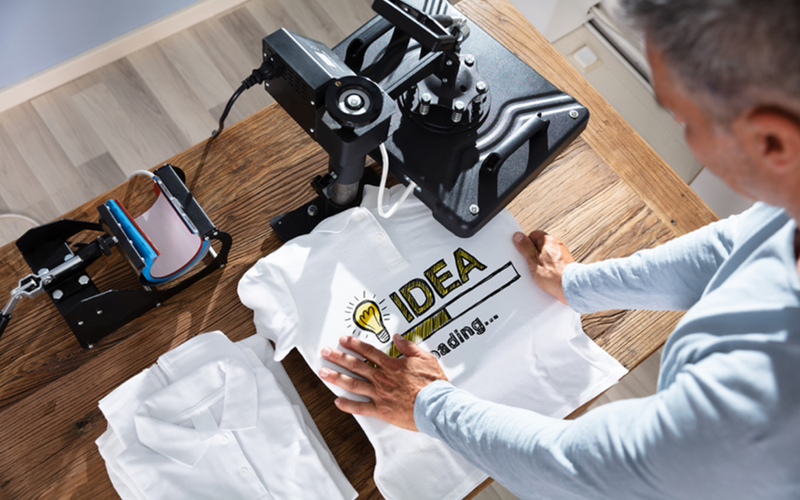
A print-on-demand (POD) business is an ecommerce model where you sell custom-designed products - t-shirts, hoodies, canvas prints, mugs, posters, throw pillows, blankets, phone cases and more - without holding any inventory. Products are produced one at a time, only after a customer places an order.
Here's how the workflow looks:
You upload your design to a POD platform.
The design is mapped onto a blank "base" product (a t-shirt, mug, canvas, etc.).
You list the product on your store, Etsy shop, Amazon, or TikTok Shop.
A customer buys the product.
The POD partner prints, packs, and ships it directly to the customer under your brand.
You keep the difference between the retail price and the production + shipping cost.
That means no warehouse, no minimum order quantity, no unsold stock, and no upfront product investment. You focus on designs and marketing; your POD partner handles fulfillment.
This is what makes print on demand the most beginner-friendly way to start an ecommerce brand in 2026.
Why Start a POD Business in 2026?
Print on demand has matured dramatically over the past few years, and 2026 is arguably the best time yet to start. Here's why:
AI design tools have removed the biggest barrier. Creating unique, professional artwork used to require design skills or expensive freelancers. Today, AI tools let beginners generate, edit, and customize designs in minutes - leveling the playing field.
Faster fulfillment than ever. Modern POD partners with North American production networks routinely deliver in 3–7 business days - competitive with Amazon Prime expectations and far ahead of traditional overseas dropshipping.
Social commerce is exploding. TikTok Shop, Instagram Shopping, and Pinterest have created new low-cost channels for branded, visual products - a natural fit for POD.
Sustainability is a real selling point. On-demand production creates far less waste than bulk inventory, and eco-conscious buyers actively prefer it.
Low-risk entry, real upside. You can launch a store for under $50, test multiple niches, and scale only what works - without ever buying inventory.
Strong, durable margins. Custom products can't be price-matched the way generic dropshipping items can, so you keep more pricing power.
In short, the tools are better, the buyers are ready, and the cost of trying is lower than ever. If you've been wondering how to start a POD business, 2026 is the year to do it.
How to Start a Print on Demand Business (Step-by-Step)
Here's the exact step-by-step process to launch your POD business in 2026.
Choose a Niche
Your niche is the single most important decision you'll make. A focused niche makes everything else - designs, marketing, pricing - dramatically easier.
A good POD niche has three traits:
A clear audience you can describe in one sentence (e.g., "nurses who love coffee," "first-time dog owners," "minimalist home décor lovers").
Proven buying demand - people are already spending money on products in this space.
Room for original designs and a point of view, so you're not competing on price alone.
How to validate your niche before you commit:
Search Etsy, Amazon, and TikTok Shop for similar products and check for bestsellers.
Look at audience size on Instagram, TikTok, Facebook groups, Reddit, and Pinterest.
Check Google search trends to confirm sustained interest.
Avoid overly broad niches like "t-shirts" or "home décor." Specific beats generic every time.
Create Designs
Designs are the heart of your POD business. Buyers aren't paying for a blank t-shirt - they're paying for the design and what it says about them.
You have four practical options:
Design yourself using tools like Canva, Photoshop, Procreate, or Illustrator.
Use AI design tools (Midjourney, DALL·E, Adobe Firefly) to generate concepts you refine.
Hire freelance designers on Fiverr, Upwork, or 99designs.
License artwork from approved marketplaces.
Best practices for POD designs in 2026:
Print-ready files: use high-resolution PNG with transparent background (300 DPI minimum).
Vector when possible for clean scaling across product types.
Never use copyrighted or trademarked content (logos, characters, song lyrics, celebrity likenesses) - this gets stores shut down fast.
Design for the niche, not for yourself - what would your target customer proudly wear or display?
Pick a POD Platform
Your POD platform is your production and fulfillment partner. Get this choice right and your business runs smoothly; get it wrong and you'll battle quality complaints, slow shipping, and returns.
Here's a quick look at the most popular POD platforms in 2026:
Printful - A widely used POD platform with a broad apparel-led catalog and integrations with most ecommerce stores. Good general-purpose option, though pricing can be on the higher side.
Printify - A marketplace model that connects you with multiple print providers. Wide product range and competitive pricing, but quality and shipping speed vary by provider.
Gelato - A global production network with strong distributed printing for international sellers.
Gooten - Aimed at scaling sellers with API-driven order management.
SPOD - Focused on fast production turnaround times, mostly apparel.
Printway - A North America–focused print-on-demand fulfillment partner with deep specialization in Home Décor and lifestyle products, fast domestic shipping, and a strong support team for sellers scaling on Shopify, Etsy, and TikTok Shop.
Looking for a side-by-side comparison? Read our full guide on the best print on demand for beginners to see which platform fits your goals.
Why sellers choose Printway
Printway is built for sellers who want product quality and shipping speed that compete in the North American market - not just the lowest possible base price.
What makes Printway stand out:
Home Décor specialization. Printway offers one of the strongest Home Décor catalogs in the POD space - canvas prints, framed prints, metal prints, tapestries, throw pillows, woven and fleece blankets, doormats, area rugs, ceramic ornaments, wall clocks, and more - alongside apparel and accessories.
North American fulfillment. Production based in the US and partner regions means typical delivery of 3–7 business days to US customers, dramatically improving reviews and ad performance.
Quality you can verify. Premium materials, accurate color reproduction, and consistent print quality across orders.
Branding that builds loyalty. Custom packaging, branded inserts, and white-label shipping help you build a real brand - not just a generic storefront.
One-click integrations with Shopify, Etsy, WooCommerce, TikTok Shop, and Amazon, with automatic order routing so you never touch an order manually.
A sample credit for new sellers so you can test product quality before committing.
Real human support - not a chatbot. Dedicated seller success help, especially valuable during Q4 peak season.
Built to scale. Printway's production capacity handles holiday spikes so your store doesn't break when sales take off.
If you're a Home Décor or lifestyle seller targeting the North American market, Printway is one of the strongest fits in 2026. For other niches, the platform still performs well thanks to its breadth and fast shipping.
Set Up Your Store
You can sell POD products through your own store, a marketplace, or both. The most common setups in 2026 are:
Shopify - Maximum control, full branding, best for building a long-term brand. Easiest to integrate with Printway and other POD platforms.
Add your designs as products by mapping them onto base products in your POD platform, generating mockups, and pushing them to your store with optimized titles, descriptions, and tags.
How to price your POD products for healthy margins:
Cost stack: base product cost + printing + shipping + transaction fees + ad spend.
Aim for a 30–50% gross margin after production and shipping, so you have room for ads, returns, and discounts.
Use price anchoring (show "compare at" prices and bundle deals) to lift conversion.
Test price points - small adjustments can swing profit significantly.
A common beginner mistake is pricing too low to "win sales." Cheap POD products attract bargain hunters, kill your margins, and starve you of marketing budget. Price for the value of the design and the brand experience, not just the production cost.
Launch & Marketing
You can have the best designs in the world, but no one will buy them if no one sees them. Marketing is what turns a POD store into a real business.
The most effective POD marketing channels in 2026:
Organic social content on TikTok, Instagram Reels, and Pinterest - short-form video showcasing products in lifestyle settings.
Paid social ads on Meta and TikTok - start small, test creatives, scale winners.
Influencer & creator partnerships - micro-influencers in your niche often outperform big names on ROI.
SEO content marketing - niche blog posts and gift guides that pull in organic search traffic.
Email marketing - capture emails from day one and nurture with launch announcements, design drops, and seasonal promotions.
Marketplace SEO - for Etsy and Amazon, listing titles, tags, and images drive most discovery.
Launch tip: don't wait for your store to be "perfect." Launch with a small product range, learn from real customer behavior, and improve from there.
How to Start POD on Etsy
Etsy is one of the best places to start a POD business in 2026 because it brings built-in buyer traffic actively searching for unique, design-led products. Here's how to start POD on Etsy step by step:
Create your Etsy seller account. Set up your shop name, banner, profile, and shop policies.
Connect a POD platform like Printway directly to your Etsy shop so orders auto-route to production.
Create niche-focused listings. Etsy rewards specificity - "Boho macrame canvas wall art for living room" beats "wall art."
Optimize titles, tags, and descriptions with the keywords your buyers actually search. Use all 13 tags per listing.
Use lifestyle mockups. Etsy buyers respond to product-in-context photos, not flat mockups alone.
Price competitively but profitably - factor in Etsy's listing, transaction, and payment fees (around 6.5% transaction + listing + processing).
Order samples first. Quality complaints on Etsy hurt your shop's review score fast. Use a sample credit from your POD partner to verify quality before listing.
Drive initial sales - Etsy's algorithm favors shops with momentum, so promote new listings off-platform (Pinterest, Instagram) in the first 30 days.
Use Etsy Ads sparingly at the start, focused on your best-performing listings.
Reinvest in winners. Identify your top sellers and create design variants in the same theme.
Etsy is forgiving for beginners but rewards consistency, niche focus, and quality fulfillment.
How to Start POD on Amazon
Amazon offers two main POD paths: Amazon Merch on Demand (Amazon prints and ships) or selling POD products as a regular seller via FBM with a POD partner integration. Here's how to start POD on Amazon:
Choose your path. Merch on Demand is invite-based and limited to specific product types (mostly apparel). Selling as a regular seller with a POD partner gives you access to Amazon's broader catalog including Home Décor.
Set up your Amazon seller account. Use a Professional account if you plan to list more than 40 items per month.
Connect your POD platform. Many POD providers, including Printway, integrate with Amazon so orders sync automatically.
Research keywords aggressively. Amazon is a search engine first. Use tools like Helium 10 or Jungle Scout to find product keywords with real demand and manageable competition.
Optimize listings for Amazon SEO. Title, bullet points, backend keywords, and high-quality images all matter. Lead with the keyword phrase buyers type.
Follow Amazon's IP policies strictly. Amazon enforces trademarks and copyright more aggressively than most platforms - original designs only.
Price to compete in Amazon's environment where buyers expect fast shipping and competitive pricing. A POD partner with North American fulfillment helps you meet Amazon's delivery expectations.
Use Amazon Ads (PPC) to drive initial sales velocity, which is critical for organic ranking.
Manage reviews carefully. Quality fulfillment is non-negotiable - one wave of bad reviews can sink a listing.
Expand winners across variants and related products once you've validated demand.
Amazon is more competitive than Etsy but has unmatched buyer intent. With the right niche, original designs, and reliable fulfillment, it can become a major revenue channel.
FAQs: How to Start a POD Business
How much does it cost to start a POD business?
You can start a print-on-demand business for as little as $0–$100 in real upfront costs. There's no inventory to buy. Typical starting expenses are a store subscription (Shopify is around $29–$39/month, Etsy is per-listing), a domain (~$10–$15/year), optional design tools, and an initial ad or sample budget. The most successful POD businesses reinvest profits into marketing rather than spending heavily upfront.
How long does it take to start making money with POD?
Most beginners make their first sale within a few weeks of launching if they focus on a clear niche and promote consistently. Reaching meaningful, repeatable monthly revenue typically takes 3–6 months of testing designs, refining marketing, and identifying winning products. POD is a long-game business - sellers who stick with it past the first 90 days are the ones who scale.
Do I need a business license to start a POD business?
In most US states you can begin testing as a sole proprietor under your own name without a formal license. Once you start generating consistent revenue, registering a business (LLC is common), getting a sales tax permit, and setting up proper bookkeeping is strongly recommended. Requirements vary by state and country, so check local rules - and treat your POD business like a real business as soon as it starts earning.
What's the most profitable POD niche in 2026?
There's no single "most profitable" niche, but consistently strong categories include Home Décor (canvas, framed prints, tapestries, throw pillows, blankets), pet products, hobby-specific apparel (gym, fishing, gaming, nursing), personalized gifts, and seasonal/holiday products. The most profitable niche for you is one where you understand the audience, can create designs they love, and where shipping speed and quality (especially for Home Décor) give you a real advantage.
Can I start a POD business with no design skills?
Yes. In 2026, AI design tools, ready-made design templates in tools like Canva, freelance designers on Fiverr, and even licensed artwork marketplaces make it possible to launch a POD business with zero traditional design experience. What matters more than design skill is niche focus and the ability to recognize what your audience actually wants to buy.
Which is better for beginners - Shopify, Etsy, or Amazon?
For absolute beginners, Etsy is often the easiest start because it brings buyer traffic and requires minimal setup. Shopify is the best choice if you want to build a long-term brand and own your customer relationships. Amazon has the largest audience but the steepest learning curve and strictest rules. Many sellers eventually run on multiple platforms - Etsy or Amazon for discovery, Shopify for brand-building.
Is print on demand still worth it in 2026?
Yes - and arguably more than ever. With faster fulfillment, AI-powered design tools, exploding social commerce, and rising demand for branded, sustainable products, the POD opportunity in 2026 is bigger than it has been in years. The sellers who win are those who pick a clear niche, partner with a reliable fulfillment provider, and treat POD as a real long-term business - not a get-rich-quick scheme.
Ready to Start Your POD Business?
Now that you know how to start a POD business in 2026, the only thing left is to take the first step. Pick your niche, sketch your first designs, and choose a fulfillment partner you can actually rely on.
Printway offers North American print-on-demand fulfillment built for serious sellers - with a strong Home Décor catalog, fast domestic shipping, custom branding, and one-click integrations with Shopify, Etsy, TikTok Shop, and Amazon.
Hanh HoangHanh Hoang is a marketing leader at Printway, with 4+ years of hands-on experience in Print-on-Demand, eCommerce marketing, and cross-border selling. She works closely with POD sellers to optimize product strategies, customer experience, and growth performance.
If you’re looking for practical insights and proven strategies to run and scale a successful eCommerce business, explore Hanh’s articles on Printway’s blog, where real-world experience meets actionable guidance.