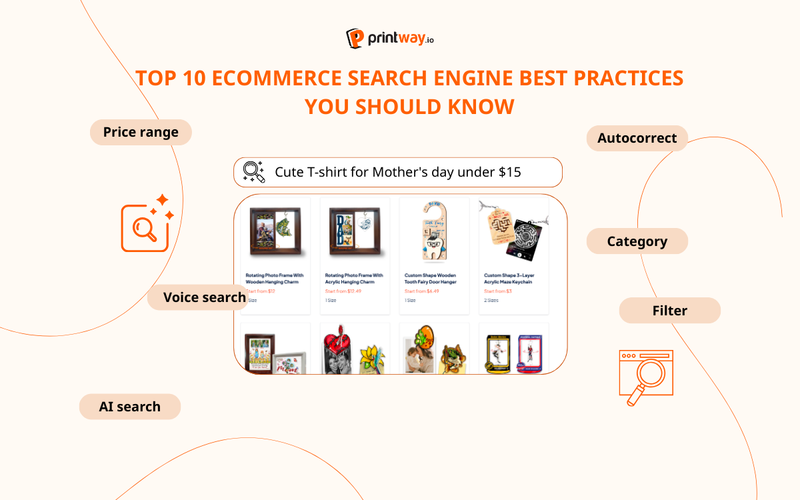
<p><strong>eCommerce search engine</strong> technology is becoming one of the most critical components of modern online stores. As product catalogs grow and customer expectations for instant results increase, having a powerful ecommerce site search system is no longer optional.</p><p>In this article, we’ll explore what an eCommerce search engine is, how it works, why it matters for conversion rates, key features to look for, the best tools in 2026, and future trends shaping AI powered ecommerce search - helping you choose the right solution for your store’s growth.</p><figure class="image"><img src="https://cdn.shopify.com/s/files/1/2513/0866/files/ecommerce-search-engine-min.png?v=1672039402" alt="Top eCommerce search engine best practices you should know"></figure><h2><strong>What is an eCommerce search engine?</strong></h2><p>Understanding what an <strong>eCommerce search engine</strong> is is fundamental for any online seller aiming to improve conversions and customer experience. As product catalogs grow larger and customer expectations become higher, search functionality is no longer just a navigation tool - it becomes a core revenue driver. A powerful <strong>ecommerce site search</strong> system directly influences how quickly shoppers find products and how confidently they complete purchases.</p><figure class="image"><img src="https://cdn.shopify.com/s/files/1/2513/0866/files/ecommerce-search-engine-tools-min.png?v=1672039424" alt="What is an eCommerce search engine?"></figure><p> </p><p> </p><h3><strong>Interesting facts about eCommerce search engine</strong></h3><p>Numbers never lie, here are some interesting facts you should know about eCommerce search engines:</p><ul><li>When a customer is on your page and trying to search for a specific product, they are much more likely to convert. In fact, search users are 7-10 times more likely to convert than regular visitors</li><li>Search users account for 10 to 40% of the total eCommerce users on your site </li><li>Worse, 10%-25% of all queries result in a 0-results page because search engines aren't always able to interpret language - this implies that shoppers must search using the same lingo as the site. When customers land on a 0-results page, you're essentially telling them you don't sell the product they want, which means they'll buy it elsewhere.</li><li>87% of shoppers start their product searches on the internet.</li><li>Search is used by 64% of people to address the "I want to buy" moment.</li><li>When a site search box is available, up to 30% of visitors use it.</li></ul><p style="text-align:center;">>>> Read more:<a href="https://printway.io/blogs/customer-service-email-templates"><strong>15+ customer service email templates for eCommerce seller</strong></a></p><h3><strong>eCommerce Search Engine Definition</strong></h3><p>So, what is an eCommerce search engine?</p><p>An <strong>eCommerce search engine</strong> is a specialized internal search technology designed to help customers find products within an online store quickly and accurately. Unlike a basic search bar, it uses advanced algorithms, indexing systems, and ranking logic to deliver highly relevant product results based on user queries.</p><p>To better understand it, let’s clarify the difference between three commonly confused terms:</p><ul><li><strong>eCommerce Search Engine</strong> This is a dedicated product search system built specifically for online stores. It focuses on transactional intent, product attributes, filters, personalization, and optimizing <strong>search relevance in ecommerce</strong>. Its goal is simple: help shoppers find and buy products faster.</li><li><strong>Internal Site Search (Basic Search Functionality)</strong> This is the default search feature built into many platforms (like Shopify or WooCommerce). While it allows keyword matching, it often lacks advanced capabilities such as semantic search, typo tolerance, AI ranking, or personalization. In many cases, it provides limited control over search relevance and analytics.</li><li><strong>Google Search</strong> Google is an external search engine that indexes public web pages across the internet. While it helps users discover online stores, it is not designed to optimize product discovery inside your store. Google prioritizes SEO signals, backlinks, and content authority, whereas an eCommerce search engine prioritizes product data, inventory, and buyer intent within a specific site.</li></ul><p>In short, Google brings traffic to your store - but your <strong>eCommerce search engine</strong> converts that traffic into sales.</p><p>Inside an online store, the eCommerce search engine acts as a digital salesperson. It interprets what shoppers are looking for, filters through thousands of SKUs, ranks the most relevant products, and presents them in a way that improves the overall <strong>onsite search experience</strong>.</p><h3><strong>How eCommerce Site Search Works</strong></h3><p>Behind the simple search box lies a sophisticated system powered by modern internal search technology. A high-performing <strong>ecommerce site search</strong> solution typically works through four core processes:</p><h4><strong>Crawling and Indexing Products</strong></h4><p>The search engine first scans (or “crawls”) all product data within the store - including titles, descriptions, tags, SKUs, categories, prices, and attributes like size or color.</p><p>This information is then structured and stored in a searchable index. The better your product data is organized, the more accurate the search results will be.</p><h4><strong>Query Processing</strong></h4><p>When a customer types a search query (for example, “blue oversized hoodie”), the system analyzes the input. Advanced engines use natural language processing (NLP) to:</p><ul><li>Understand synonyms (e.g., “sweatshirt” vs. “hoodie”)</li><li>Correct spelling mistakes</li><li>Interpret user intent</li><li>Detect plural/singular forms</li></ul><p>This step is critical for improving <strong>search relevance in ecommerce</strong>, especially in large catalogs.</p><h4><strong>Ranking & Search Relevance</strong></h4><p>Once relevant products are identified, the system ranks them. Ranking logic may consider:</p><ul><li>Keyword match strength</li><li>Product popularity</li><li>Sales performance</li><li>Customer ratings</li><li>Inventory status</li><li>Profit margins</li></ul><p>Modern AI-powered engines continuously optimize ranking models based on real-time data. This ensures that high-converting products appear first, improving both user satisfaction and revenue.</p><h4><strong>Displaying Personalized Results</strong></h4><p>Advanced eCommerce search engines go beyond static results. They personalize product listings based on:</p><ul><li>User browsing history</li><li>Past purchases</li><li>Location</li><li>Device type</li><li>Behavior patterns</li></ul><p>This personalization enhances the overall <strong>onsite search experience</strong>, making shoppers feel understood and increasing the likelihood of conversion.</p><p>In today’s competitive digital market, an optimized <strong>eCommerce search engine</strong> is no longer optional. It is a strategic growth tool that directly impacts product discovery, customer satisfaction, and overall sales performance.</p><h2> <strong>Why eCommerce Search Matters for Online Stores </strong></h2><p>In today’s digital marketplace, understanding <strong>why ecommerce search matters</strong> is essential for sustainable growth. Customers expect instant, accurate results when searching for products, and the quality of your search system directly shapes the overall <strong>ecommerce search experience</strong>. A well-optimized search function does more than help users find products - it drives revenue, improves satisfaction, and strengthens competitive positioning.</p><figure class="image"><img src="https://cdn.shopify.com/s/files/1/2513/0866/files/optimize-search-box-min.png?v=1672039462" alt=" Why does site search matter in eCommerce? "></figure><p><strong>Impact on Conversion Rate</strong></p><ul><li>Users who use site search typically convert at significantly higher rates because they show strong purchase intent.</li><li>Reduces friction in product discovery by delivering relevant results instantly instead of forcing customers to browse multiple categories.</li><li>Minimizes “zero results” pages through smart query handling, synonyms, and typo tolerance - helping prevent lost sales.</li><li>Plays a direct role in <strong>improving ecommerce conversion rate</strong> by shortening the buying journey.</li></ul><p><strong>Improving Customer Search Experience</strong></p><ul><li>Enables faster navigation with real-time results and autocomplete suggestions.</li><li>Delivers personalized results based on browsing behavior, past purchases, and preferences.</li><li>Supports smart filters (price, size, category, availability) that help customers refine searches efficiently.</li><li>Enhances overall <strong>ecommerce search experience</strong> by making product discovery intuitive and seamless.</li></ul><p><strong>Competitive Advantage in Modern eCommerce</strong></p><ul><li>Meets modern expectations for fast and accurate product discovery, similar to leading marketplaces.</li><li>Differentiates your store through AI-powered ranking and intelligent search relevance.</li><li>Strengthens brand perception by offering a smooth, professional onsite search experience.</li><li>Transforms search from a basic feature into a strategic growth tool that supports long-term scalability.</li></ul><h2><strong>Key Features of a Modern eCommerce Search Engine</strong></h2><p>A modern eCommerce search engine is no longer just a basic keyword-matching tool. It combines AI, automation, and behavioral data to improve search relevance, enhance user experience, and increase conversions. Below are the core features that define a high-performing, AI powered ecommerce search system.</p><figure class="image"><img alt="Key Features of a Modern eCommerce Search Engine" src="https://cdn.printway.io/lzi/69a0018297c10df2137316ca_800x800.jpeg"></figure><h3><strong>Smart Autocomplete & Instant Search</strong></h3><ul><li>Predictive search suggestions based on popular queries and user behavior</li><li>Real-time search results displayed as users type</li><li>Typo tolerance and synonym recognition</li><li>Faster product discovery that reduces search friction</li></ul><h3><strong>Advanced Filters & Faceted Navigation</strong></h3><ul><li>Category-based filters for structured browsing</li><li>Price range filters for budget-focused shoppers</li><li>Attribute-based filtering (size, color, brand, rating)</li><li>Dynamic <strong>faceted navigation</strong> that updates results instantly</li><li>Improved filtering logic to support complex product catalogs</li></ul><h3><strong>AI-Powered & Semantic Search</strong></h3><ul><li><strong>Semantic search</strong> powered by Natural Language Processing (NLP)</li><li>Machine learning ranking based on user behavior and conversions</li><li>Context-aware search relevance instead of exact keyword matching</li><li><strong>Personalized product search</strong> recommendations</li><li>Continuous optimization through AI powered ecommerce search algorithms</li></ul><h3><strong>Search Analytics & Performance Tracking</strong></h3><ul><li>Monitoring search conversion rate to measure effectiveness</li><li>Identifying zero-result queries to reduce lost revenue</li><li>Tracking top search terms and trending products</li><li>Advanced <strong>search analytics</strong> dashboard for actionable insights</li><li>Data-driven optimization for improving onsite search performance</li></ul><h2><strong>Types of eCommerce Search Engine Solutions</strong></h2><p>Choosing the right <strong>ecommerce search platform</strong> depends on your store size, technical resources, and growth goals. Some businesses rely on built-in tools, while others adopt <strong>hosted search solutions</strong> or fully customized systems powered by an ecommerce search API. Below are the main types of solutions available today.</p><h3><strong>Built-In Platform Search</strong></h3><p>Most ecommerce platforms provide a default search feature as part of their ecosystem. This is often the starting point for small to mid-sized stores.</p><ul><li><strong>Shopify native search</strong>: Easy to use and automatically integrated into Shopify themes, suitable for small catalogs but limited in advanced filtering and personalization.</li><li><strong>WooCommerce default search</strong>: Basic WordPress-based functionality that often requires plugins for better search relevance and performance.</li><li><strong>Magento built-in search</strong>: More advanced than other native options, with support for layered navigation, but may still require optimization for large-scale operations.</li><li><strong>Limitations in scaling</strong>: Built-in systems often lack advanced semantic search, AI ranking, and deep search analytics, making them less suitable for high-growth or enterprise stores.</li></ul><h3><strong>Hosted Search Solutions (Cloud-Based)</strong></h3><p>Hosted search solutions are SaaS-based platforms designed specifically to enhance ecommerce site search performance.</p><ul><li><strong>SaaS search platforms</strong>: Delivered via subscription and integrated using an <strong>ecommerce search API</strong>, reducing the need for heavy internal development.</li><li><strong>Faster deployment</strong>: Cloud-based setup allows quick implementation without complex infrastructure management.</li><li><strong>Scalability & reliability</strong>: Designed to handle high traffic volumes, large product catalogs, and seasonal spikes.</li><li><strong>Cloud search for ecommerce</strong> ensures uptime, performance optimization, and automatic updates without internal server maintenance.</li></ul><p>This option is ideal for growing brands that need flexibility, AI capabilities, and enterprise-grade search relevance without managing backend complexity.</p><h3><strong>Open-Source / Self-Hosted Search Engines</strong></h3><p>For businesses with strong technical teams, open-source solutions provide full customization and control.</p><ul><li><strong>Elasticsearch</strong>: A powerful open-source engine widely used for scalable and high-performance ecommerce search applications.</li><li><strong>Apache Solr</strong>: Another enterprise-grade search solution known for advanced indexing and faceted navigation capabilities.</li><li><strong>Custom development</strong>: Businesses can build tailored ranking logic, personalized search algorithms, and advanced filtering systems.</li></ul><p>While self-hosted solutions offer maximum flexibility, they require ongoing maintenance, infrastructure management, and technical expertise. This approach works best for large enterprises with specific performance and customization requirements.</p><h2><strong>Top 10 Best eCommerce Search Engines in 2026</strong></h2><p>This section highlights the <strong>best ecommerce search engines</strong> to improve onsite product discovery, relevance, speed, and conversion - from enterprise platforms to affordable solutions for small stores. Ideal for merchants ready to upgrade their internal search functionality and improve sales.</p><h3><a href="https://www.algolia.com/"><strong>Algolia</strong></a></h3><figure class="image"><img src="https://cdn.shopify.com/s/files/1/2513/0866/files/Algolia_OG_image.jpg?v=1672039821" alt="Algolia"></figure><p><strong>Function:</strong></p><p>AI-driven relevance and ranking</p><p>Instant search results with predictive autocomplete</p><p>Advanced filtering and faceted navigation</p><p>Personalization and analytics dashboard</p><p>Multi-language and multi-region support</p><p><strong>Pricing:</strong></p><p>SaaS pricing starts around <strong>$29/month</strong> for basic plans</p><p>Enterprise pricing available with custom features and throughput</p><p><strong>Why It’s Suitable:</strong> Algolia is one of the <strong>AI search tools for ecommerce</strong> that delivers extremely fast, relevant product search experiences. Its machine learning ranking and personalization help increase conversion rates and reduce search abandonment.</p><p><strong>Best For:</strong></p><p>Mid-size to <strong>enterprise ecommerce brands</strong></p><p>Large catalogs</p><p>Stores needing fast, real-time search</p><p>Sites with multiple languages/regions</p><h3><a href="https://www.yext.com/index.html"><strong>Yext</strong></a></h3><figure class="image"><img src="https://cdn.printway.io/lzi/699ffc7d1b35fa2d78f065cc_800x800.png" alt="Yext"></figure><p>Yext (NYSE: YEXT) is a software platform that assists organizations in providing meaningful, actionable responses wherever their consumers, employees, and partners seek information.</p><p>Yext can help:</p><ul><li>Customers prefer results that are relevant to their current situation.</li><li>Customers who have found the information they are seeking may choose to refine their search results by price, color, size, or another criterion.</li><li>Using the drag-and-drop, point-and-click interface, you can easily visualize the impact of your changes.</li><li>The built-in Search Phrases screen in Yext normalizes query strings (for things like capitalization, preceding and trailing whitespace, and punctuation) into a list of truly unique search terms organized by popularity, allowing you to discover what users are really looking for.</li></ul><h3><a href="https://www.coveo.com/en"><strong>Coveo</strong></a></h3><figure class="image"><img src="https://cdn.shopify.com/s/files/1/2513/0866/files/coveo.png?v=1672039797" alt="Coveo"></figure><p>The first step toward relevant search is Coveo Relevance Cloud. Self-optimizing AI allows you to capitalize on the potential of every click and query. You may improve the user experience by focusing on search relevance from the start. After that, scale to full 360-degree significance. </p><p>Every query and click tells you what your clients desire. Customers will be able to 'add to card' relevant product results as well as product and content recommendations from you. Connect each customer to the most relevant answer faster with AI-powered self-service customer service and AI-powered agent answers.</p><p>Coveo Features:</p><ul><li>Relevance at every touch point</li><li>Intelligent search</li><li>Recommendation</li><li>Personalization</li></ul><p>Pricing:</p><ul><li>Base: $6000 per Month</li><li>Pro: $1230 per Month</li><li>Enterprise: Custom Pricing</li></ul><h3><a href="https://searchanise.io/"><strong>Searchanise</strong></a></h3><figure class="image"><img src="https://cdn.shopify.com/s/files/1/2513/0866/files/seachadise.png?v=1672040047" alt="Searchanise"></figure><p>A comprehensive set of options to enhance your shopping experience. Search for a product by its name, category/collection, product description, or pages/blog posts. The product preview will be displayed if you enter the first letter of the product name into our eCommerce product search widget. </p><p>Even if you misspell something, it will still display the proper suggestion. To modify the look and feel of the widget, you do not need to code it. The Searchanise admin panel contains all options. Searchanise smoothly integrates with all interconnected systems. It is simple to set up and has several customization possibilities.</p><p>Searchanise features:</p><ul><li>Full-text site search </li><li>Autocomplete</li><li>Stopwords</li><li>Spell check, autocorrect</li><li>Customizable search result</li><li>Synonym</li><li>Filter strategy</li></ul><p>Searchanise pricing:</p><ul><li>Basic from $16/ month</li><li>Essential $33/ month</li><li>Advanced $49/ month</li><li>Growth of $83/ month</li><li>Pro $149/ month</li><li>Premium $279/ month</li></ul><h3><a href="https://www.luigisbox.com/"><strong>Luigi’s Box</strong></a></h3><figure class="image"><img src="https://cdn.shopify.com/s/files/1/2513/0866/files/luigi-box.png?v=1672040027" alt="Luigi’s Box"></figure><p>Luigi's Box assists eCommerce in understanding what your consumers are looking for, what they are having difficulty discovering, and how you can optimize their search experience. Determine how customers locate your key information. You may increase your content's discoverability by identifying prevalent typos and niche queries.</p><p>Luigi's Box pros:</p><ul><li>Search with Autocomplete</li><li>Recommender</li><li>Product Listing</li></ul><h3><a href="https://www.elastic.co/elasticsearch"><strong>Elasticsearch</strong></a></h3><p>Elasticsearch is a powerful open-source search engine widely used for building custom ecommerce search systems. Unlike plug-and-play SaaS tools, Elasticsearch provides complete flexibility for developers who want to design tailored search logic. It is part of the Elastic Stack and supports advanced indexing, clustering, and real-time data analysis. Many large ecommerce platforms use it as the backbone of their internal search technology.</p><p><strong>Function:</strong></p><ul><li>Open-source ecommerce search engine framework</li><li>Highly customizable indexing and query performance</li><li>Support for advanced faceted navigation</li><li>Scales horizontally with cluster deployment</li><li>Works with Kibana for analytics</li></ul><p><strong>Pricing:</strong></p><ul><li>Open-source core is free</li><li>Elastic Cloud hosted options start around <strong>$16/month</strong> depending on instance size</li></ul><p><strong>Why It’s Suitable:</strong> Elasticsearch provides <strong>open-source flexibility</strong> for brands needing deep control over search logic, relevancy tuning, and custom ranking rules. It’s part of a powerful stack that can be tailored for complex catalogs and bespoke search requirements.</p><p><strong>Best For:</strong></p><ul><li>Tech-savvy teams</li><li>Large catalogs requiring custom development</li><li>Brands building proprietary search + analytics features</li></ul><h3><a href="https://www.klevu.com/"><strong>Klevu</strong></a></h3><p>Klevu is a conversion-focused AI powered ecommerce search platform designed specifically for online retailers. It combines semantic search, personalization, and merchandising tools to maximize product discoverability. Klevu emphasizes revenue growth by automatically optimizing results based on shopper behavior. It integrates easily with major ecommerce platforms, making it a popular mid-market solution.</p><p><strong>Function:</strong></p><ul><li>Natural language processing (NLP) search</li><li>AI personalization and search suggestions</li><li>Merchandising tools (boost products, category pinning)</li><li>Search insights and recommendations</li></ul><p><strong>Pricing:</strong></p><ul><li>Tiered pricing based on features and traffic</li><li>Entry plans suitable for small merchants; custom pricing for enterprise</li></ul><p><strong>Why It’s Suitable:</strong> Klevu specializes in <strong>AI personalization</strong> and automated learning, helping strengthen conversion by displaying the right products faster. Easy integration with major platforms makes it one of the <strong>best ecommerce search engines</strong> for conversion optimization.</p><p><strong>Best For:</strong></p><ul><li>Shopify, Magento, BigCommerce stores</li><li>Brands that want strong personalization without heavy technical setup</li><li>Merchants focused on conversion lift</li></ul><h3><strong>Doofinder</strong></h3><figure class="image"><img src="https://cdn.printway.io/lzi/699ffd5ce0c33695a4b417bb_800x800.png" alt="Doofinder"></figure><p>Doofinder is a cloud-based ecommerce search engine known for simplicity and quick deployment. It is designed for small and mid-sized businesses that need better onsite search without complex development. The platform improves search accuracy, speed, and user experience through AI-driven algorithms. As part of many ecommerce search engine comparison lists, Doofinder stands out for accessibility and ease of use.</p><p><strong>Function:</strong></p><ul><li>Fast implementation with simple setup</li><li>Autocomplete search suggestions</li><li>Customizable filters & synonyms</li><li>Analytics and search insights</li></ul><p><strong>Pricing:</strong></p><ul><li>Flexible plans starting at <strong>$49/month</strong></li><li>Higher tiers include A/B testing and machine learning ranking</li></ul><p><strong>Why It’s Suitable:</strong> Doofinder delivers solid search performance with <strong>easy integration</strong> and <strong>SME-friendly pricing</strong>, making it ideal for small to mid-sized stores that need stronger search without high costs or complex builds.</p><p><strong>Best For:</strong></p><ul><li>Small to mid-sized ecommerce sites</li><li>Stores that need enhanced search quickly</li><li>Merchants with limited developer resources</li></ul><h3><a href="https://www.lupasearch.com/"><strong>Luapa Search</strong></a></h3><figure class="image"><img src="https://cdn.printway.io/lzi/699ffdbd3a55517ad132ef93_800x800.png" alt="Luapa Search"></figure><p>Luapa Search is a newer ecommerce search solution designed to offer modern search capabilities with a lightweight setup. It aims to improve internal search technology while keeping implementation simple. The tool focuses on speed, filtering, and relevance tuning for online stores that need efficient search functionality without enterprise complexity. It is positioned as a practical alternative to default platform search engines.</p><p><strong>Function:</strong></p><ul><li>Lightweight, fast search module</li><li>Enhanced filtering and relevancy tuning</li><li>Autocomplete and search analytics</li></ul><p><strong>Pricing:</strong></p><ul><li>Monthly plans designed for small to medium catalogs</li></ul><p><strong>Why It’s Suitable:</strong> Luapa Search is a newcomer focused on speed and modern features without bloated complexity. It’s practical for stores that want improved onsite search but don’t need full enterprise sophistication.</p><p><strong>Best For:</strong></p><ul><li>Small to medium ecommerce websites</li><li>Stores looking for a modern alternative to default platform search</li></ul><h3><strong>Searchanise / Other Alternatives</strong></h3><p>Searchanise is one of the more affordable AI search tools for ecommerce, popular among small merchants and startups. It enhances ecommerce site search by adding autocomplete, filters, and merchandising features to default platform search systems. While it may not offer enterprise-grade AI, it significantly upgrades the onsite search experience at a low cost. It frequently appears in ecommerce search engine comparison guides as a budget-friendly choice.</p><p><strong>Function:</strong></p><ul><li>Autocomplete and instant search</li><li>Faceted filters</li><li>Search suggestions and merchandising tools</li><li>Basic analytics</li></ul><p><strong>Pricing:</strong></p><ul><li>Budget-friendly options starting around <strong>$19–$29/month</strong></li></ul><p><strong>Why It’s Suitable:</strong> Searchanise and similar tools are <strong>budget-friendly search solutions</strong> that deliver meaningful search upgrades for stores that can’t yet afford larger platforms. While not as advanced as enterprise AI tools, they greatly improve <strong>internal search effectiveness</strong> compared to default options.</p><p><strong>Best For:</strong></p><ul><li>Small stores</li><li>Beginners looking for an affordable improvement</li><li>Merchants with limited technical resources</li></ul><h2><strong>Key Takeaways for Sellers</strong></h2><ul><li><strong>Algolia and Klevu</strong> are among the top <strong>AI search tools for ecommerce</strong> with advanced relevance and personalization.</li><li><strong>Elasticsearch</strong> is best for highly customized search solutions.</li><li><strong>Doofinder, Cleark.io, Luapa Search, Searchanise</strong> offer strong alternatives for smaller and medium-size stores with easier setups and affordable pricing.</li></ul><p>Choosing the right search engine depends on <strong>catalog size, budget, technical capacity, and scalability needs</strong> - part of any smart <strong>ecommerce search engine comparison</strong> before investing.</p><h2><strong>Future Trends in eCommerce Search Engines (2026 & Beyond)</strong></h2><p>As online competition intensifies, the future of ecommerce search engines will be driven by AI, automation, and deeper personalization. Retailers are moving beyond basic keyword matching toward intelligent systems that understand user intent, context, and behavior in real time. Below are the key trends shaping AI powered ecommerce search in 2026 and beyond.</p><h3><strong>AI & Machine Learning Dominance</strong></h3><p>AI powered e-commerce search is no longer optional - it is becoming the industry standard. Modern search engines increasingly rely on machine learning algorithms to improve search relevance in ecommerce by analyzing user behavior, click-through rates, and purchase history.</p><p>With NLP ecommerce search, systems can interpret natural language queries like “comfortable running shoes under $100” instead of relying on exact keyword matches. Over time, machine learning continuously optimizes ranking models, ensuring that top-performing products appear first.</p><p><strong>What this means for sellers:</strong></p><ul><li>Higher conversion rates through smarter ranking</li><li>Reduced zero-result queries</li><li>Automated optimization without manual rule setting</li></ul><h3><strong>Voice Search Integration</strong></h3><p>Voice commerce is steadily influencing ecommerce site search behavior. As consumers grow comfortable using voice assistants and mobile voice input, search engines must adapt to longer, conversational queries.</p><p>Voice search requires strong NLP ecommerce search capabilities because spoken queries tend to be more descriptive and intent-driven. Instead of typing “red dress,” users might say, “Show me a red dress for a wedding under $150.”</p><p><strong>Why it matters:</strong></p><ul><li>Supports mobile-first shopping behavior</li><li>Enhances accessibility</li><li>Encourages more natural product discovery</li><li>Stores that optimize their internal search technology for conversational queries will stay ahead of evolving customer expectations.</li></ul><h3><strong>Visual Search & Image Recognition</strong></h3><p>Visual search is transforming how users discover products online. Instead of typing a query, shoppers can upload an image to find similar products. AI powered ecommerce search systems now integrate image recognition to analyze colors, shapes, patterns, and styles.</p><p>This trend is especially powerful in fashion, home decor, and lifestyle ecommerce. Visual search reduces friction in product discovery and bridges the gap between inspiration and purchase.</p><p><strong>Key advantages:</strong></p><ul><li>Faster product matching</li><li>Higher engagement rates</li><li>Improved onsite search experience</li><li>Retailers adopting visual search capabilities will benefit from stronger discovery-based shopping behavior.</li></ul><h3><strong>Hyper-Personalization in Search Results</strong></h3><p>Personalized search results are becoming the new competitive advantage in ecommerce. Rather than showing the same ranking to every user, advanced ecommerce search platforms tailor results based on browsing history, purchase patterns, location, and preferences.</p><p>Hyper-personalization combines AI powered ecommerce search with behavioral analytics to deliver unique product rankings for each shopper. This significantly improves ecommerce search experience and boosts average order value.</p><p><strong>Impact on online stores:</strong></p><ul><li>Increased conversion rates</li><li>Stronger customer retention</li><li>More relevant and engaging product discovery</li><li>In 2026 and beyond, the ecommerce brands that invest in personalized search results and intelligent automation will dominate product discovery and outperform competitors.</li></ul><h2><strong>FAQs About eCommerce Search Engines</strong></h2><p>As online competition increases, many store owners still have common questions about how ecommerce search engines work and why they matter. Below are concise, SEO-optimized answers designed for featured snippets and voice search queries.</p><h3><strong>What is an eCommerce search engine?</strong></h3><p>An eCommerce search engine is an internal search system that helps users find products within an online store. It uses indexing, ranking algorithms, and AI-powered search technology to deliver relevant product results based on user queries, improving product discovery and conversion rates.</p><h3><strong>How is eCommerce search different from Google?</strong></h3><p>Google search indexes and ranks web pages across the entire internet, while an ecommerce search engine operates inside a specific online store. Ecommerce site search focuses on product data, inventory, filters, personalization, and conversion optimization rather than general content ranking.</p><h3><strong>What is the best eCommerce search engine?</strong></h3><p>The best ecommerce search engine depends on your store size and needs. Enterprise brands often choose AI-powered solutions like Algolia, while mid-sized stores may prefer Klevu or Doofinder. Open-source options like Elasticsearch are ideal for businesses requiring full customization and technical control.</p><h3><strong>Does better site search improve conversions?</strong></h3><p>Yes. Studies consistently show that users who use internal search technology convert at higher rates. A well-optimized ecommerce search experience reduces friction, eliminates zero-result queries, improves search relevance in ecommerce, and guides customers to the right products faster - directly increasing sales.</p><h2><strong>Conclusion</strong></h2><p>An eCommerce search engine is no longer just a navigation tool - it is a powerful revenue driver. From AI powered ecommerce search and semantic search to faceted navigation and personalized search results, modern search technology directly impacts product discovery, customer satisfaction, and conversion rates.</p><p>As competition intensifies in 2026 and beyond, investing in the right ecommerce search platform can significantly improve ecommerce conversion rate, enhance onsite search experience, and create a strong competitive advantage. Businesses that treat search as a strategic growth component - not just a technical feature - will win in the evolving digital marketplace.</p>