
Hanh Hoang
Feb 25 2026 •8 minutes
Easter Insight 2026 shows that Easter 2026 is full of potential for every eCommerce seller - backed by real marketplace data and emerging consumer trends.
This article explores the latest Easter data, spending statistics, keyword trends, and buyer behavior insights sellers must understand to stay competitive. From top-performing product categories and high-intent search terms to evolving consumer patterns, these insights will help sellers identify real opportunities and prepare strategically for the upcoming Easter season.

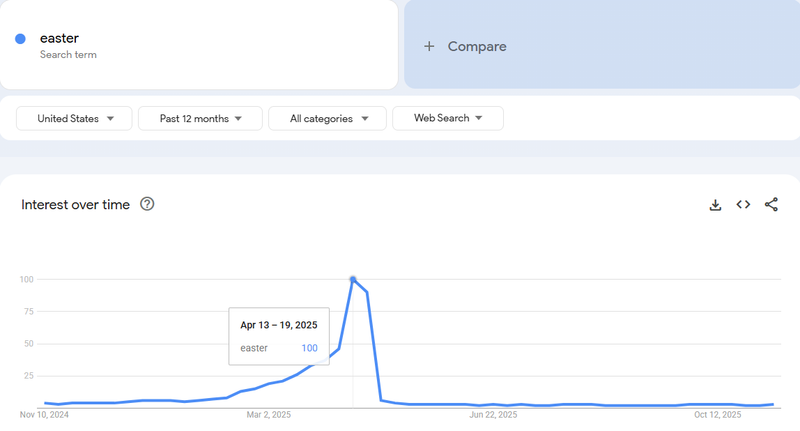
When is Easter 2026? Easter 2026 falls in mid-April, following the consistent seasonal cycle reflected in historical search and retail data. Over the past five years, Google Trends has shown a predictable surge in U.S. searches for “Easter” every year in mid-April, aligning directly with the holiday period.
In 2025, search interest spiked sharply during the Easter week, confirming that consumer attention concentrates around this timeframe. Regional data also shows stronger search intensity in states such as West Virginia and Louisiana, highlighting concentrated pockets of demand.
For retailers and print-on-demand sellers, knowing when Easter 2026 occurs is more than calendar awareness - it defines campaign timing, inventory planning, and marketing execution windows.
Understanding when is Easter 2026 helps businesses align product launches and promotional strategies with actual consumer behavior patterns.
Google Trends data shows a sharp spike in searches for “Easter” in mid-April, confirming that this is the primary awareness and celebration window. Retailers should plan peak advertising budgets and final promotional pushes during this period.
Search interest for “Easter gifts” typically peaks around March, weeks before the holiday itself. In 2025, states like Vermont (100) and West Virginia (97) showed the highest relative search interest for Easter gifts.
Source: Google Trend
This pattern indicates that consumers purchase gifts before Easter week, not during it. Retailers who wait until April to launch gift collections risk missing high-intent buyers.
Source: Google Trend
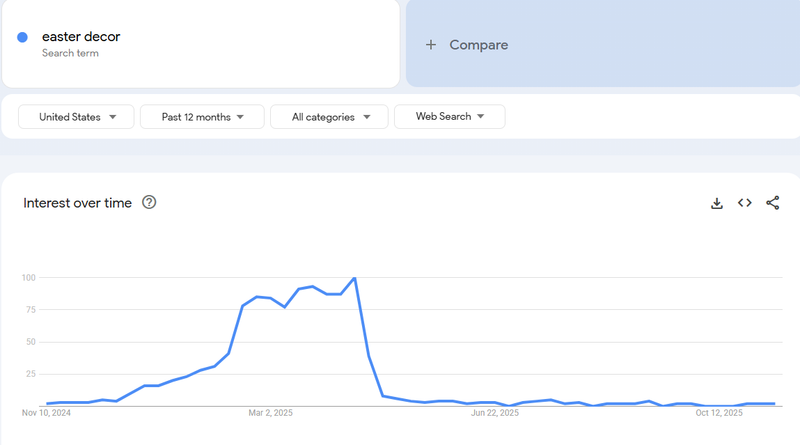
Search demand for Easter decor began increasing from late 2024 and remained elevated before peaking in March 2025. The sustained rise suggests that shoppers begin preparing decorations well in advance of the holiday.
This early planning behavior means decor products should be launched by February to capture early traffic and maximize conversion potential.
Based on search trends and seasonal demand cycles:
Easter is not a single-day retail opportunity - it is a structured sales season that unfolds over 3–6 weeks. Understanding when is Easter 2026 allows retailers to shift from reactive selling to proactive retail planning, ensuring better inventory control, stronger campaign timing, and higher seasonal revenue performance.
Understanding Easter data 2026 helps retailers evaluate the true scale of seasonal demand and position their products strategically within the Q1–Q2 retail calendar.
Recent Easter spending statistics highlight how significant this holiday has become in the U.S. retail landscape.
Source: Statista
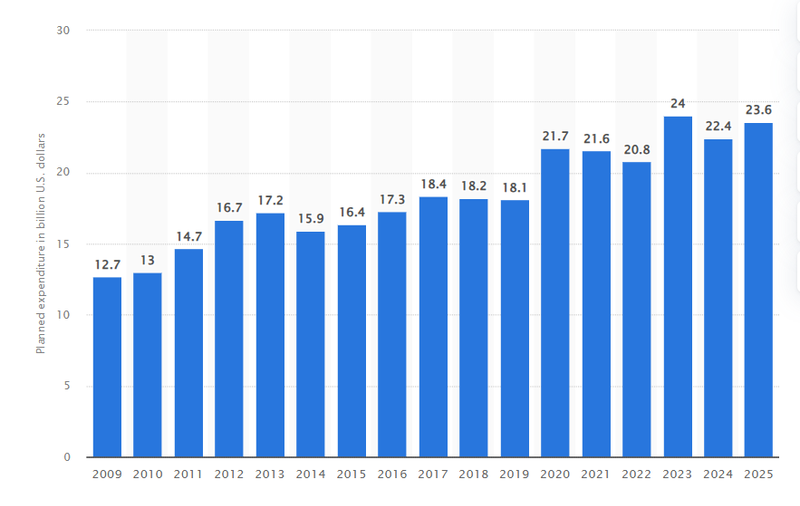
According to Statista, U.S. consumers planned to spend approximately $23.6 billion on Easter in 2025, marking a noticeable increase compared to 2024. This steady rise confirms that Easter holiday sales remain on a strong growth trajectory.
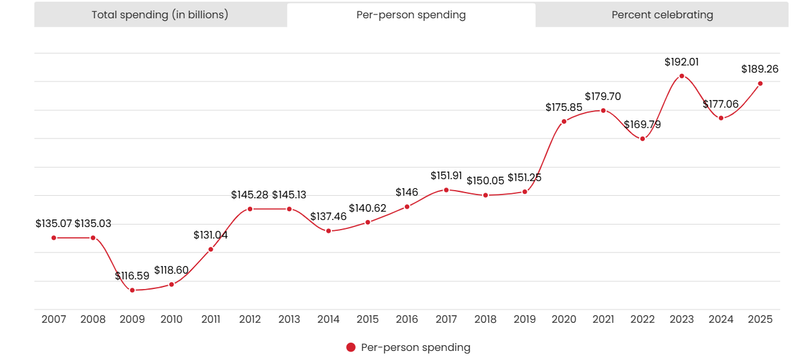
Source: NRF
On an individual level, per-person spending reached an estimated $189.26 in 2025, continuing a long-term upward trend since 2009. Notable spikes in 2021 and 2023 reflected stronger consumer confidence and economic recovery, reinforcing Easter’s expanding role in household celebrations.
Since 2020, Easter has consistently outperformed other seasonal holidays such as Valentine’s Day and Father’s Day in total retail volume. This positions Easter retail sales as one of the most important revenue peaks in the first half of the year.
Insight:
>>> Related content: What Easter Gift Ideas Will Help Print-on-demand Sellers Maximize Profits in 2026?
Understanding Easter consumer behavior is essential for retailers and POD sellers preparing for the 2026 season. While participation rates remain relatively stable, spending patterns, category preferences, and income-based differences reveal strong revenue opportunities-especially for personalized and decor-focused products.
Source: NRF
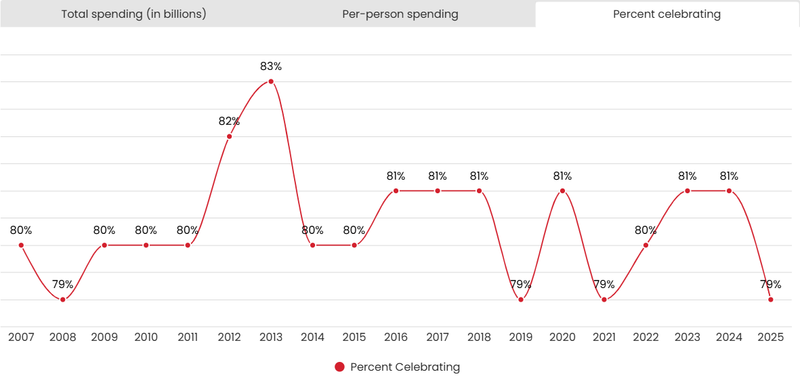
According to historical data, between 79% and 83% of Americans celebrate Easter each year. The peak participation rate reached 83% in 2013, and in 2025 the percentage is projected to dip slightly to 79%.
Although the participation rate shows a gradual softening, it has remained largely stable over time, typically fluctuating within a narrow range.
Insight:
Source: spiegel
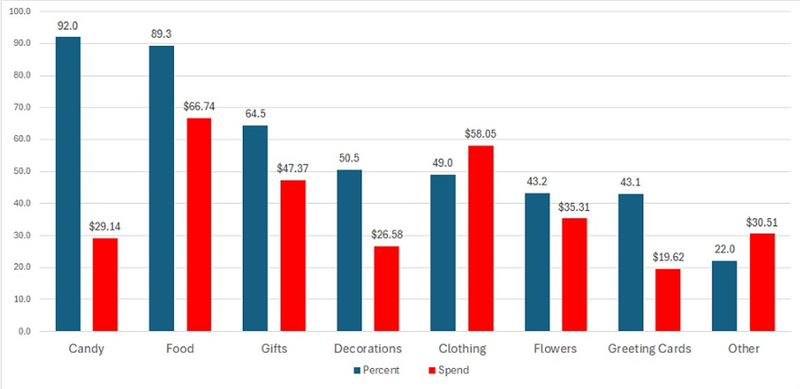
Easter spending distribution among celebrators shows clear priority categories:
This breakdown highlights that while candy and food dominate, non-food categories collectively represent a significant share of Easter retail sales.
Insight for POD Sellers:
→ This creates strong opportunities in:
For print-on-demand brands, this confirms that Easter is not just a candy holiday-it’s a personalization-driven seasonal market.
Source: NRF
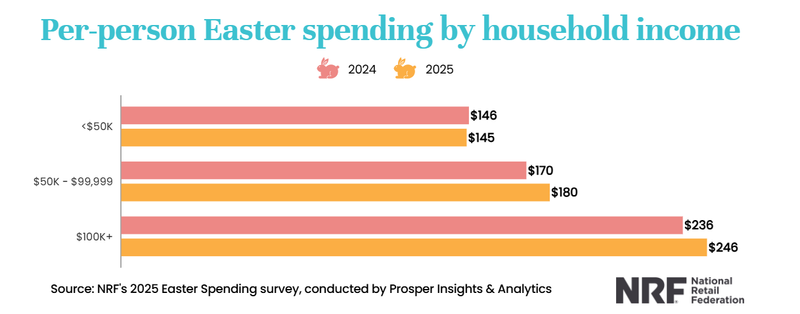
Spending varies significantly by income group:
Insight:
Targeting higher-income audiences can significantly increase Average Order Value (AOV).
Premium, customized, and luxury-themed Easter products have strong potential.
Upselling bundles (apparel + decor + gift sets) can work especially well in affluent segments.
For 2026, retailers should consider segmented marketing strategies that align product positioning with income-based purchasing power.
Recent Easter shopping trends on Google reveal a highly predictable and stable seasonal demand pattern. Over the past five years, searches for “Easter” in the U.S. have shown a consistent spike every year, with peak interest occurring in mid-April, aligning precisely with the Easter holiday period.
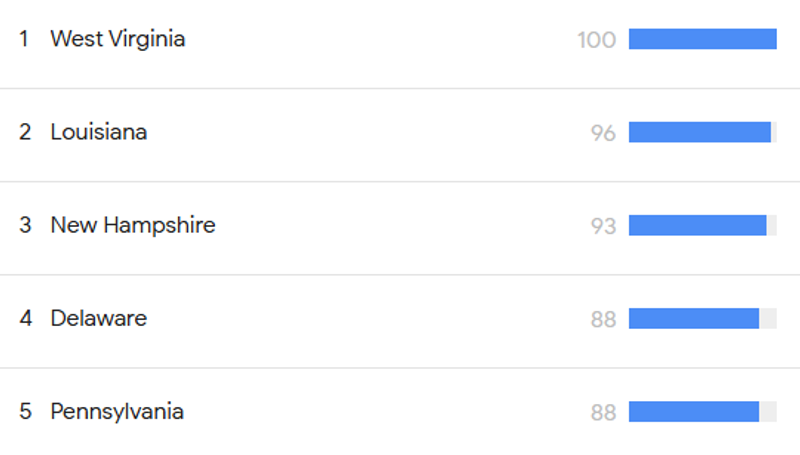
In 2025, Google Trends data showed a sharp mid-April surge, with the highest regional interest recorded in West Virginia and Louisiana. Importantly, overall search interest has not declined over time, confirming that Easter remains a reliable seasonal niche rather than a short-term trend.
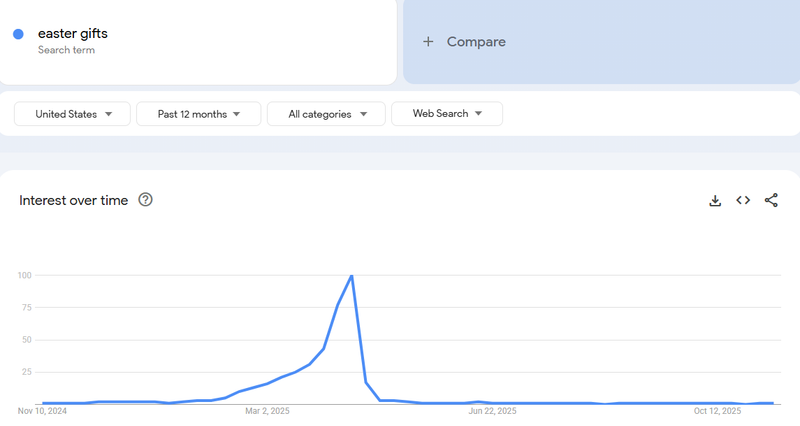
When analyzing the Easter gift market, search behavior shows that consumers plan ahead. Searches for “Easter gifts” peak around March, roughly 3–4 weeks before the holiday. Vermont and West Virginia recorded the highest relative search interest for Easter gift-related queries. This pattern clearly reflects strong pre-holiday gift planning behavior, suggesting sellers should launch gift-focused collections at least one month before Easter to capture early buying intent.
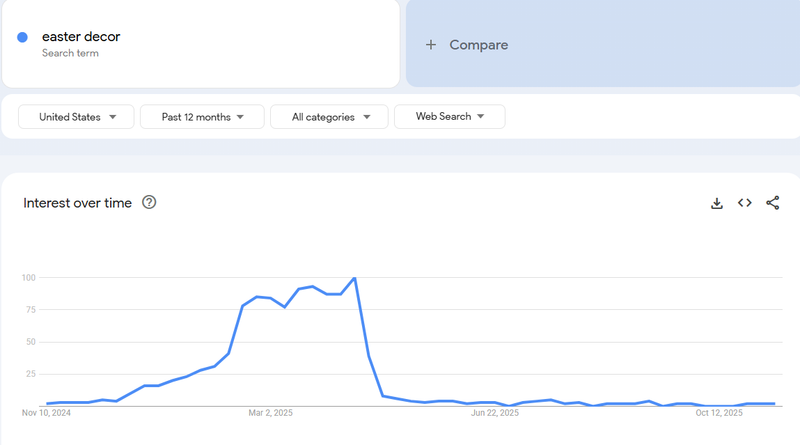
Meanwhile, Easter decor search growth demonstrates even earlier momentum. Interest began to surge from late 2024 and remained elevated, reaching its highest point in March 2025. The growth pattern is described as both fast and durable, indicating sustained demand rather than a short spike. For retailers and POD brands, this confirms that decor is a long-lead seasonal category, with consumers starting preparations weeks in advance and maintaining strong purchasing interest throughout the season.
Etsy marketplace data provides clear insight into real buyer intent leading up to the holiday. By analyzing search volume, recorded sales, and keyword growth trends, sellers can better understand where demand is strongest and which product angles offer the highest potential for Easter 2026.
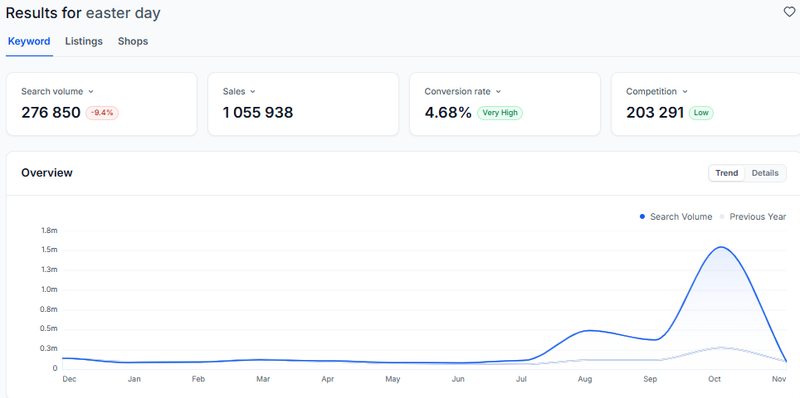
When comparing high-volume keywords, “Easter gift” significantly outperforms “Easter day” in both search and sales performance.
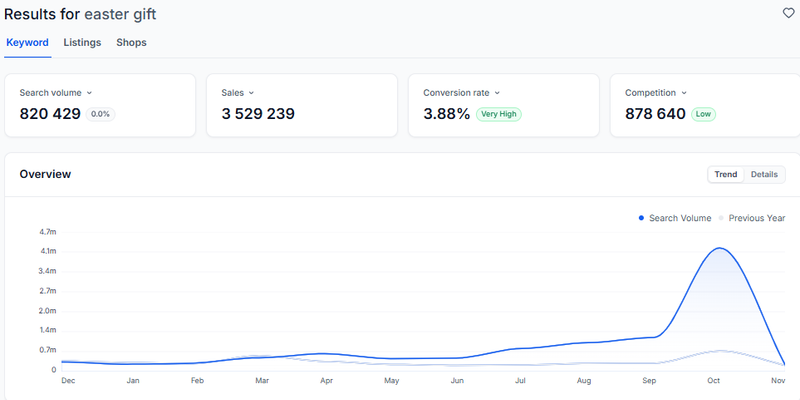
Source: Alura
“Easter gift”
Source: Alura
“Easter day”
In addition, earlier data shows “easter gift” reaching over 820,000 monthly searches and generating over 3.5 million recorded sales, clearly outperforming broader holiday terms.
👉 Insight: Buyer intent is strongly concentrated around gifting rather than generic holiday searches. The keyword “Easter gift” carries stronger commercial intent and conversion potential compared to the more generic “Easter day.” For sellers, this confirms that the Easter gift market is a primary revenue driver within the seasonal search ecosystem.
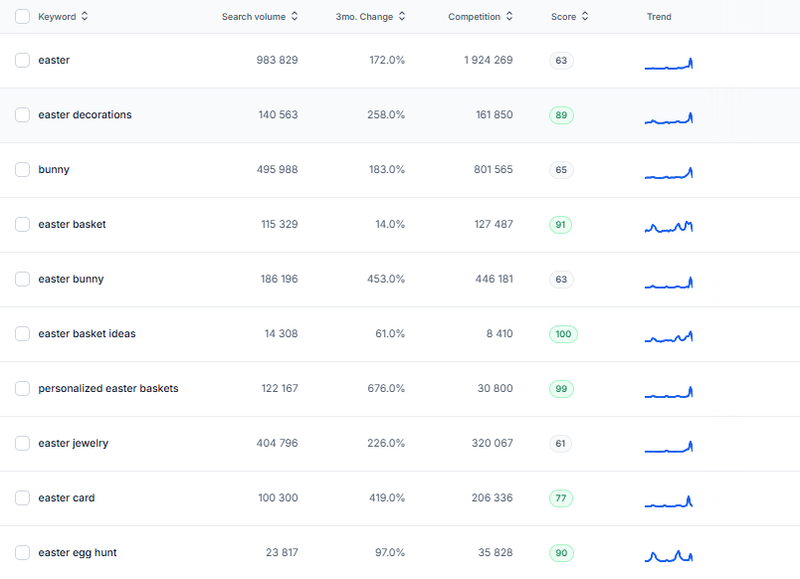
Beyond core terms, Etsy keyword trends highlight several high-growth related keywords gaining momentum:
Notably:
These percentage increases indicate rapid acceleration in buyer interest as the holiday approaches.
Insight: Bunny-themed products represent an extremely high-potential niche, especially for personalized and POD items. Meanwhile, the strong growth in decor-related keywords confirms that decoration products experience powerful pre-holiday demand surges. Sellers who combine bunny themes + decor + personalization are strategically positioned to capture high-intent Easter traffic.
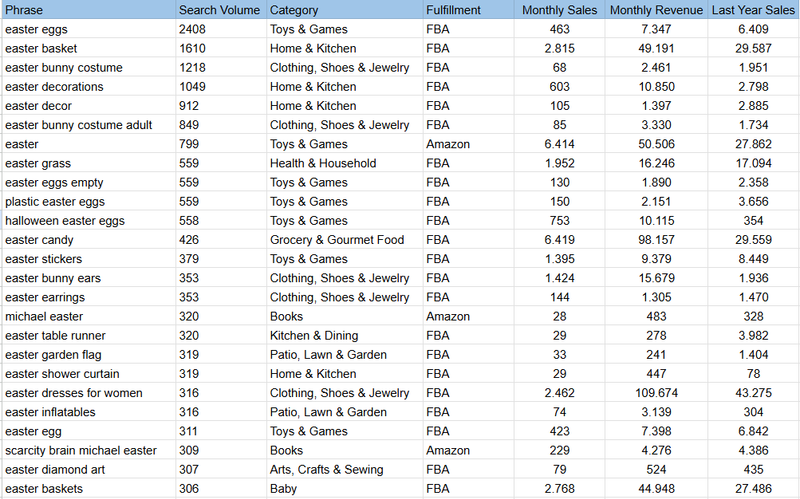
Source: Helium 10
The Amazon keyword analysis shows that “easter basket stuffers” is the top search term, indicating strong demand for small basket-filling items. Other high-volume keywords reinforce a purchasing focus on children’s gifts and Easter decorations, highlighting clear gift-oriented buying intent, especially around Easter baskets.
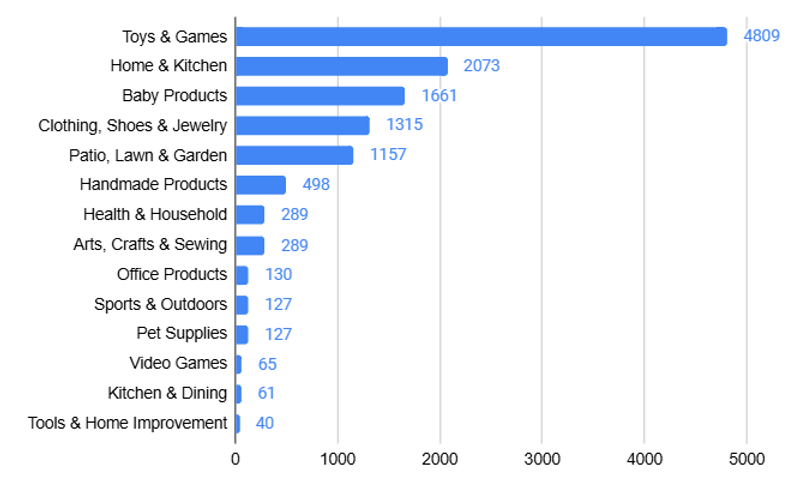
Source: Helium 10
The highest demand categories are Toys & Games (4809) and Home & Kitchen (2073), indicating a strong focus on children's items and general household goods for gifting. Within these categories, the most popular individual items are Bed Blankets (2697), Stuffed Animals & Teddy Bears (1673)), showcasing the breadth of products considered for Easter gifting on Amazon.
In summary, the Easter trend on Amazon shows a clear pattern: consumers prioritize children’s gifts, themed decorations, and practical-yet-sentimental products. Sellers who optimize listings around high-intent Easter keywords and bundle-friendly items are best positioned to capture seasonal demand.
Easter 2026 presents a clear opportunity for sellers who understand one core truth child-centered, emotion-driven shopping season.
The data shows strong momentum in small giftable items, plush products, cozy home goods, and decorative pieces - all optimized around high-intent keywords like Easter basket stuffers and Easter gifts for kids. Buyers are not just purchasing products; they are building experiences and traditions.
Sellers who combine keyword intelligence, category insights, and emotionally resonant product positioning will be best positioned to capture Easter demand in 2026. Preparation, strategic bundling, and early optimization will separate seasonal sellers from long-term winners.
If executed correctly, Easter is not just a short holiday spike - it’s a scalable growth opportunity.
>>>Maybe you like: Unlock Easter Ebook Insight & Full guidline Now