Dieu Linh
Apr 17 2026 •11 minutes
In 2026, you don’t need a warehouse or a huge budget to launch a global brand. Print on demand for beginners has revolutionized e-commerce, offering a low-risk way to sell custom products without ever touching inventory.
However, your success depends entirely on the partner you choose. With so many platforms competing for your attention, finding the best print on demand for beginners can feel overwhelming. You need a service that isn't just easy to use, but one that offers fast shipping and high-quality products that keep customers coming back.
We’ve researched and found out the top players to help you decide. From seamless integrations to global fulfillment, here are the best print on demand sites for beginners to jumpstart your business today.
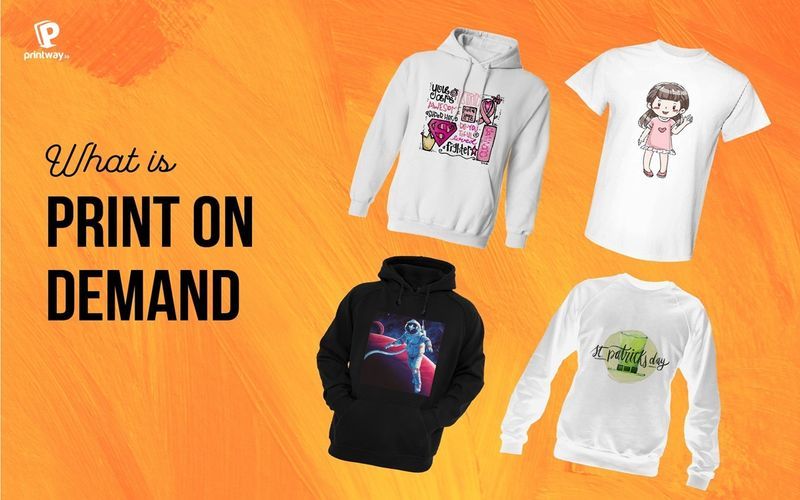
If you’re new to e-commerce, you might have heard the term "POD" buzzing around. Simply put, Print on Demand (POD) is a business model where products are only created once a customer actually hits the "buy" button.
Think of it as the "sell first, print later" approach. Unlike traditional businesses that have to guess what people want and end up with garages full of unsold t-shirts, POD ensures that production only happens when there is a real order waiting to be filled. No waste, no inventory, and no upfront manufacturing costs.
To understand how it works, it helps to think of Print on Demand as a specialized type of dropshipping. In a standard dropshipping setup, you sell someone else’s product. In POD, you’re selling your creativity. You take everyday items like mugs, t-shirts, hats, shoes, or phone cases and turn them into unique brand pieces with your one-of-a-kind designs. You can list these items on big marketplaces like Amazon, eBay, and Etsy, or even your own custom website.
The secret sauce to making this work is what we call fulfillment services (or order fulfillment). You don’t need a printing press in your basement; instead, you partner with a specialist who handles the heavy lifting.
Here is the logical flow of a typical sale:
The Order: A customer falls in love with a design in your online store and places an order.
The Hand-off: That order is instantly sent to your POD service provider.
The Creation: Your provider prints your design onto the product exactly as the customer requested.
The Delivery: The provider packages the item and ships it directly to your customer’s door.
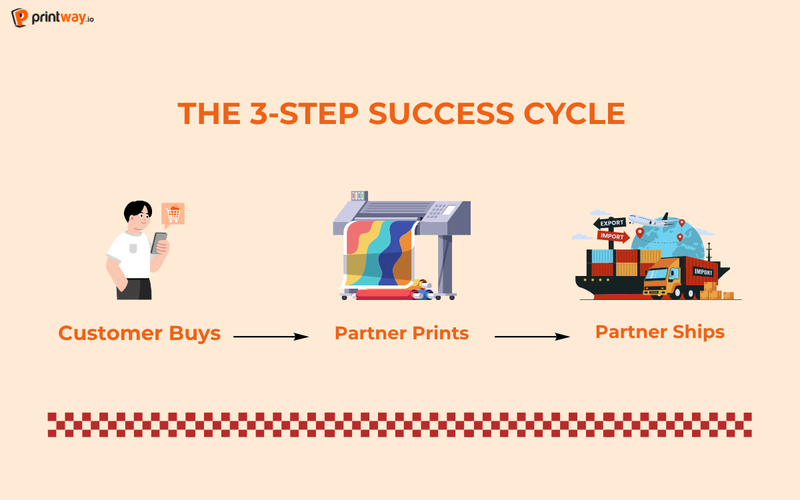
Customer Buys → Partner Prints → Partner Ships
It’s a smooth, automated cycle that lets you focus on the fun part - designing and marketing while the technical logistics happen quietly in the background. This is exactly why many consider this the best print on demand for beginners path; you get to be a business owner without the traditional "business" headaches!
If you've ever felt like starting a business was too expensive or too technical, print-on-demand for beginners is about to change your mind. In 2026, the barriers that used to stop entrepreneurs, like expensive warehouses or complex shipping contracts, have completely vanished.
Here is why POD is widely considered the smartest entry point for new sellers:
The biggest "business killer" for beginners is usually the upfront cost of stock. Traditional retail requires you to buy hundreds of items before you even make your first dollar. With the best print on demand for beginners model, your upfront cost for inventory is exactly $0. Since products are only printed after a customer pays you, you never have to worry about a garage full of unsold hoodies or "dead stock" eating your profits.
The beauty of POD is that it grows exactly as fast as you do. You can start by testing just one design on a single t-shirt. If it takes off, you don't need to hire more staff or buy more equipment. Your fulfillment partner (like Printway) handles the increased volume for you.
Modern e-commerce is all about working smarter, not harder. In 2026, the best print-on-demand sites for beginners offer seamless integrations with platforms like Shopify and Etsy.
This creates a "hands-off" workflow:
A customer buys from your store.
The order details are automatically sent to your POD provider.
The provider prints and ships the item without you lifting a finger.
Once your store is set up, your main job is simply to bring in customers. The system handles the rest, making it a perfect side hustle that runs while you sleep.
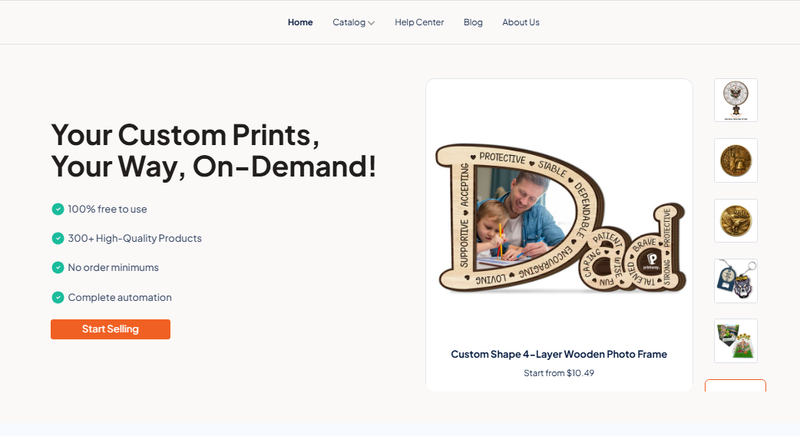
The Verdict: Consider Printway the "hidden gem" of the industry. It’s the perfect choice for sellers who want global reach and high-end products without the technical complexity often found on larger platforms.
If you are looking for the best print on demand for beginners that balances ease of use with professional-grade scaling, Printway is a top contender. Here is why:
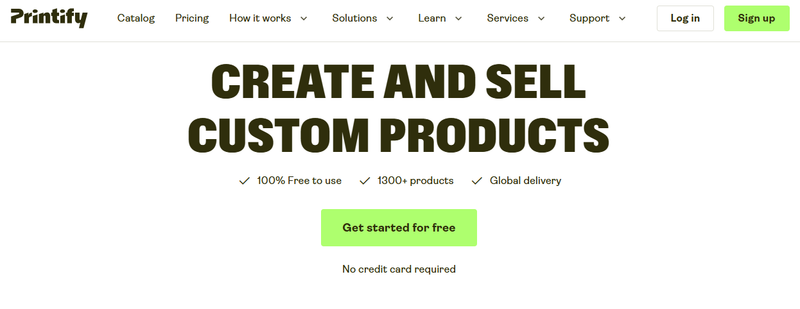
The Verdict: The "Giant Marketplace" of printers.
Printify is famous for its massive network of third-party print providers. Instead of printing everything themselves, they connect you to hundreds of different factories around the world.
The Pros: You get a huge selection of products and some of the lowest base prices in the industry.
The Cons: Because you are dealing with different providers, quality can vary from one printer to another. For a beginner, this means you’ll need to do a bit more "homework" to find the best partners within their network.
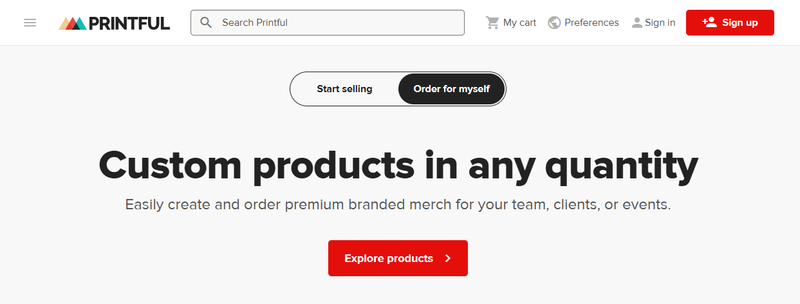
The Verdict: The "Premium Veteran" for consistent quality.
Printful is one of the oldest names in the game and is best known for keeping everything in-house. They own their printers and manage their own staff, which leads to very consistent results.
The Pros: Their mockup generator is top-tier, and their integration with stores is incredibly smooth.
The Cons: Quality comes at a price. Printful’s base costs are typically higher than Printway or Printify, which can make it a little harder for beginners to stay competitive on price while still making a decent profit.
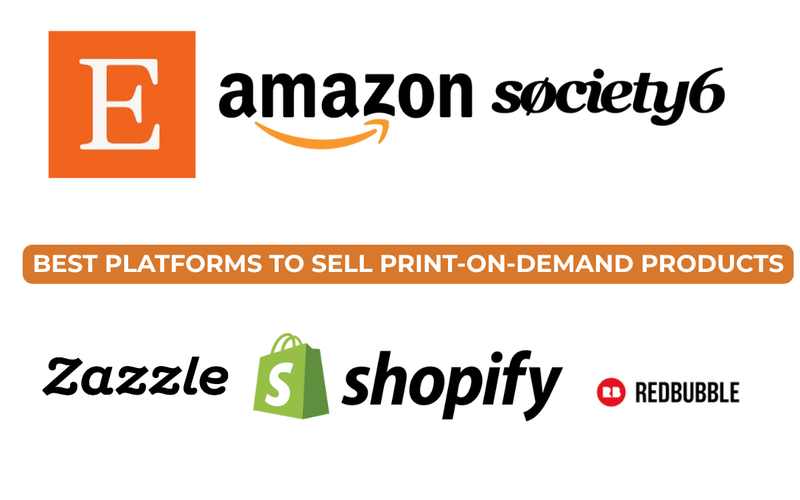
In 2026, you shouldn't be manually entering customer addresses. The best print on demand sites for beginners offer "one-click" integrations.
Shopify: Perfect if you want to build a standalone brand with full control.
Etsy: The go-to for beginners who want to tap into an existing marketplace of millions of shoppers.
TikTok Shop: The rising star of 2026. If you plan on going viral with short-form video, ensure your POD partner (like Printway) can sync directly with TikTok to fulfill those sudden spikes in order.
While POD has "zero inventory risk," it isn't completely free to start. To launch the best print on demand for beginners store, you should budget for these three essentials:
Platform Fees:
Shopify: Typically starts around $39/month (Basic plan).
Etsy: No monthly fee, but they charge a $0.20 listing fee per item and a one-time $15 setup fee for new shops.
TikTok Shop: Generally takes a 6% commission on sales rather than a monthly subscription.
Domain Name: A professional web address usually costs $15–$20 per year.
Product Samples: Never skip this. Budget is roughly $50–$100 to order samples of your own designs. You need to see the print quality and feel the fabric before you ask a customer to pay for it!
The goal of a side hustle is freedom, not a second full-time job. A high-quality automation flow means:
Automatic Order Routing: When a customer buys a mug on Etsy at 2:00 AM, the order is sent to the printer while you sleep.
Real-Time Tracking: As soon as the package is scanned by the carrier (USPS, UPS, etc.), the tracking number should automatically sync back to your store and be emailed to the customer.
Inventory Updates: If a specific color of hoodie goes out of stock at the warehouse, the platform should "gray out" that option in your store so you don't sell something that can't be shipped.
The biggest mistake beginners make is trying to "sell to everyone." In the world of POD, if you sell to everyone, you sell to no one.
The Success Strategy: Find a specific group with a shared passion, like book lovers, pet lovers or those who like gardening, etc. And remember that, you need to follow seasonal holidays like Mother's Day, Father's Day to help you skyrocket sales in a whole year.
Once you know who you’re selling to, you need to match them with the right items.
Example: If your niche is "Eco-conscious Travelers", don't just sell standard plastic phone cases. Instead, pick eco-friendly tote bags or stainless steel travel tumblers.
Specialist Tip: Start with 3–5 core products. It’s better to have a small, high-quality collection than a store with 100 items that don't quite fit together
If you want to find a new niche, don't miss out Best Print-on-Demand Niches for 2026: 10+ Evergreen & Low-Competition Ideas
While we’ve compared the big players, Printway remains our top recommendation for those looking to scale. Why? Because as a beginner, you want a partner that grows with you. With its huge catalog of 500+ items and global shipping hubs, Printway allows you to start small and seamlessly expand into international markets (US, EU, AU) without switching providers later.
Setting up the "plumbing" of your business is surprisingly easy in 2026.
For Shopify: Simply install the Printway.io app from the Shopify App Store. It will walk you through a quick setup to sync your products and billing.
For Etsy: Log into your Printway dashboard, click "Connect to Etsy," and grant access. Once connected, your orders will automatically flow from your shop to the fulfillment center, no manual data entry required!
This is where you turn your store into a sales magnet. To win in 2026, you need to satisfy both the search algorithm and the shopper's intent.
Smart Keyword Research: Before you write a single word, use tools like Google Trends, eRank, or AnswerThePublic to see what people are actually typing. Don't just target "T-shirt"; target "Long-tail" phrases like "vintage aesthetic oversized graphic tee" - these have lower competition and much higher conversion rates.
The "Human-First" Title Strategy: * The Hook: Put your most important keyword in the first 40 characters (that’s all mobile users see!).
The Formula: Primary Keyword + Key Differentiator + Use Case/Persona.
Example: Instead of "Blue Hoodie," use "Heavyweight Navy Hoodie | Premium Fleece Lined | Perfect Gift for Mountain Hikers."
The "Benefits-Driven" Description:
The First 150 Characters: This is your "Meta Description." Include your primary keyword once in a natural, welcoming sentence.
Features vs. Benefits: Don't just say "100% Cotton." Say "Breathable 100% cotton that stays soft wash after wash." Scannability: Use bullet points. 2026 shoppers scan, they don't read. Highlight shipping times, fit guides, and care instructions clearly.
Success in POD is 20% tools and 80% how you use them. Here are the "traps" most beginners fall into—and how you can leapfrog over them:
It is tempting to just upload a design and start running ads, but never sell what you haven't touched. Colors on a glowing computer screen (RGB) often look different when printed on fabric (CMYK). By ordering a sample, you can check the fabric quality, the "hand-feel" of the print, and the true sizing. Plus, you can use those samples to take authentic photos and videos for your marketing—which converts much better than stock mockups!
There is nothing worse than a customer receiving a pixelated, blurry shirt. For crisp, professional results, your designs must be high-resolution.
The Rule of Thumb: Always design at 300 DPI (dots per inch).
The Result: This ensures that whether your design is on a small keychain or a large hoodie, the edges remain sharp and the colors stay vibrant.
In 2026, you don't need a degree in Fine Arts to create stunning products.
Midjourney: Perfect for creating high-end, artistic, and unique graphics that look like professional illustrations.
Canva AI: Best for beginners who need to combine text with graphics quickly. It’s an "all-in-one" workshop to get your store looking professional in hours, not weeks.
Kittl: A powerful tool specifically built for merchandise design, helping you create complex layouts that are already optimized for printing.
Absolutely. While the market is more competitive, it is also much larger—projected to hit over $15 billion this year. The key to profitability in 2026 is moving away from generic designs and focusing on niche markets and personalization. When you provide a product that speaks to someone's specific identity or passion, you can charge a premium that keeps your margins healthy.
Both have their strengths. Standard dropshipping often offers lower product costs, but you are selling the same generic items as everyone else. Print on demand gives you Total Brand Control. Since your designs are unique to you, you aren't stuck in a "race to the bottom" on price. You are selling a brand, not just a commodity.
Not at all! Many of the top-selling products in the best print on demand for beginners stores are actually text-based designs. A clever quote, a relatable phrase, or a simple minimalist word can often outsell a complex illustration. As long as you understand your niche's "slang" and what makes them laugh or feel proud, you can win.
In conclusion, it’s clear that print-on-demand is no longer just a "side hustle"—it is a sophisticated e-commerce engine. With the global market projected to surpass $13 billion this year, the opportunity to carve out your own profitable corner has never been better.
The path to success for a beginner is simpler than it used to be, provided you follow the right logic:
Start with a specialized niche to stand out in a crowded market.
Focus on high-quality fulfillment by choosing the right partner. While platforms like Printify and Printful are industry staples, a specialized service like Printway offers the perfect blend of global reach, unique products, and beginner-friendly margins.
Embrace automation so you can spend your time on what matters—creativity and connecting with your customers.
Remember, the best print on demand sites for beginners are the ones that let you learn as you grow. Don’t wait for the "perfect" design or the "perfect" time. The technology is ready, the global shipping networks are in place, and the customers are looking for exactly what you have to offer.
Are you ready to build your brand? Head over to our step-by-step guide on picking your first niche, or sign up for a Printway account today to see just how easy your first product launch can be!