Hanh Hoang
May 20 2026 •8 minutes
Instagram is one of the highest-leverage free marketing channels a print-on-demand seller can use - over two billion monthly users, a discovery algorithm that pushes strong content far beyond your follower count, and a visual format that suits POD products perfectly. But Instagram works differently from a marketplace like Etsy or Amazon. This guide explains exactly how print on demand on Instagram works, whether you can actually sell on the platform, and the five-step process to turn an Instagram account into a POD revenue stream.
Quick take: Print on demand on Instagram means using Instagram as the marketing and discovery engine for a POD business - you build an audience with content, then convert that audience into buyers through a connected online store, while a POD partner produces and ships every order.
Print-on-demand on Instagram is the practice of using Instagram to market and sell custom-designed products - apparel, home decor, accessories, mugs - that are produced and shipped only after a customer places an order. Instagram is the discovery and marketing layer; it is not the fulfillment layer.
This is the single most important thing to understand: Instagram does not print or ship anything. A complete print-on-demand-on-Instagram setup has three parts:
When the three connect, the workflow is simple: you post content on Instagram, a viewer becomes interested, they reach your store through a product tag or your bio link, they buy, and your POD partner produces and ships the order. You never touch inventory.
POD pairs unusually well with Instagram because Instagram is a visual platform and POD products are visual products. A well-shot mug, a styled t-shirt, or a decorated room photographs and films beautifully - which means your marketing content and your product catalog are effectively the same asset.
Yes - you can absolutely sell print-on-demand on Instagram, and many POD sellers run Instagram as their primary acquisition channel. But selling on Instagram happens through one of two routes, and it helps to know which one you are using.
Most successful POD sellers use both: Instagram Shopping tags for in-feed discovery, and the bio link as the catch-all destination. What you cannot do is rely on Instagram to fulfill orders - fulfillment always runs through your store and your POD partner.
One requirement worth stating plainly: you must own the designs you sell. Instagram enforces intellectual-property rules, and POD products built on trademarked or copyrighted artwork get accounts restricted or removed. Original design is not optional.
The five-step sequence below takes a POD seller from a blank Instagram account to a content engine that drives consistent store traffic and orders.
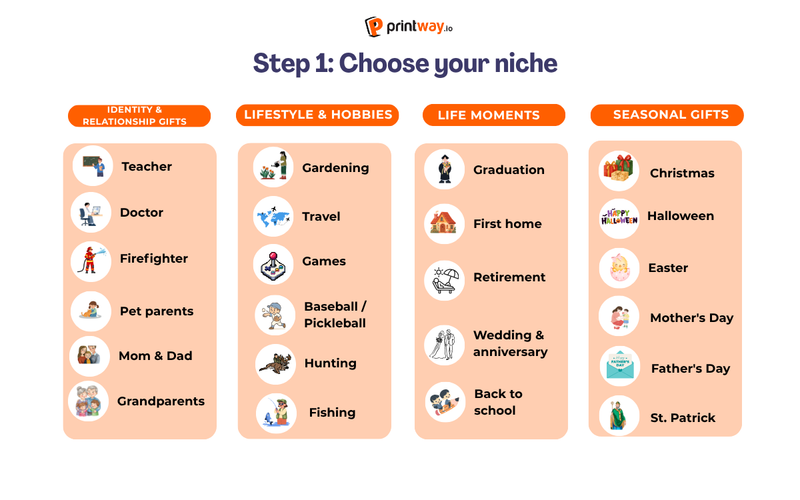
Instagram's algorithm rewards accounts with a clear, consistent theme - it learns what your content is about and shows it to people who want that content. A scattered account ("everything for everyone") confuses both the algorithm and the audience.
How to choose a niche that works on Instagram specifically:
The strongest POD niches on Instagram cluster around personalization, hobbies, identity, and home aesthetics - all categories where the product itself is content-worthy.
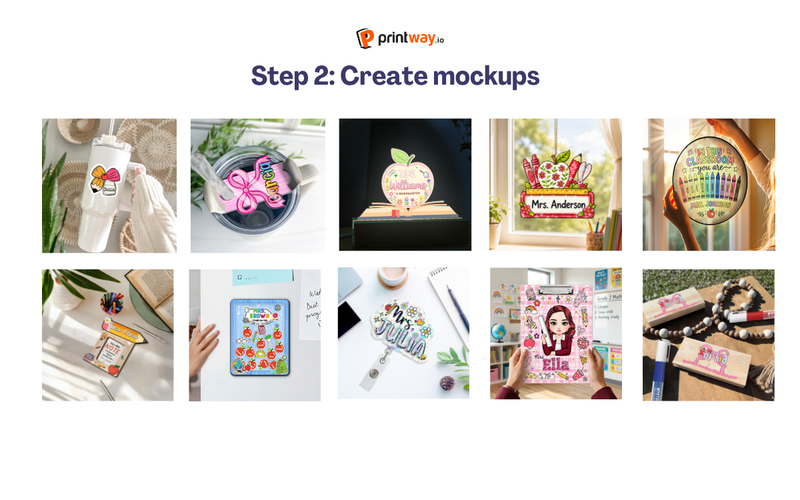
On Instagram, your mockups are your marketing. Unlike a marketplace, where a plain product-on-white photo is enough, Instagram demands content that stops the scroll.
Build three types of mockup content for every product:
Start with your POD partner's built-in mockup generator for fast catalog coverage, then layer in real lifestyle photography and video as the account grows. Printway provides mockup-ready product imagery across its 800+ SKUs, which gives Instagram sellers a head start on visual content before investing in custom shoots.
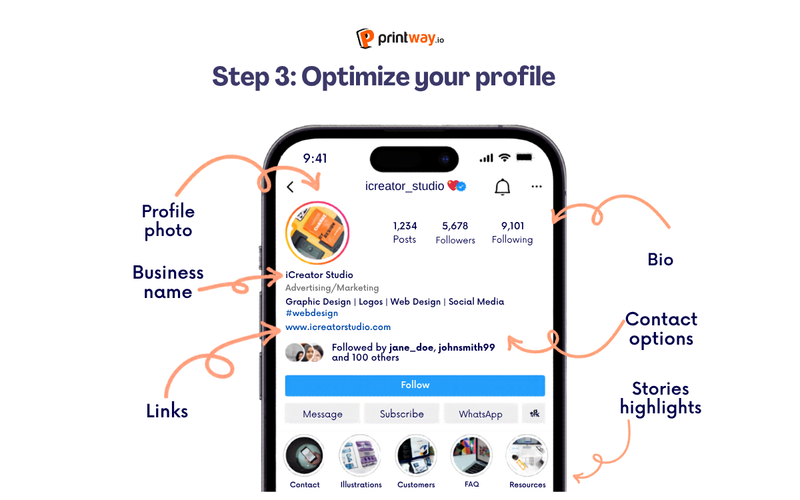
Your Instagram profile is your storefront window. A viewer who discovers a Reel and taps through to your profile decides within seconds whether to follow or leave.
Profile optimization checklist:
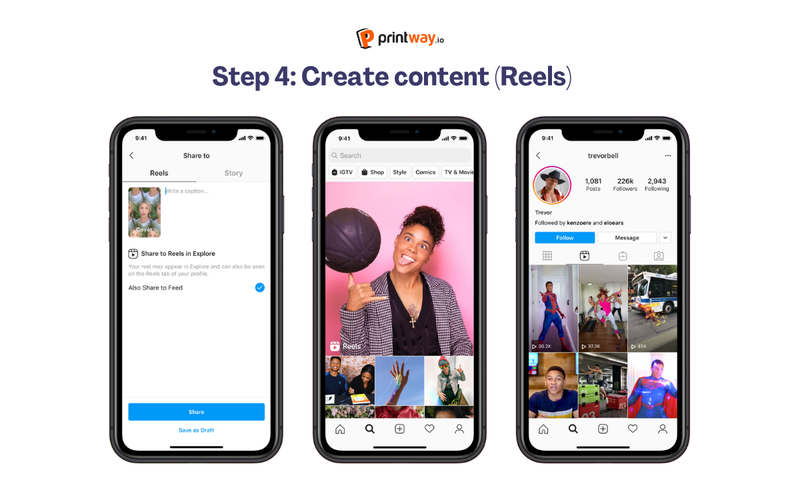
Reels are the engine of Instagram growth in 2026. The algorithm pushes Reels to non-followers far more aggressively than feed posts, which makes Reels the single best tool for a new POD account to reach new buyers.
Reel formats that consistently work for POD sellers:
Practical Reels rules: hook the viewer in the first second, keep clips 7–21 seconds, use trending audio, add on-screen captions, and post consistently. Three to five Reels a week is the realistic minimum to build momentum, and every Reel should end with a clear next step.
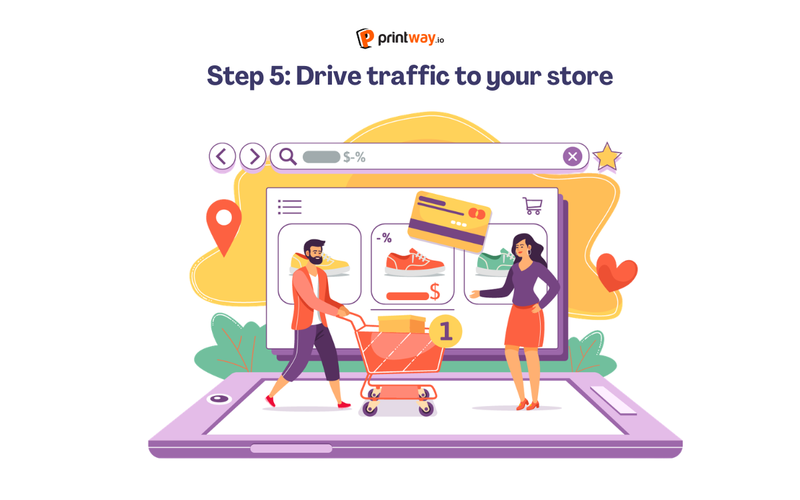
Content builds an audience; this step converts that audience into store visits and orders.
Instagram Shopping tags - tag products directly in Reels, posts, and Stories so interested viewers move straight to a product page.
Behind all of this sits the part the customer never sees: when an order lands in your store, your POD partner produces and ships it automatically. With Printway connected to your Shopify, Etsy, Amazon, or WooCommerce store, the Instagram-to-order pipeline runs end to end - you focus entirely on content and audience, while production, fulfillment, and tracking happen on their own.
Print on demand on Instagram is one of the most accessible ways to build an e-commerce business in 2026. The platform gives you free, algorithm-powered reach to a massive visual audience, and the POD model removes inventory risk and upfront cost. The sellers who win treat Instagram as a content engine - a clear niche, scroll-stopping mockups, an optimized profile, consistent Reels, and disciplined traffic-driving - while a reliable POD partner quietly handles everything physical.
That partner is the foundation the whole system rests on. Printway produces 800+ products across Home Decor, Apparel, Accessories, and All-Over-Print in US and Vietnam facilities, integrates directly with Etsy, Shopify, Amazon, and WooCommerce, and offers branded packaging that turns first-time Instagram buyers into repeat customers.
Ready to turn your Instagram audience into a POD business? Connect your store to Printway - design and post on Instagram, and let production, fulfillment, and tracking run automatically from the very first order.
Can you sell print-on-demand on Instagram? Yes. You sell POD on Instagram by using the platform as a marketing and discovery channel that drives buyers to a connected online store, while a POD partner produces and ships every order. Instagram itself does not fulfill orders.
Do you need a website to sell print-on-demand on Instagram? You need a connected store - that can be a Shopify site, an Etsy shop, or your own website. Instagram Shopping requires a product catalog from a commerce platform, and even link-in-bio selling needs a store as the checkout destination.
Is print-on-demand on Instagram free to start? Creating an Instagram account and posting content is free. The real costs are your store platform (Etsy listing fees or a Shopify subscription), design tools, and any optional paid ads. POD itself has no upfront inventory cost - you only pay base cost when a customer orders.
What products sell best with print-on-demand on Instagram? Visually distinctive products perform best because Instagram is a visual platform - home decor, apparel, mugs, and personalized gifts all film and photograph well. Products tied to an identity or aesthetic consistently outperform generic items.
How long does it take to make sales with print-on-demand on Instagram? It depends on content consistency and niche fit, but most sellers posting 3–5 Reels per week see meaningful store traffic within 4–8 weeks. Instagram rewards consistency, so the timeline shortens dramatically for sellers who publish reliably.